
Mountain cherry
Prunus prostrata Labill.
Description
Growing requirements
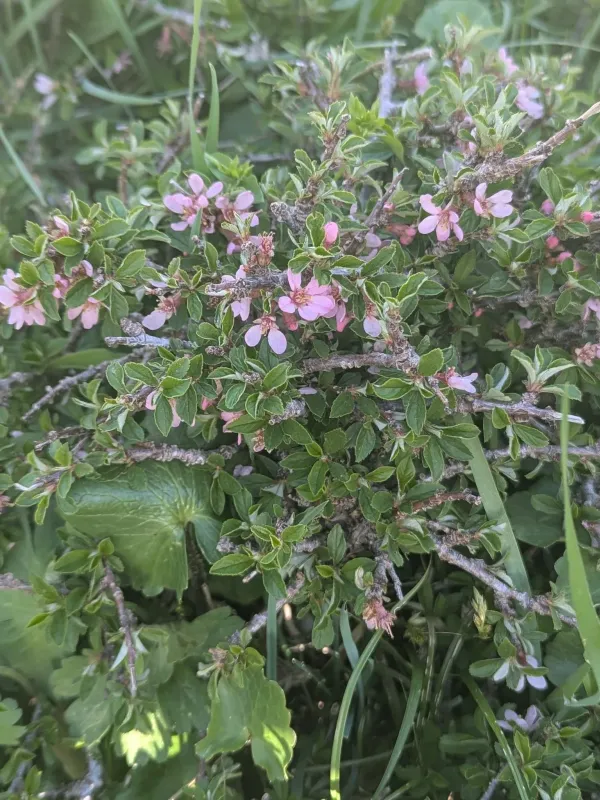
Mountain cherry (Prunus prostrata) is a low-growing, prostrate shrub belonging to the Rosaceae family. It is a unique botanical species characterized by its creeping habit, making it perfectly suited for rockeries and rugged terrain.
Native to the mountainous regions of Southern Europe, the Caucasus, and the Middle East, this plant has adapted to high-altitude environments. Its natural habitat is typically rocky slopes and limestone crevices, which explains its extreme resilience.
The plant requires full sun exposure to maintain its compact, dense growth habit. Insufficient sunlight will lead to spindly, weak branches and a significant decrease in the profusion of its characteristic pink flowers during the spring season.
Soil requirements are modest, but drainage is non-negotiable. Mountain cherry thrives in sandy, stony, or rocky soils and is highly intolerant of waterlogged conditions, which can quickly cause root rot and death of the plant.
In terms of cultivation, it is considered a low-maintenance species. Once established, it is remarkably drought-tolerant due to its deep root system that can penetrate rock fissures, though supplemental water is needed during prolonged heatwaves for young specimens.
Main diseases and pests
Common fungal issues include monilinia blight and cherry leaf spot, which can occur if the local climate becomes excessively humid or if there is poor air circulation around the base of the shrub during the growing season.
Pests that may affect this species include aphids and mites, which feed on the tender new growth. Integrated pest management, focusing on early detection and physical removal, is usually sufficient to maintain the health of these hardy mountain plants.