
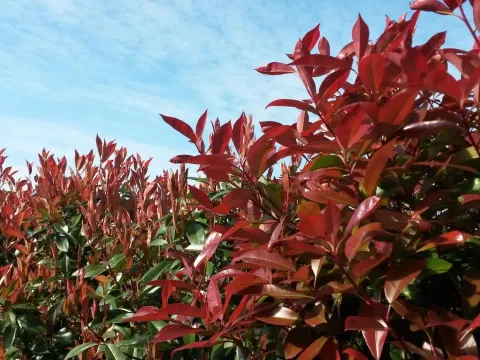
Photinia
Photinia
Photinia is a genus of evergreen and deciduous shrubs and small trees belonging to the Rosaceae family. Native to warm temperate and subtropical regions of Asia, these plants are highly valued for their ornamental foliage.
What the section contains


Photinia
The culture requires fertile, well-draining soil with a neutral to slightly acidic pH level. Ensuring proper drainage is critical, as waterlogged soil can quickly lead to root rot and severe plant decline.
Climate adaptation varies by species; however, most cultivars prefer sheltered positions with exposure to full sun or partial shade. Protection from harsh, cold winter winds is essential to prevent leaf desiccation in colder zones.
Agrotechnical practices involve regular pruning in the spring. This encourages dense, compact growth and promotes the production of the iconic bright red new leaves that make Photinia a favorite in garden design.
In terms of propagation, Photinia is primarily grown from semi-hardwood cuttings. This method ensures the reproduction of specific hybrid characteristics, such as leaf color variation and growth habit.
Fire blight (Erwinia amylovora) remains the most significant threat to Photinia, often requiring the total removal of infected branches or even the entire plant to prevent the spread.
Leaf spot disease, caused by the fungus Entomosporium maculatum, is common and manifests as reddish-brown spots on the leaves, leading to premature leaf drop.
Pests such as aphids and scale insects are known to infest the plant, feeding on sap and excreting honeydew, which can further encourage the growth of sooty mold.
Management strategies focus on proper spacing to ensure airflow, which significantly reduces the humidity levels that favor fungal pathogens.
Applications of appropriate fungicides and systemic insecticides are recommended when cultural methods, such as pruning and sanitation, prove insufficient to control outbreaks.