
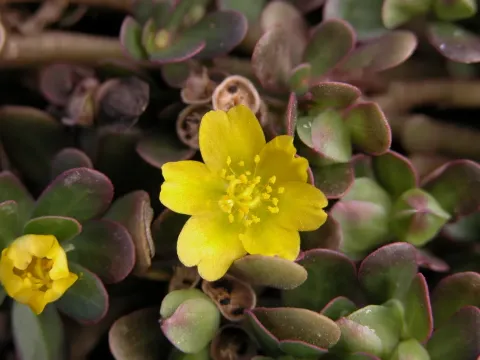
Shining purslane
Portulaca nitida
Shining purslane is a heat-loving plant that thrives in warm weather. Sowing in open fields should only commence once all risks of frost have passed and soil temperatures have reached at least 18–20 degrees Celsius.
What the section contains
Shining purslane
In regions with shorter growing seasons, starting plants indoors as seedlings is highly recommended. Seeds should be sown 30–40 days before the intended date of transplantation to the permanent site.
The seeds of this species are extremely small and light-sensitive. They should be sown on the surface of the soil and merely pressed gently into the substrate without covering them, as they require light to germinate.
Maintaining high humidity during the germination phase is critical. Using a transparent film or a glass cover can help create the necessary microclimate while ensuring sufficient light penetration for the seeds.
When transplanting seedlings, spacing should be set at 25–30 centimeters between rows. This distance allows the succulent foliage to spread properly while ensuring adequate airflow between the individual plants.
This crop requires full sun to achieve its maximum nutritional and culinary potential. Exposure to shade leads to stunted growth and a significant reduction in the succulence and flavor profile of the leaves.
It adapts well to a variety of soil types but performs best in well-drained, sandy, or light loam soils. Poorly drained, heavy clay soils often lead to root rot and other moisture-related diseases.
Portulaca nitida is remarkably drought-tolerant, capable of storing water within its thickened leaves. However, for continuous production of tender greens, a consistent watering schedule is essential.
The ideal temperature for active growth ranges between 22 and 30 degrees Celsius. Development slows significantly if temperatures drop below 15 degrees, and the plant remains sensitive to frost.
Soil fertility requirements are generally low to moderate. Excessive nitrogen fertilization should be avoided, as it encourages rapid vegetative growth that can compromise the plant's structural integrity and flavor.
The yield of shining purslane is largely dependent on the frequency of harvesting and the availability of solar energy. Given optimal conditions, the plant is known for its rapid recovery after trimming.
The first harvest can typically be initiated 30 to 45 days after emergence. At this stage, the plants have established a solid root system and are actively producing new, tender leaf tissue.
Multiple harvests are possible throughout the growing season if the plants are managed correctly. Regular harvesting acts as a pruning mechanism, stimulating the growth of lateral shoots and increasing overall biomass.
It is vital to monitor the plants for signs of flowering. Once the plant enters its reproductive phase, the stems become woody and less palatable, signaling the end of the prime harvesting window.
Under favorable management, growers can expect high yields per square meter. Consistent moisture and strategic harvesting are the primary drivers of success in achieving maximum production volume.
The most significant threat to this crop is excessive soil moisture. Waterlogged conditions quickly lead to fungal infections such as root rot, which can devastate an entire field in a short period.
Slugs and snails are the primary pests that damage the succulent leaves, particularly during periods of high humidity or in areas where the soil remains damp near the base of the plant.
Aphids may also infest the plant during temperature fluctuations. Biological control methods or organic-approved sprays are preferred, given that the greens are frequently consumed raw in salads.
- Crop rotation protocols.
- Good field sanitation.
- Proper soil drainage.
- Regular weed management.
Disease prevention is largely based on site selection and ensuring proper air circulation. Avoiding dense planting patterns reduces the likelihood of humidity-related issues significantly.
The best time for harvesting is during the early morning hours. This ensures that the leaves contain the highest level of turgor and moisture, which improves the quality of the harvested product.
Harvesting involves cutting the upper 5–10 centimeters of the shoots. It is important to leave the lower portion of the plant intact, as this allows the plant to regenerate for subsequent harvest cycles.
Post-harvest handling is critical, as the greens are highly perishable. Immediate cooling or storage in a temperature-controlled environment (2–5 degrees Celsius) helps maintain freshness and shelf life.
When collecting seeds for future planting, select the most vigorous plants and allow them to complete their full life cycle. The pods should be harvested once they turn brown but before they shatter.
For large-scale operations, mechanical harvesting is possible using specialized equipment that maintains a specific cut height. This preserves the crown of the plant, enabling future regrowth after mechanical intervention.