
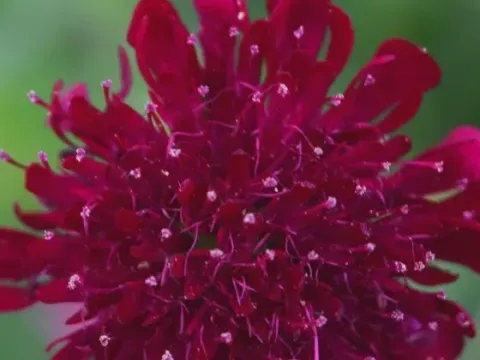
Purple scabious
Knautia purpurea
Sowing of purple scabious (Knautia purpurea) is best performed in early spring as soon as the soil reaches a temperature of 8–10 degrees Celsius. Late autumn sowing is also possible in temperate regions to promote earlier germination in the following season.
What the section contains
Purple scabious
The seeds require minimal stratification or quality preparation to ensure uniform germination across the field. Optimal sowing depth should be maintained at approximately 1.5 to 2 centimeters to provide sufficient moisture contact while preventing poor seedling emergence.
A row spacing of 30 to 45 centimeters is recommended for mechanical weeding and optimal air circulation. When growing for seed production, reducing plant density ensures that each specimen receives adequate sunlight and nutrients for maximum yield.
Using certified, high-purity seeds is essential for maintaining crop health and performance. Modern precision seeders provide the most uniform distribution, which is a critical factor for achieving high yields in large-scale agricultural operations.
Post-sowing rolling is a standard practice to improve the contact between the seed and the soil particles. This mechanical step promotes rapid moisture absorption and leads to emergence within two to three weeks under favorable weather conditions.
Purple scabious belongs to the Caprifoliaceae family and is recognized as a hardy herbaceous perennial. It originated in the diverse landscapes of Europe, where it has successfully adapted to a wide range of temperate environmental conditions.
The crop thrives in fertile, well-draining loamy soils with a neutral pH level. It is essential to avoid sites with poor drainage or stagnant water, as the root system is sensitive to waterlogging, which can cause significant plant loss during the winter.
The plant exhibits excellent winter hardiness, allowing for successful cultivation in various climatic zones. It effectively utilizes spring moisture and demonstrates high resilience during the initial phases of the growing season.
Abundant sunlight is a prerequisite for high-quality blooms and robust growth throughout the year. Shade-grown plants often show increased stem length, reduced flowering intensity, and a decrease in overall plant vigor compared to those grown in full sun.
Field maintenance involves regular inter-row cultivation during the first growing year. This practice is crucial to eliminate competitive weeds and improve soil structure, which in turn facilitates the development of a dense and healthy crop canopy.
The biomass yield of purple scabious is significant when optimal agricultural practices are applied. The crop produces a lush base of foliage followed by numerous long-stemmed flowers, ensuring a consistent volume of green material.
It is widely valued as a top-tier honey plant, making it an excellent addition to agricultural landscapes supporting pollinator conservation. The long flowering period is a major asset for apiaries looking for reliable nectar sources.
Seed yields generally range between 300 and 600 kilograms per hectare depending on crop age and management. Productivity typically peaks during the second and third years, after which the field may require renovation.
Forage yield can reach up to 20 tons per hectare under intensive management including phosphorus and potassium fertilization. These nutrients are vital for root development and overall plant resistance to biotic and abiotic stresses.
Crop rotation and periodic field rejuvenation every four to five years are standard practices to maintain soil fertility and productivity. This helps in managing weed pressure and preventing the natural decline of the perennial stand.
Purple scabious is generally robust, though high humidity may lead to powdery mildew infections. Ensuring adequate spacing and airflow throughout the field remains the most effective prophylactic measure against fungal pathogens.
Aphids are the most common pests that can damage the developing floral heads during the peak growing season. Biological control methods and regular monitoring help in managing pest populations without the need for intensive chemical intervention.
Root rot diseases are primarily associated with waterlogged conditions in low-lying areas. Proper field site selection and drainage management are the most effective strategies to prevent the development of these soil-borne diseases.
Crop rotation is critical to avoid the accumulation of specific soil pathogens over several years. By diversifying the crop cycles, farmers can maintain soil health and minimize the impact of pests on the scabious population.
Regular visual inspections of the stand allow for early detection of potential threats. Timely identification of problems ensures that agricultural interventions can be applied precisely, preserving the overall quality of the harvest.
Harvesting for green biomass is best achieved at the onset of mass flowering when the nutrient content is at its peak. Prompt collection of the cut material is necessary to maintain its feed value and structural integrity.
Seed harvesting should be timed when the floral heads turn brownish and the seeds reach full maturity. Early harvesting prevents significant losses caused by natural seed shattering in the field during windy conditions.
A two-stage harvesting process is recommended for seed crops, involving cutting into swaths followed by threshing. This method ensures that the seeds reach optimal maturity and reduces mechanical damage during the cleaning process.
Post-harvest processing includes cleaning and drying to remove debris and moisture, ensuring long-term storage stability. Proper ventilation in storage facilities is essential to prevent mold growth and ensure seed viability.
In small-scale or artisanal operations, selective harvesting by hand can yield premium-quality material. This approach minimizes contamination and ensures the collection of the most mature and viable seeds for future use.