
Phemeranthus calcaricus
Phemeranthus calcaricus
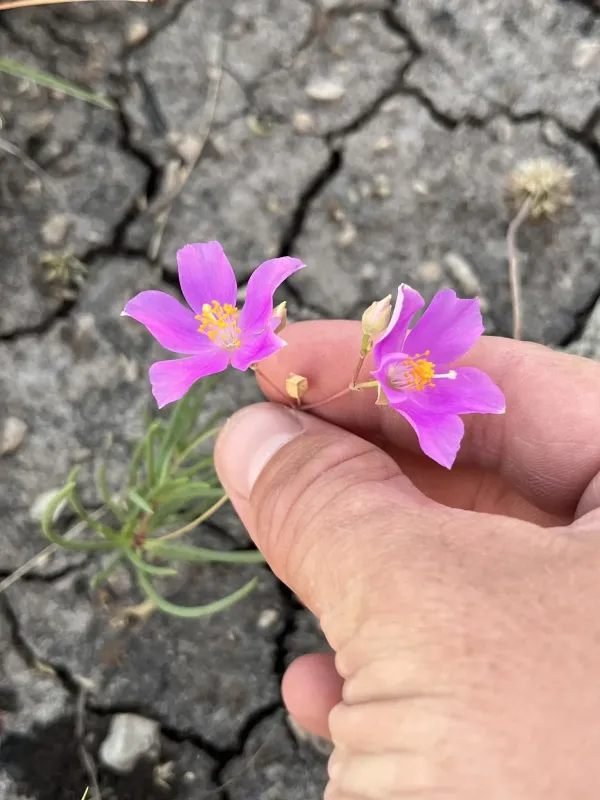
Description
Growing requirements
Phemeranthus calcaricus is a perennial succulent species belonging to the Montiaceae family. It is distinct for its adaptation to limestone outcrops, reflecting its natural preference for habitats characterized by sparse soil and high mineral content.
The plant exhibits typical succulent traits, including fleshy leaves designed for water storage, which allows it to thrive in arid or rocky environments where other vegetation would struggle. Its growth habit is typically low-spreading or clump-forming, topped with delicate floral structures.
Cultivation of this species requires full sun exposure to ensure proper physiological development and flowering. Adequate light intensity is essential to prevent etiolation and to maintain the compact growth form that makes it aesthetically desirable.
Soil requirements focus primarily on drainage. The substrate should be highly porous, rocky, or sandy to prevent moisture retention around the roots. An alkaline pH, typical of limestone environments, is highly beneficial for the optimal health of this plant.
In landscaping, Phemeranthus calcaricus is valued for its hardiness and utility in xeriscaping. It is frequently utilized in rock garden projects, green roofs, or as a decorative element in drought-prone areas where low-maintenance perennial coverage is required.