
Phemeranthus sediformis
Phemeranthus sediformis
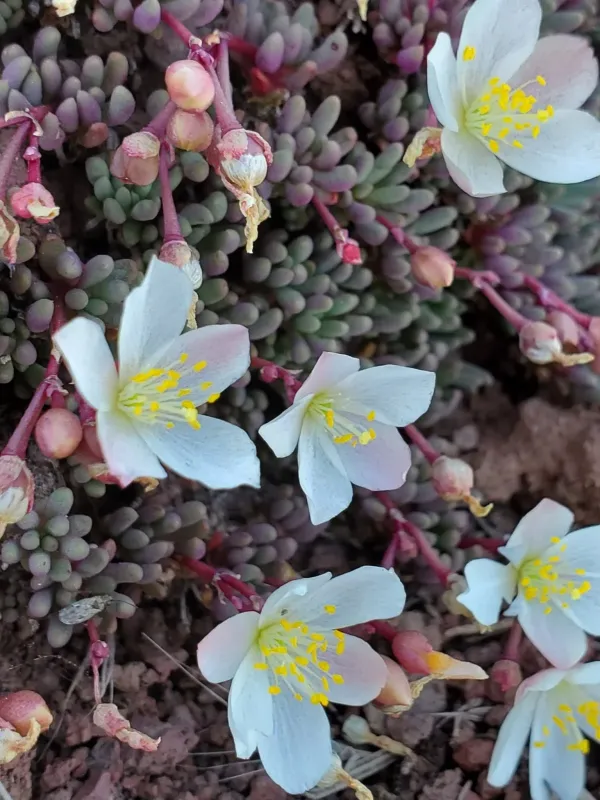
Description
Sowing dates
Sowing Phemeranthus sediformis is primarily conducted via seeds during the spring season when the soil warms up sufficiently. The optimal time is generally late April or early May, once the risk of night frost has passed.
For successful germination, a well-drained substrate with a high content of sand or fine gravel is required. Seeds are sown on the surface as they require light exposure to activate biological growth processes.
In greenhouse or nursery conditions, sowing can begin earlier by providing an ambient temperature of approximately +20°C to +25°C. It is crucial to maintain moderate soil moisture until the first sprouts emerge, avoiding waterlogging.
Once the young plants form several true leaves, pricking or transplanting to their permanent location is conducted. The crop is extremely sensitive to root system damage, so the use of individual peat pots is highly recommended.
Spacing during planting is critical for the development of the aerial parts of the plant. A standard layout requires placing plants at intervals of 15–20 centimeters to ensure adequate air circulation and reduce disease pressure.
Growing requirements
Phemeranthus sediformis belongs to the Montiaceae family and is a typical representative of xerophytic flora. This plant is adapted to survive in environments with extremely dry climates and high solar radiation.
Optimal conditions for growth include sandy, loamy, or stony soils with a neutral to slightly acidic pH. The most essential requirement is perfect drainage, which prevents any water stagnation in the root zone.
The plant demonstrates high drought resistance due to its succulent leaves capable of storing water. However, for commercial biomass production, periodic but very moderate watering is required during the agricultural cycle.
For normal metabolism, Phemeranthus requires maximum sunlight throughout the day. In shaded conditions, the plant loses its decorative and biological characteristics, becomes leggy, and is more susceptible to fungal diseases.
The crop prefers a moderately warm climate with significant day-to-night temperature fluctuations. In regions with high air humidity, cultivation requires specific conditions to prevent rot and decay processes in plant tissues.
Yield
The yield potential of Phemeranthus sediformis is considered in the context of its economic significance as an ornamental or medicinal resource. In agronomic practice, productivity is estimated by biomass output per unit area.
With intensive care and sufficient sunlight, the plant can form dense mats composed of numerous shoots. The harvest is usually timed to coincide with the peak of the vegetative phase, prior to mass flowering.
In its natural habitat, yield depends heavily on annual precipitation and mean temperatures. Under irrigated farming, biomass output can be increased by 1.5–2 times compared to wild populations.
Quantitative yield indicators also depend on varietal characteristics and the quality of the seed material. Modern breeding efforts aim to increase shoot density and resilience against various environmental stress factors.
Despite a slow growth rate in the early stages, mature Phemeranthus specimens are capable of stable growth throughout the summer season. The use of balanced mineral fertilizers with low nitrogen content further stimulates root system development.
Main diseases and pests
The primary threat to Phemeranthus sediformis is fungal infection resulting from excess moisture. Root rot and collar rot are the most common diseases that can lead to the loss of entire plantations in a short period.
Among pests, mealybugs and spider mites pose the greatest danger. These insects multiply rapidly in dry, warm atmospheres, sucking fluids from the succulent leaves of the plant.
Pests often target weakened specimens growing under poor ventilation or improper lighting conditions. Timely monitoring of the plantation allows for the containment of infestation spots at an early stage.
To combat diseases, the use of systemic fungicides is recommended, while pest outbreaks require targeted insecticides. However, the primary defensive measure remains strict adherence to best agrotechnical practices.
Preventive measures include soil sterilization before planting and avoiding direct contact between the plant’s aerial parts and wet soil by mulching the surface with fine pebbles or gravel.
Harvesting
Harvesting Phemeranthus sediformis requires caution, as its tissues are extremely fragile and easily damaged by mechanical impact. The use of sharp cutting tools for shoot harvesting helps to minimize plant trauma.
The optimal time for harvesting is a dry, sunny afternoon, when tissue moisture content is at its minimum. This significantly simplifies subsequent drying and reduces the risk of mold during storage.
Both manual and mechanized methods are used for harvesting, depending on the scale of cultivation. During full-scale mowing, it is important to leave a portion of the root system and basal rosettes to ensure plant recovery.
Harvested material should not be exposed to direct sunlight for extended periods after cutting. Rapid drying in well-ventilated rooms helps preserve active substances and the marketable appearance of the product.
After harvesting, the product undergoes sorting to remove damaged or diseased parts. Storage is carried out in airtight packaging with low air humidity to prevent hygroscopic processes and decay.