
Phemeranthus spinescens
Phemeranthus spinescens
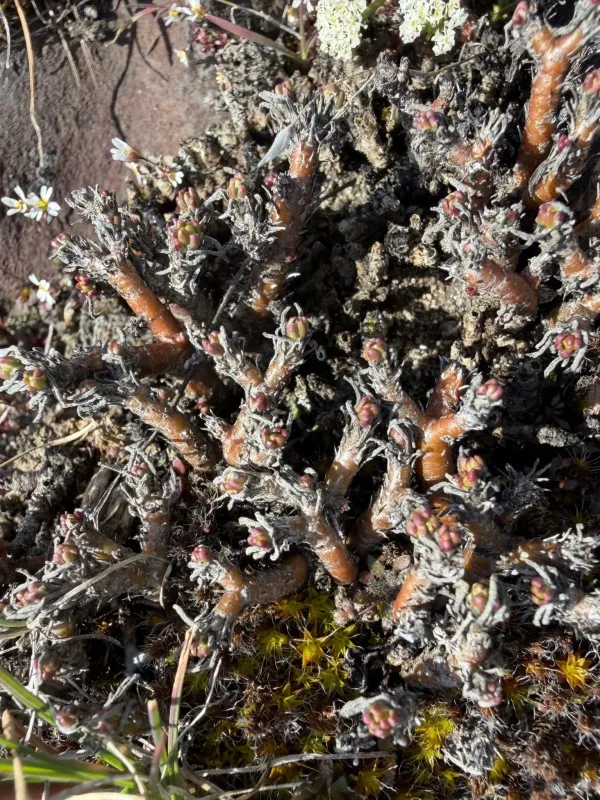
Description
Growing requirements
Phemeranthus spinescens is a perennial succulent herb belonging to the Montiaceae family. It is historically recognized for its ability to thrive in harsh, rocky environments, which characterizes its unique biological structure and adaptation strategies.
Originating from the arid regions of the Pacific Northwest in the United States, particularly Washington and Oregon, the plant has evolved to survive in basaltic rock outcrops. This specialized habitat requires the plant to store significant amounts of water within its foliage.
The plant is distinguished by its fleshy, basal leaves and persistent, hardened peduncles that resemble spines, from which it derives its specific epithet. It typically grows from a deep, tuberous root system, allowing it to withstand prolonged periods of drought and high temperatures.
In terms of agricultural requirements, Phemeranthus spinescens demands excellent soil drainage and full solar exposure. It is highly intolerant of organic-rich or moisture-retentive soils, which can trigger rapid root decay. The ideal substrate is a mineral-heavy mix, such as grit, sand, or volcanic scoria.
This species exhibits remarkable climate tolerance, specifically regarding cold hardiness, provided the winter environment remains relatively dry. Excessive humidity during the dormant season is the most significant limiting factor for successful cultivation and plant longevity.
Main diseases and pests
The primary threats to Phemeranthus spinescens are phytopathological, specifically fungal root rots caused by environmental mismanagement. Over-irrigation, especially during cloudy weather or in poorly draining substrates, leads to irreversible decay of the tuberous root system.
Insect pests such as aphids and mealybugs can occasionally infest the plant, particularly under glass or in suboptimal ventilation conditions. These pests target the succulent tissues and floral buds, necessitating regular monitoring and integrated pest management practices to maintain plant vigor.