
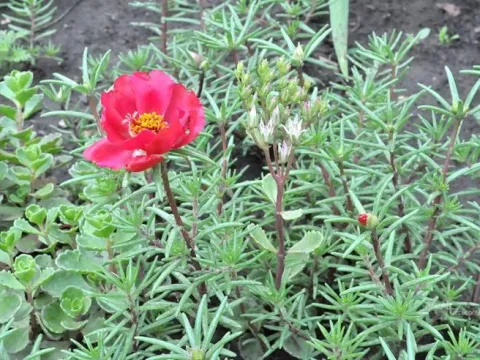
Moss rose purslane
Portulaca hybrids
Moss rose purslane (Portulaca grandiflora), a member of the Portulacaceae family, is a popular annual succulent known for its vibrant, rose-like flowers. Due to its slow initial development, seeds are typically started indoors in late winter, around February or March.
What the section contains
Moss rose purslane
The seeds are extremely small and should be sown on the surface of the soil without covering them, as light is essential for germination. Providing a consistent temperature of 22–25 degrees Celsius is crucial for uniform seedling emergence.
For outdoor sowing, it is vital to wait until the risk of frost has passed, as the plant is highly sensitive to cold. Late May or early June is the ideal time when the soil has warmed up sufficiently for active growth.
When transplanting, seedlings should be spaced 15–20 centimeters apart to allow for proper airflow and development of the spreading stems. Proper spacing prevents overcrowding, which can lead to moisture retention and potential disease issues.
If direct sowing in the ground is preferred, ensure the site is free from competing weeds. The seeds will take approximately 60 to 70 days to reach the flowering stage under optimal thermal conditions.
Originating from the tropical climates of South America, moss rose thrives in hot, sunny conditions. It is remarkably drought-tolerant and performs best when planted in full sun, where its flowers can fully bloom throughout the day.
The plant prefers poor, sandy, or gritty soil. Rich, fertile soil is actually detrimental to its performance, as it encourages excessive vegetative growth at the expense of floral production and reduces its heat tolerance.
Watering requirements are very low compared to other ornamental crops. As a succulent, it stores moisture in its thick, fleshy leaves and stems, making it an excellent candidate for xeriscaping or rock gardens.
Drainage is the most important factor in soil preparation. Any water accumulation around the roots will quickly lead to rot, making it essential to choose a well-drained location, such as a slope or a container with drainage holes.
Fertilization is rarely necessary. In most cases, the natural nutrient content of sandy soil is sufficient for the plant to complete its life cycle and produce a profusion of colorful blooms.
The primary concern for moss rose purslane is fungal infections caused by excessive humidity. Symptoms often include discoloration of the foliage and sudden wilting of the stems, especially after prolonged periods of rainy weather.
Good cultural practices, such as maintaining adequate space between plants and avoiding overhead watering, are the best defense against fungal pathogens like Albugo portulacae. Prevention is far more effective than treatment.
Aphids are the most common insect pests that attack the plant. They tend to cluster around the flower buds and young shoots, extracting sap and causing stunted growth or failure of the flowers to open properly.
If an infestation occurs, horticultural soaps or targeted insecticides can be used to manage the population. It is advisable to monitor the plants closely during the peak of summer when aphid activity is at its highest.
Slugs and snails can also feed on the leaves during damp, overcast periods. Keeping the garden bed tidy and removing unnecessary organic debris around the plants can significantly reduce the habitat for these pests.