
Purple willow
Salix helix
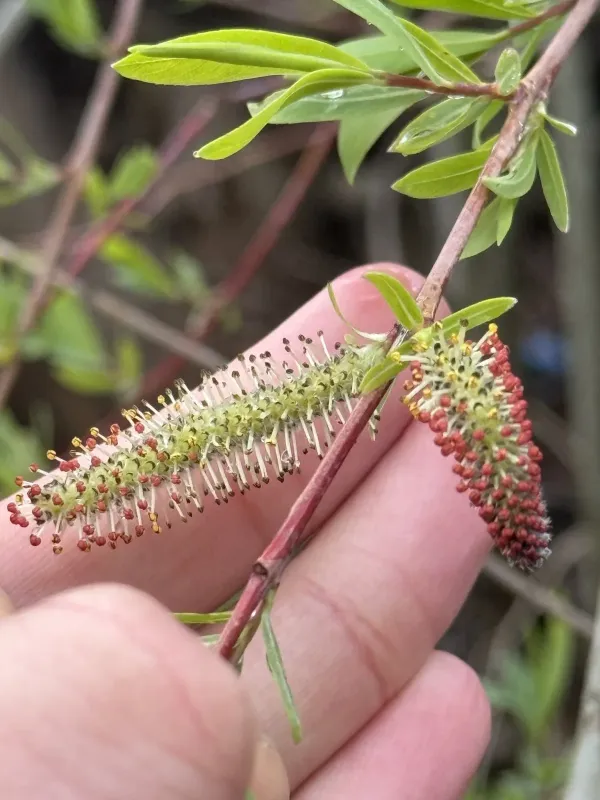
Description
Sowing dates
Propagation of Salix purpurea is primarily achieved through hardwood cuttings. The ideal time for planting is early spring, just before the buds begin to swell and active sap flow commences, typically during April.
Cuttings should be harvested from healthy, vigorous one-year-old shoots. A standard cutting length of 20 to 30 centimeters, with a diameter between 8 and 15 millimeters, ensures a high success rate and strong initial growth.
Planting is usually performed in prepared rows, spacing cuttings 20–30 centimeters apart, with rows set 60–80 centimeters wide. This spacing optimizes land usage and allows for mechanical maintenance and harvest operations.
Cuttings should be inserted into the soil so that only one or two buds remain above the surface. Firming the soil around the base is essential to eliminate air pockets, which helps stabilize the cutting and facilitates root development.
Maintaining adequate soil moisture is critical during the first growing season. Once established, the purple willow develops a robust root system, enabling it to thrive even in challenging riparian environments.
Growing requirements
The Purple Willow belongs to the Salicaceae family and is known for its high water requirements. While it thrives near water bodies, it adapts well to various soil types, including fertile loams and sandy soils, provided they are not excessively compacted.
Light exposure is a significant factor for the development of quality rods. These plants are strictly photophilous and require full sun to grow straight, flexible, and well-branched stems suitable for crafting and basketry.
Salix purpurea is exceptionally cold-hardy, surviving harsh winters with ease. Its wide geographical distribution, spanning Europe, North Africa, and Asia, demonstrates its natural resilience to various temperature regimes and environmental stressors.
Soil pH preference ranges from slightly acidic to neutral. Although the plant is moisture-loving, it does not tolerate stagnant, waterlogged conditions for extended periods, as this can lead to oxygen deprivation in the root zone.
Initial weed management is vital for the establishment of young plantations. Because purple willows are fast-growing, they quickly shade out competing weeds once the canopy closes, but proactive care in the first two years is necessary.
Yield
Yield for purple willow plantations is calculated based on the annual harvest of rods. Under optimal management, a single hectare can produce between 10 to 15 tons of high-quality biomass, depending on the planting density and soil fertility.
Productivity increases significantly from the third year onwards. A well-managed plantation can remain economically viable for 15 to 20 years, provided the plants are coppiced regularly to stimulate continuous regrowth of young, flexible shoots.
When grown specifically for energy production, the focus shifts to maximizing wood volume. These biomass plantations are harvested on short rotations to provide high-calorific wood chips for sustainable heating solutions.
Regular pruning is the primary tool for yield control. It not only increases the volume of the harvest but also ensures the production of long, uniform, and high-quality rods that are highly prized in the artisanal basketry industry.
Nutrient management should be balanced; excessive nitrogen can lead to rapid but structurally weak growth, while adequate potash and phosphorus levels promote wood strength and overall plant health, directly influencing the harvest quality.
Main diseases and pests
Fungal diseases, particularly willow rust and powdery mildew, are the most common threats. These pathogens manifest as leaf spots or whitish powder on foliage, which can cause significant defoliation if left unmanaged.
Pests such as willow leaf beetles (Phratora vitellinae) can cause extensive damage to foliage, severely impacting the plant's photosynthetic capacity. Aphids and mites may also infest younger shoots, leading to stunted or distorted growth.
Maintaining a healthy plantation starts with proper sanitation, including the removal and destruction of infected branches during the dormant season to break the disease cycle and prevent recurring infestations.
Strategic chemical or biological control should be used sparingly and only when pest thresholds are exceeded. Promoting natural biodiversity in and around the plantation helps control pest populations through natural predators.
Environmental management, such as ensuring proper plant spacing and airflow, is essential for reducing the risk of fungal spread. Avoid overcrowding, as stagnant air increases humidity around the leaves, providing ideal conditions for disease.
Harvesting
Harvesting takes place during the dormant season, specifically between late autumn and early spring, after the leaves have fallen and before the new growth cycle begins. This timing ensures that the rods are at their peak durability.
Cutting should be done close to the ground using sharp tools. This practice, known as coppicing, encourages the plant to produce a multitude of new shoots from the stool, maintaining the productivity and quality of the plantation for years.
Post-harvest, the rods should be sorted by length and diameter. If white willow rods are required for decorative purposes, they must be peeled immediately after harvest to maintain the desired finish and prevent staining.
Proper drying is essential for long-term storage. Rods must be air-dried in a well-ventilated area away from direct sunlight to prevent brittleness and cracking, ensuring they remain pliable for subsequent crafting needs.
Store harvested bundles upright in dry, protected environments. Routine checks are necessary to monitor for any signs of decay or mold, ensuring the raw material remains in premium condition until it is ready to be used.