

Reference · Crops
Plantain
Plantago L.
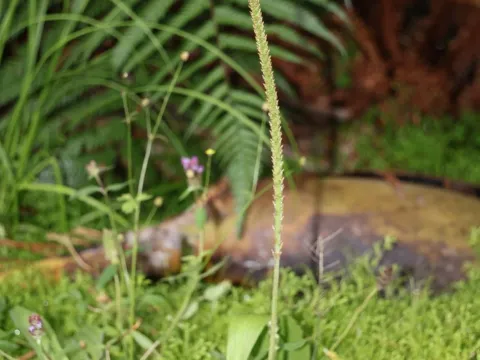
Plantain (Plantago L.) belongs to the Plantaginaceae family and is commonly grown as a commercial medicinal herb. Seeds are typically sown in early spring or late autumn into well-prepared seedbeds.
10
items
What the section contains
 Asian plantain
Plantago asiatica L.
Asian plantain
Plantago asiatica L.
 Buckhorn plantain (aristate)
Plantago aristata Michx.
Buckhorn plantain (aristate)
Plantago aristata Michx.
 Buckshorn plantain
Plantago coronopus L.
Buckshorn plantain
Plantago coronopus L.
 Flea seed
Plantago afra L.
Flea seed
Plantago afra L.
 Greater plantain
Plantago major L.
Greater plantain
Plantago major L.
 Hoary plantain
Plantago media L.
Hoary plantain
Plantago media L.
 Psyllium
Plantago arenaria Waldst. & Kit.
Psyllium
Plantago arenaria Waldst. & Kit.
 Psyllium
Plantago ovata Forssk.
Psyllium
Plantago ovata Forssk.
 Ribwort plantain
Plantago lanceolata L.
Ribwort plantain
Plantago lanceolata L.
 Rugel's plantain
Plantago rugelii Decne.
Rugel's plantain
Plantago rugelii Decne.
Marketplace
Products in this section · 10


Triflurex 240 g.e., (Trifluralin, 240 g/l)
F.A.GAN Chemical Manufacturers Ltd. Israel, member
Herbicides
0
0
No offers
—
Details

Plantain
Given the tiny size of the seeds, they should be sown at a shallow depth of no more than 0.5 to 1 cm. A row spacing of 45–60 cm is standard for industrial cultivation to facilitate mechanical inter-row cultivation.
Seedlings emerge relatively slowly, so weed control is critical during the establishment phase. The plant develops a basal rosette in the first year, with the primary harvests taking place in subsequent years.
In larger operations, transplanting seedlings grown in nurseries is a common practice. This method ensures a more uniform plant stand and significantly improves the survival rate of the crop in the field.
The choice of planting date depends on local climate conditions, but early spring sowing is generally preferred for optimal growth. High-quality seeds with strong germination rates are essential for establishing a productive crop.
Plantain is adaptable but thrives best in sunny, open locations with well-drained, fertile soil. Loamy or sandy-loam soils with a neutral pH provide the most favorable conditions for development.
Although the plant is moisture-loving, it is highly sensitive to waterlogging. Sites with high water tables or poor drainage should be avoided to prevent root damage and ensure healthy plant development.
Proper nutrient management, including the application of organic and mineral fertilizers, is vital for high yields. Nitrogen application significantly boosts vegetative growth, increasing the volume of harvestable leaves.
Plantain exhibits excellent cold tolerance, allowing it to grow across various climatic zones. The ideal temperature range for active vegetative growth is between 18 and 22 degrees Celsius.
Weed management is a fundamental aspect of its agrotechnics. Because young plants grow slowly, competition from weeds can drastically reduce the yield and quality of the medicinal raw material.
The yield of plantain depends on the age of the stand and management intensity, typically ranging from 1.0 to 1.5 tons of dried leaves per hectare annually. Yield potential peaks during the second year of growth.
Under favorable growing conditions and good irrigation, farmers can conduct multiple cuttings per season. This intensive approach can significantly increase the total seasonal production of medicinal foliage.
The harvest should occur during the full flowering stage, as this is when the concentration of bioactive compounds, such as mucilage and flavonoids, is at its peak. Timing is essential for quality assurance.
Efficient drying and post-harvest processing are key to maintaining the chemical stability of the herb. Proper handling ensures that the final product meets pharmaceutical standards for potency and purity.
Yields can vary based on specific cultivars and regional soil fertility. Consistent soil moisture levels and timely fertilization are the primary drivers of long-term productivity in plantain plantations.
Fungal diseases, including powdery mildew and various leaf spot pathogens, are the most significant threats to plantain. These infections often spread in conditions of high humidity and poor air circulation.
Insect pests, such as leaf beetles, can cause extensive damage to the foliage, directly affecting marketability. Integrated Pest Management (IPM) practices should be employed to minimize chemical usage.
Root rot often occurs in poorly drained soils. Preventing soil compaction and ensuring adequate aeration are critical preventive measures to protect the root system from fungal pathogens.
Effective weed control is a necessary part of a crop protection strategy. Using mechanical tools and mulching helps suppress weeds without relying heavily on synthetic herbicides near harvest time.
Regular field scouting is recommended to identify early signs of pest or disease pressure. Proactive interventions help maintain the health of the stand and prevent significant yield losses during the season.
Harvesting is usually done by cutting the leaf rosettes during the flowering stage. Mechanized harvesting equipment is often used in larger plantations to maximize efficiency and labor productivity.
Immediate post-harvest processing is crucial to prevent degradation. Leaves are dried in well-ventilated areas or specialized convection dryers at temperatures between 40 and 50 degrees Celsius to preserve efficacy.
After drying, the product is cleaned to remove debris, weeds, and damaged material. The quality of the finished dried leaf should be consistent in color and free from signs of mold or contamination.
Storage requires cool, dry, and dark conditions to protect the volatile components from degradation. Proper packaging prevents moisture absorption, ensuring the shelf life of the medicinal product.
Field maintenance after the final harvest, including the removal of crop residues, helps reduce inoculum for the following year. A well-executed harvest plan is central to the profitability of herbal farming.