
Rock speedwell
Veronica fruticans
Description
Growing requirements
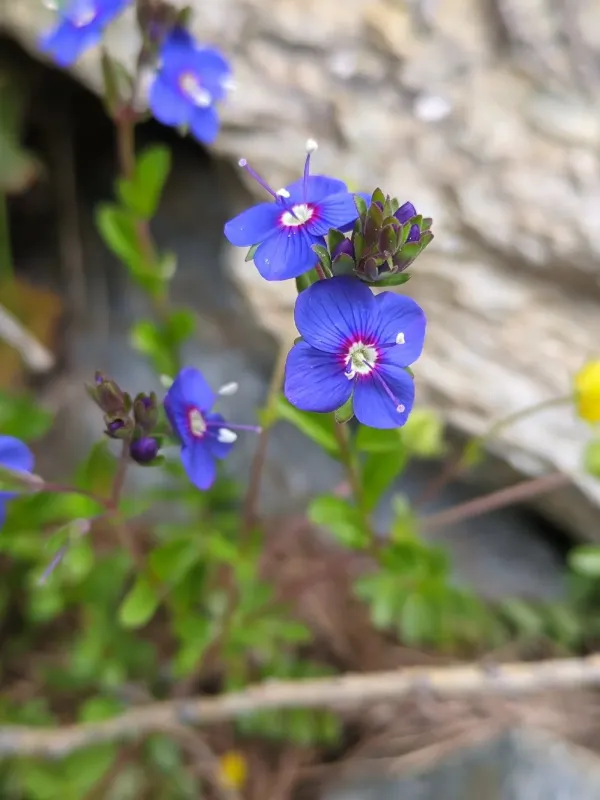
Rock speedwell (Veronica fruticans) is a hardy perennial belonging to the family Plantaginaceae. It originates from the rocky mountain regions of Europe, where it thrives in alpine tundra environments with thin, nutrient-poor soils.
The plant is defined by its low-growing, mat-forming habit, usually reaching only a few inches in height. It features small, elliptical leaves and vibrant blue or violet flowers that bloom in clusters during the late spring and early summer months.
Successful growth requires excellent soil drainage, mimicking its natural habitat. It prefers gritty, well-draining substrates and does not tolerate waterlogged conditions, which can lead to rapid root decay in most garden settings.
This species is a quintessential plant for rock gardens, scree beds, or alpine containers. It demands high light exposure to maintain its compact, dense growth structure; insufficient sunlight typically results in weak, leggy stems.
In terms of climate, it is well-adapted to cooler temperatures and thrives in regions with clear seasonal transitions. It shows high frost resistance, though it appreciates protection from harsh winds during the peak winter months.
Main diseases and pests
The most significant threat to the rock speedwell is fungal infection, particularly those triggered by high humidity levels. Root rot is a common issue if the soil remains excessively damp for extended periods throughout the year.
Powdery mildew may affect the foliage, especially in stagnant air conditions. Improving airflow through proper plant spacing is the most effective preventative measure against such outbreaks in professional landscaping.
Pests like aphids can infest the flowering tips, weakening the plant. Gardeners should monitor for these insects regularly and apply targeted organic or chemical treatments if an infestation threshold is crossed.
Slugs and snails are notorious for causing physical damage to the leaves of this low-growing plant. Using physical barriers like sharp grit or crushed shells around the base of the plant can deter these pests effectively.
Preventative care also involves maintaining a tidy environment by removing dead foliage after the blooming season concludes. This practice reduces the organic matter that could harbor fungal spores or provide shelter for small pests.