
Hoary plantain
Plantago media L.
Description
Sowing dates
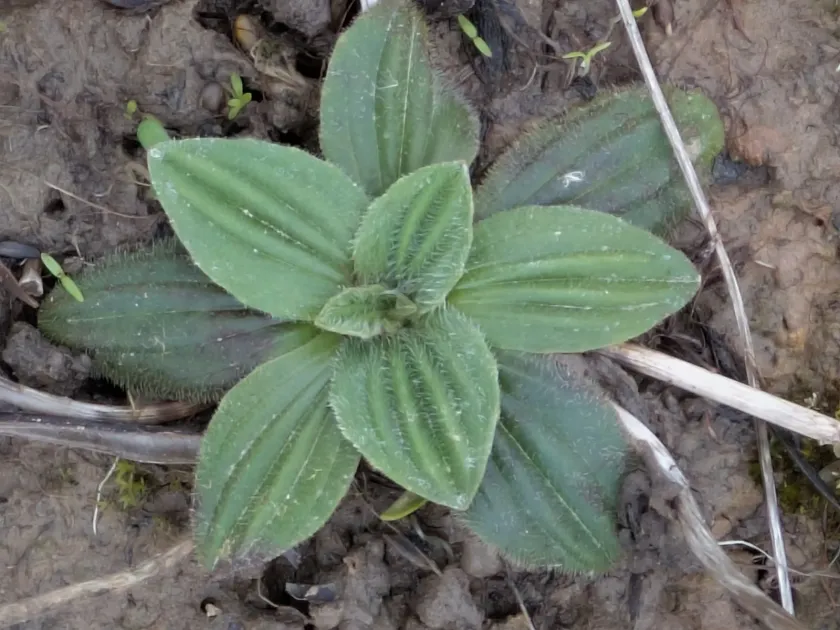
Hoary plantain (Plantago media L.) belongs to the Plantaginaceae family. It is a hardy perennial herbaceous plant widely recognized for its botanical stability and traditional medicinal applications.
Sowing is typically performed in late autumn or early spring. The seeds are small and require a firm, prepared seedbed to ensure proper germination and establishment during the initial growth phase.
Seeds should be sown at a shallow depth of approximately 0.5 to 1 centimeter. Proper soil-to-seed contact is crucial for the moisture absorption necessary for successful emergence of seedlings.
Row spacing of 45–60 centimeters is recommended in commercial production. This spacing allows for mechanical weeding and adequate aeration, which are essential for maintaining the health of the leaf rosettes.
Optimal plant density ensures that each individual rosette has sufficient space to mature, which maximizes both the quality and quantity of the harvested foliage.
Growing requirements
The crop thrives in soils rich in calcium and organic matter. While it is adaptable to various soil types, it performs best on well-drained, fertile loams that maintain consistent moisture levels.
Sunlight is a key factor for development; Hoary plantain is a light-demanding species that produces the highest concentration of active compounds when grown in full sun exposure.
The plant is highly frost-hardy and well-adapted to temperate climates, allowing for consistent growth patterns across various regions without the need for specialized overwintering protection.
Regarding soil acidity, the plant prefers neutral to slightly alkaline conditions. It is relatively intolerant of highly acidic soils, which can stunt its growth and reduce overall vigor.
Once established, the deep taproot provides significant drought tolerance, though supplemental irrigation during prolonged dry spells is beneficial for sustaining high biomass production.
Yield
Hoary plantain is primarily harvested for its leaves. Under optimal growing conditions, the crop can yield up to 2 tons of dried leaf material per hectare annually.
The peak harvesting period occurs during the flowering phase, as this is when the secondary metabolites, including iridoids and mucilages, reach their maximum concentration in the leaf tissue.
The cultivation cycle is perennial, and the plant can remain productive for several years on the same field, provided that nutrient levels are maintained through periodic fertilization.
Harvesting efficiency is improved by using specialized equipment that trims the leaves while leaving the central bud intact, ensuring the plant can regrow for subsequent cuts.
Quality control during post-harvest handling is critical. Leaves must be dried rapidly to prevent oxidation and to maintain the bright green color required by medicinal trade standards.
Main diseases and pests
Common diseases include powdery mildew and various leaf spot fungi, especially in humid or overcrowded conditions where air circulation is restricted around the leaf rosettes.
Pests such as root-feeding larvae and various beetles can impact the plant's health. Integrated pest management strategies, focusing on crop rotation and field sanitation, are effective deterrents.
Weed competition is the primary challenge during the first year of establishment. Mechanical weeding is the most common approach to managing competition without the use of chemical herbicides.
Maintaining proper field drainage is essential to prevent root rot, which is often a secondary symptom of waterlogged soil and poor agricultural management practices.
- Powdery mildew infections
- Leaf spot pathogens
- Damage from foliage-eating insects
Harvesting
The harvest is executed during the peak blooming stage. This timing is essential for ensuring the medicinal efficacy of the collected raw material.
Leaves are cut manually or with machinery at a height of 3–5 centimeters above the ground. This preserves the central growing point and supports the rapid recovery of the vegetative rosette.
Post-harvest, the raw material should be transported to a drying facility immediately to avoid heating in bulk piles, which can cause severe degradation of the active compounds.
Industrial drying techniques involve forced-air systems kept at low temperatures (below 50°C) to ensure the moisture content is reduced to levels suitable for long-term storage.
Final quality assessment involves checking the dried leaves for color, aroma, and the absence of contaminants or foreign material, ensuring the product meets industry standards.