
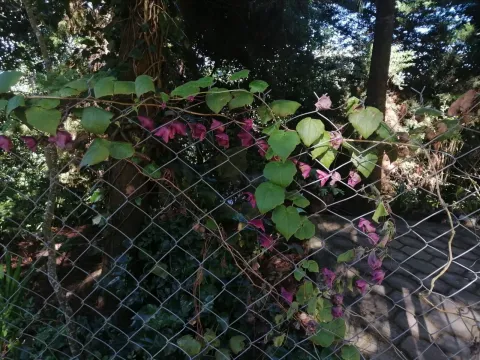
Rhodochiton
Rhodochiton
Rhodochiton atrosanguineus, commonly known as the purple bell vine, belongs to the Plantaginaceae family. While it is a perennial in its native tropical habitat, it is grown as an annual in cooler temperate climates.
What the section contains

Rhodochiton
Sowing should begin in late winter, specifically February or March, to ensure a strong root system before the warmer season. Seeds require light to germinate and should be surface-sown on fine, moist compost.
Maintain temperatures around +20…+22 °C during the germination period. Covering the seed tray with plastic or glass helps to maintain the necessary humidity levels, though daily ventilation is required to prevent fungal issues.
Seedlings are slow-growing initially, requiring careful attention during the transplanting phase. Once they have developed their first true leaves, they should be pricked out into individual pots to avoid root congestion.
Hardening off the plants before placing them into their permanent outdoor position is essential. They should only be moved outside once all risks of frost have passed and nighttime temperatures are consistently mild.
Rhodochiton thrives in fertile, well-draining soil with a neutral pH. The soil structure must be loose enough to facilitate root penetration while retaining adequate moisture for active growth.
The plant requires a location with full sunlight to semi-shade. In climates with intense heat, providing partial afternoon shade will help prevent the foliage from scorching and reduce water stress.
Agronomic management involves regular watering, ensuring the soil remains moist but never waterlogged. Fertilization with a balanced NPK fertilizer every two weeks promotes vigorous vine elongation and continuous blooming.
Providing a sturdy support system, such as a trellis or netting, is critical. The vine's climbing habit necessitates vertical guidance to showcase its unique pendant flowers effectively.
Proper aeration is key to maintaining plant health. If grown in pots, containers should be large enough to support the root mass, ensuring the plant doesn't become root-bound during the height of the season.
The most common pests affecting Rhodochiton are spider mites, which thrive in low-humidity environments, and whiteflies, which often colonize the undersides of the leaves.
Overwatering, especially when combined with poor drainage, frequently leads to root rot, which is a significant threat to this culture. Ensuring the substrate is well-aerated is the best form of prevention.
Integrated pest management strategies should be employed, utilizing biological controls or systemic insecticides if infestations occur, while maintaining high cultural hygiene standards.
Monitoring the plant for signs of stress, such as leaf yellowing or stunted growth, allows for early intervention before pests cause irreversible damage to the vine's structure.
- Maintain high air circulation.
- Use sterile potting medium.
- Monitor for spider mite webs.
- Keep the root zone well-drained.