
Red-seeded plantain
Plantago rhodosperma
Description
Sowing dates
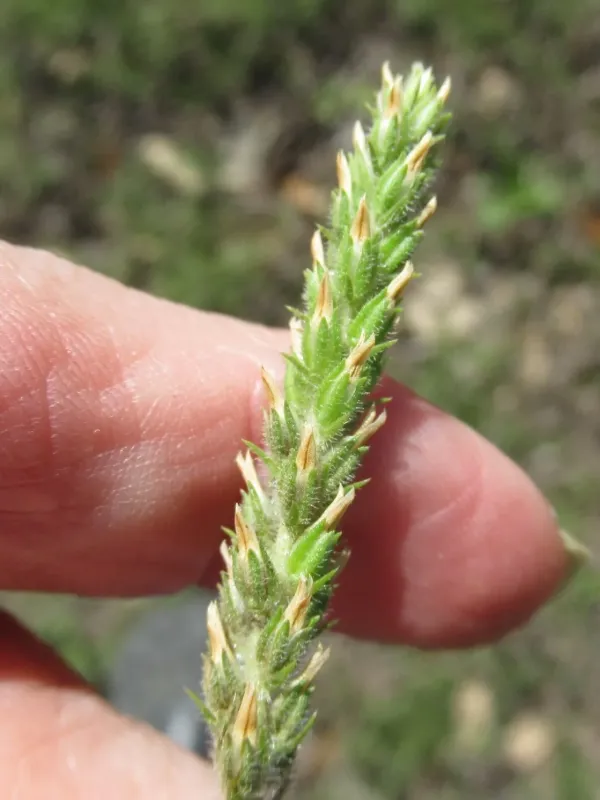
Red-seeded plantain (Plantago rhodosperma) is an annual herb belonging to the Plantaginaceae family. It is specifically adapted to open, dry environments, which makes it a unique candidate for cultivation in specific temperate and semi-arid regions.
Sowing should take place in early spring once the ground temperatures have stabilized around 10–12 degrees Celsius. The seeds require light for germination, which dictates a shallow sowing depth of no more than 1–2 centimeters.
For field production, a row spacing of 30 to 45 centimeters is recommended to facilitate mechanical weeding and ensure optimal nutrient access for each individual plant within the row.
Given the small size of the seeds, light rolling after sowing is crucial to ensure good seed-to-soil contact, which significantly improves the germination rate in dry or wind-exposed fields.
As an annual crop, the growth cycle is relatively fast. Proper timing of the initial sowing is essential to ensure that the plants reach full maturity before the arrival of intense summer heat, which can trigger premature bolting.
Growing requirements
This crop thrives in well-drained, sandy, or loamy soil types. It is highly tolerant of poor soil fertility, making it a viable option for land restoration projects in areas with degraded soil structures.
Red-seeded plantain requires plenty of sunlight and performs poorly in shaded areas. Exposure to full sun is necessary for the development of healthy, dense leaf rosettes and the subsequent production of high-quality seeds.
While the plant is drought-tolerant, it responds well to supplemental irrigation during the initial vegetative growth phase. However, excessive moisture must be avoided to prevent root diseases.
The ideal soil pH for this species ranges from slightly acidic to neutral. Extreme soil alkalinity should be avoided, as it can hinder the uptake of essential micronutrients needed for seed development.
Crop rotation is recommended to maintain soil health. Planting red-seeded plantain after legumes or cereal crops can help maintain a balanced soil nutrient profile for optimal productivity.
Main diseases and pests
Root rot is the most common threat, usually triggered by poor drainage or excessive standing water in the field. Improving soil structure and avoiding over-irrigation are the primary prevention methods.
Aphids can be problematic during the bolting and flowering stages. They target the succulent flower spikes, potentially reducing seed yields if populations are not controlled early in the season.
Soil-dwelling larvae can damage the root systems of young seedlings. Integrated pest management strategies, such as using natural predators or crop rotation, are preferred over broad-spectrum chemical insecticides.
Powdery mildew may occur in humid, stagnant air conditions. Ensuring proper spacing between plants to facilitate airflow is the most effective cultural method to reduce the risk of fungal outbreaks.
Weeds are the most significant challenge in the first few weeks of growth. Because the plant establishes slowly initially, rigorous inter-row cultivation is necessary until the rosettes gain enough size to shade the ground.
Harvesting
Harvesting should be conducted when the seed heads turn a characteristic dark brown color. Timing is critical, as the seeds can shatter and fall to the ground if the harvest is delayed past the peak maturity stage.
After cutting, the plant material must be dried in a well-ventilated area. Drying at temperatures exceeding 40 degrees Celsius should be avoided to prevent potential degradation of the seed's viability.
Threshing is performed using mechanical equipment adapted for small seeds. After threshing, winnowing or sieving is required to remove chaff and dirt, ensuring the final product meets market purity standards.
The leaves and stems can be harvested separately for herbal or pharmaceutical use before the plant shifts its energy entirely toward seed production during the late flowering stage.
Stored seeds should be kept in a cool, dry place within breathable containers to maintain their germination potential over long-term storage periods, which can extend up to several years under optimal conditions.