
Plantago salsa
Plantago salsa
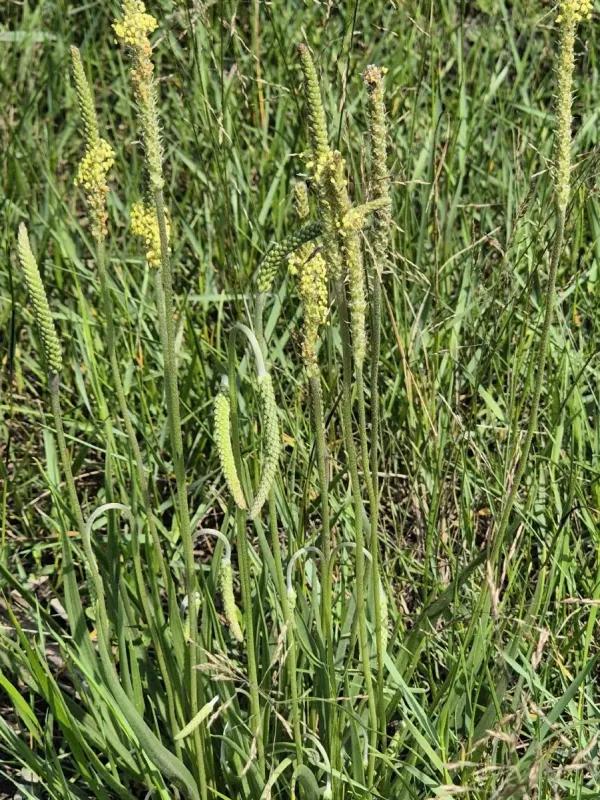
Description
Sowing dates
Sowing Plantago salsa requires a specialized approach due to its biology as a halophyte. The optimal sowing window is early spring, immediately after the soil temperature reaches 5–8 degrees Celsius.
Seeds need precise placement at a shallow depth of 1–2 centimeters, ensuring good capillary contact with the soil. Field-scale sowing can be achieved using standard grain drills adjusted for fine-seed calibration.
To improve germination uniformity, pre-soaking seeds in a mild saline solution can mimic natural environmental triggers. Field rollers should be used immediately after sowing to ensure proper seed-to-soil contact for better water absorption.
The seeding rate is typically set at 8–10 kg per hectare to achieve a dense stand that effectively competes with weeds. Proper spacing is crucial during the initial growth phases to allow for optimal root development.
Maintaining soil moisture during the first two weeks is vital for successful establishment. Once the plants have established, they show high tolerance to fluctuating moisture and the high salinity levels inherent in their native habitats.
Growing requirements
Plantago salsa is a member of the Plantaginaceae family, specifically adapted to thrive in saline conditions. It is frequently found in salt marshes, coastal meadows, and floodplains where high salt concentrations exclude less resilient crops.
This crop prefers loose, well-draining soils that prevent surface crusting, which can impede root respiration. Despite its salt tolerance, the physical structure of the soil remains an important factor for achieving high yields.
Climatically, Plantago salsa is highly resilient to temperature extremes and intense UV radiation. It is well-suited for environments where seasonal flooding is followed by periods of high evaporation and drought stress.
Soil pH levels can range from neutral to alkaline, as the plant possesses internal mechanisms to regulate osmotic balance using the salts present in the environment. It is a highly efficient model for utilizing marginal saline lands.
Agronomic management should include periodic inter-row cultivation to enhance oxygen exchange in the root zone. This practice promotes faster growth and ensures that the plant remains vigorous even in highly mineralized conditions.
Yield
Yield capacity of Plantago salsa depends significantly on soil texture and the degree of salinity. Under managed field conditions, it can produce up to 1.5–2.0 tons of dry biomass per hectare.
The primary use of the plant is as a supplementary forage component. Its unique mineral composition and protein content make it a valuable addition to livestock diets, particularly in arid regions with limited fresh fodder options.
For maximum forage quality, the crop should be harvested before the flowering stage. During the vegetative phase, the nutrient profile is optimized, and stems are tender, ensuring better digestibility for animals.
Moderate nitrogen application can boost biomass production, provided that it does not disrupt the plant's natural osmotic regulation. Trials show that managed inputs significantly increase total productivity on low-yield saline plots.
Seed production remains consistently high, averaging 300–500 kg per hectare. The seeds have excellent storage stability, provided they are kept in cool, dry conditions with adequate ventilation.
Main diseases and pests
Plantago salsa exhibits natural resistance to most common crop pathogens, largely due to the salt accumulation in its tissues, which creates an inhospitable environment for many fungal spores and bacterial colonies.
In cases of poor drainage and prolonged humidity, potential risks include powdery mildew. Prevention focuses on maintaining proper plant density and ensuring airflow through the field to reduce the risk of infection.
Pest pressure is generally low for this species. Insect populations that might target typical crops rarely pose an economic threat to Plantago salsa, thanks to its specific phytochemical profile and salt-adapted metabolism.
Root-knot nematodes can occasionally pose a threat in intensive monoculture systems. Implementing a diversified crop rotation plan is the most effective way to mitigate this risk and maintain soil health.
Overall, the crop requires very little chemical intervention, making it a sustainable candidate for low-input agricultural systems. Regular field scouting is sufficient for identifying and managing any localized issues.
Harvesting
Biomass harvesting is performed using conventional forage harvesters. It is critical to time the harvest before the transition to the reproductive stage to ensure the nutritional value of the silage or hay is preserved.
Seed harvest is conducted when the seed pods have turned brown and reached physiological maturity. Harvesting in dry weather is essential to minimize harvest losses and ensure high grain quality.
Post-harvest processing involves drying seeds to a moisture level below 12%. This ensures long-term viability and prevents fungal growth during storage in silos or climate-controlled warehouses.
For forage, the harvested mass should be dehydrated efficiently to stabilize nutrients. Properly dried material can be baled and stored, providing a reliable feed source during winter or drought months.
Post-harvest residue management typically involves light disking. The incorporation of these residues back into the soil helps maintain soil organic matter, slowly improving the condition of saline lands for future seasons.