
Ribwort plantain
Plantago lanceolata L.
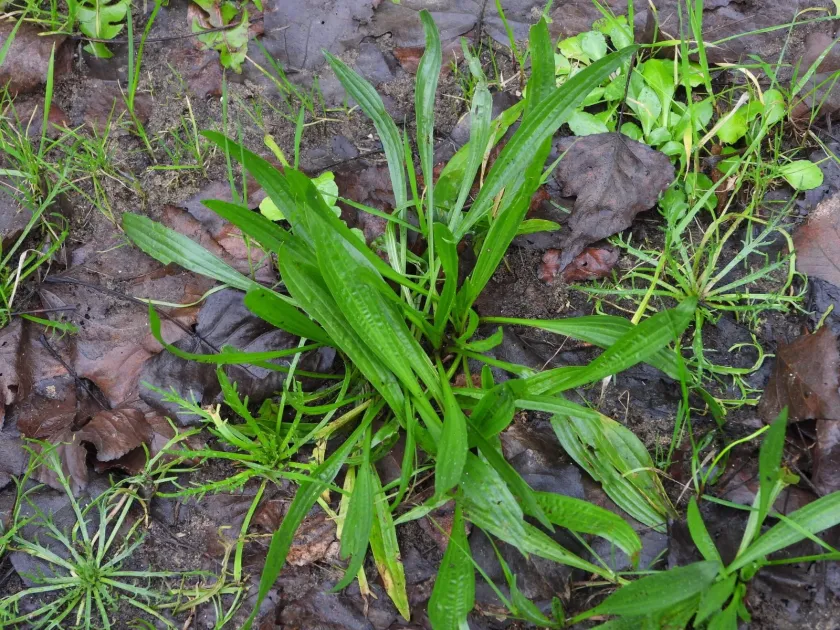
Description
Sowing dates
Sowing of ribwort plantain is preferably carried out in early spring as soon as the soil warms up to 8–10 degrees Celsius. In some regions, autumn sowing is also practiced, allowing seeds to undergo natural stratification during the winter.
The optimal sowing depth is between 0.5 and 1 cm, as the seeds are very small. Deeper sowing significantly reduces germination rates, which requires careful seedbed preparation to ensure success.
In industrial cultivation, row spacing of 45–60 cm is recommended to allow for mechanical weeding and maintenance. On weed-prone fields, spacing may be increased to facilitate inter-row cultivation.
The seeding rate for ribwort plantain is approximately 2–4 kg per hectare. It is crucial to ensure even distribution of seeds across the field using specialized drills designed for small seeds.
To improve field emergence, light soil rolling after sowing is recommended. This provides better contact between the seeds and the moist soil layer, promoting uniform and faster sprout appearance.
Growing requirements
Ribwort plantain is a perennial herb of the Plantaginaceae family, known for its high adaptability. It can grow on various soil types, but it performs best on fertile, well-drained loamy soils.
The crop has moderate water requirements. While it thrives in sufficiently moist conditions, it exhibits high tolerance to short-term dry periods due to its well-developed root system.
As a light-loving plant, ribwort plantain requires open and well-lit areas to maximize green mass production. Shaded environments can lead to a decrease in the concentration of active medicinal compounds in the leaves.
Normal growth requires a neutral or slightly acidic soil pH. On excessively acidic soils, preliminary liming is necessary to optimize the chemical balance and promote healthy plant development.
Ribwort plantain responds well to organic and mineral fertilizers, particularly nitrogen and phosphorus. Applying fertilizer during the active growth phase significantly boosts the total yield of raw material.
Yield
The yield of ribwort plantain depends directly on the intensity of the agronomic practices and soil fertility. On average, two to three cuts of green mass can be harvested per season.
The average yield of dried leaves in a well-managed plantation is about 10–15 centners per hectare. This figure varies significantly depending on the age of the crop and the specific weather conditions of the year.
Peak productivity is generally observed during the second and third years of life. From the fourth year onwards, plantations often require renewal or re-seeding due to a natural decline in yield potential.
Utilizing modern selected varieties allows for higher-quality production with more uniform leaf size and higher concentration of active components like aucubin glycosides.
When grown for animal feed, the green mass yield can reach 150–200 centners per hectare. Timely mowing is essential to prevent the stems from becoming too coarse and fibrous.
Main diseases and pests
The main pests of the crop include various species of weevils and leaf beetles that feed on young foliage. Integrated pest management using biological or chemical insecticides is used to control these populations.
Powdery mildew is the most dangerous disease, occurring in conditions of high humidity and overcrowded plantations. It manifests as a white coating on the leaves, reducing their market value and medicinal quality.
Root rot can affect plants in heavy, waterlogged soils. To prevent infestation, it is important to follow crop rotation practices and avoid water stagnation in the field.
Leaf spot diseases also threaten the quality of the raw material, especially during rainy summers. If early symptoms appear, it is recommended to reduce irrigation and apply preventative fungicide treatments.
- Pest damage (weevils, cutworms).
- Fungal diseases (powdery mildew, downy mildew).
- Weed competition during the first year of establishment.
Harvesting
The harvest begins during the flowering stage, when the concentration of biologically active substances in the plant is at its highest. Leaves must be bright green, free of damage and signs of disease.
Harvesting is performed by cutting the leaves along with their stalks, approximately 3–5 cm above the soil surface. It is essential to prevent foreign debris, such as roots or other plant species, from entering the harvested mass.
The harvested raw material must be transported to the drying facility immediately. Delay in processing leads to self-heating of the mass and spoilage, which is unacceptable for pharmaceutical manufacturing.
Drying is performed in specialized industrial dryers at temperatures not exceeding 40–50 degrees Celsius. Overheating causes the destruction of beneficial components and turns the leaves brown.
Stored dried plantain should be kept in dry, well-ventilated rooms in paper bags or other protective containers that prevent moisture and light exposure. Properly stored material remains active for up to two years.