
Plantago squarrosa
Plantago squarrosa
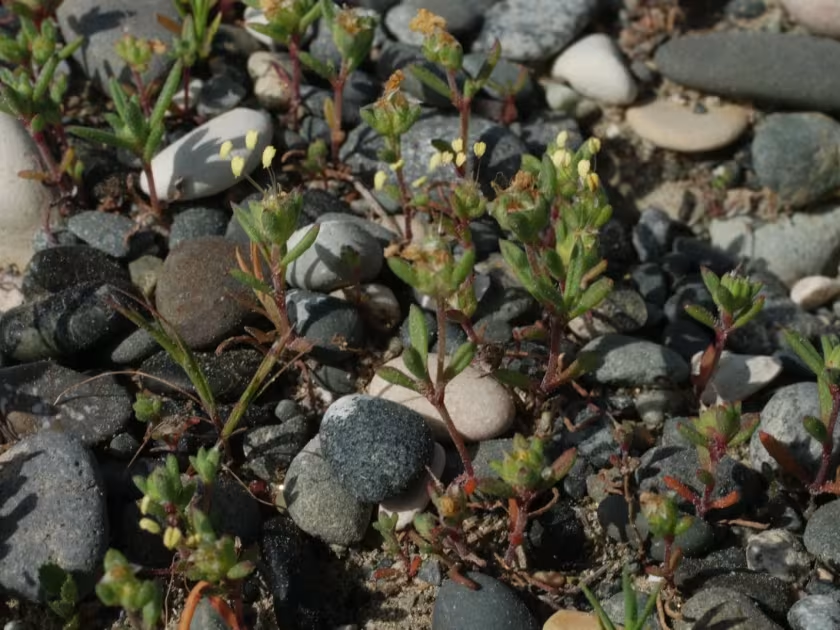
Description
Sowing dates
Plantago squarrosa is an annual herbaceous plant belonging to the Plantaginaceae family, often found in arid and semi-arid Mediterranean-type environments.
Sowing should be performed in early spring when the soil temperature consistently remains above 10 degrees Celsius to ensure uniform germination across the field.
The seeds are small and should be sown at a shallow depth of approximately 0.5 cm, preferably using precision drills to maintain consistent spacing between rows.
Seedbed preparation is critical; the soil should be finely pulverized and compacted post-sowing to maintain moisture levels necessary for the initial growth stages.
Early maintenance involves monitoring germination rates, as the species can be sensitive to crusting on the surface of the soil if heavy rains follow the planting date.
Growing requirements
The crop thrives in full sun exposure and requires high light intensity to maximize the synthesis of secondary metabolites within the plant tissues.
Sandy loam or well-drained loamy soils are ideal for this species, as it is highly intolerant of waterlogged conditions that can cause rapid root decay.
Climate-wise, it prefers moderate temperatures and is well-adapted to surviving brief periods of water deficit through its efficient water-use strategy.
Nutrient requirements are modest; however, a balanced supply of potassium helps strengthen the cell walls and improves overall plant resilience against abiotic stress.
The pH levels should ideally range between 6.5 and 7.5 to ensure the optimal availability of nutrients required for healthy vegetative growth.
Main diseases and pests
Aphids and various mite species are the most common pests that can infest the foliage, potentially reducing the overall quality of the harvest if left unmanaged.
Fungal pathogens such as Fusarium or Rhizoctonia may occur in overly humid conditions, leading to root rot and significant stand loss during the growing season.
Integrated pest management (IPM) practices, including crop rotation and the use of resistant varieties, are highly recommended to prevent disease buildup.
Proper weed management during the first few weeks is crucial, as the young seedlings of Plantago squarrosa are poor competitors against invasive weeds.
Monitoring the fields for early signs of infection is vital, as fast identification and intervention can prevent the spread of diseases throughout the entire planting area.