
Rugel's plantain
Plantago rugelii Decne.
Description
Sowing dates
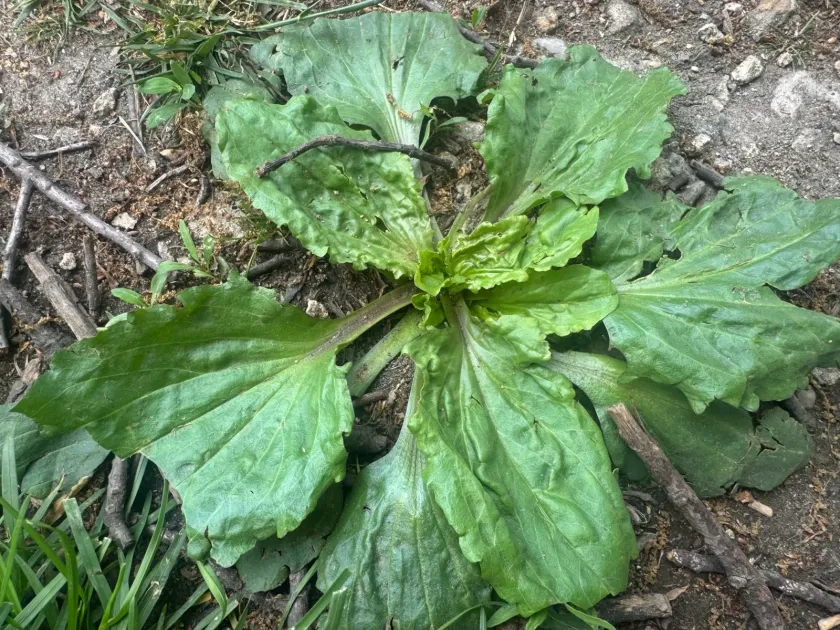
Rugel's plantain Plantago rugelii is a perennial herb belonging to the Plantaginaceae family. It is often identified by its broad leaves and prominent petioles that are often reddish at the base, distinguishing it from related species.
The growth cycle begins in early spring. Seeds germinate when soil temperatures reach 10–12 degrees Celsius, leading to the rapid formation of a basal rosette which is highly efficient in capturing sunlight in disturbed environments.
Seed production is prolific, with the plant capable of creating a significant soil seed bank. This adaptability allows Rugel's plantain to thrive in diverse environments ranging from lawns to agricultural fields.
Biological resilience is a key feature of this species. The plant possesses a deep taproot that allows it to access water during dry periods and survive in compacted soils where other species fail.
In terms of agricultural impact, the plant is often managed as a weed, although it has historical uses in herbal medicine due to its anti-inflammatory properties, similar to other plantain species.
Growing requirements
The plant prefers well-drained, moist, and nutrient-rich soils. It demonstrates remarkable tolerance to various soil types, including those with a pH ranging from 5.0 to 7.5, making it a highly adaptable inhabitant.
Temperature requirements for optimal growth are between 18 and 25 degrees Celsius. The species is highly hardy, capable of surviving harsh winters with cold temperatures and limited snow cover.
Sunlight exposure is crucial for the reproductive phase. While it can survive in partial shade, full sun promotes larger rosette formation and more abundant seed head production.
Moisture availability is essential for early development, although established plants show a moderate level of drought tolerance once the taproot is fully developed.
Soil management should focus on aeration and nutrient balance to ensure that the plantain does not outcompete desired crops, especially in high-density forage or lawn setups.
Main diseases and pests
Fungal pathogens such as powdery mildew represent the primary disease threat to Rugel's plantain, particularly when humidity levels remain high for extended periods during the growing season.
Pests typically include leaf-mining insects and various nematodes that impact root health. While these pests can stunt growth, the plant generally maintains its dominance in stable habitats.
Damage from herbivores is usually mitigated by the plant's ability to quickly regenerate leaves from the protected basal meristem.
For weed management in agricultural settings, herbicide application and regular mowing before the flowering stage are effective methods to prevent unwanted proliferation.
Maintaining a healthy, dense cover of primary crops is the most effective biological control method to prevent Rugel's plantain from establishing itself in new areas.