
Flea seed
Plantago afra L.
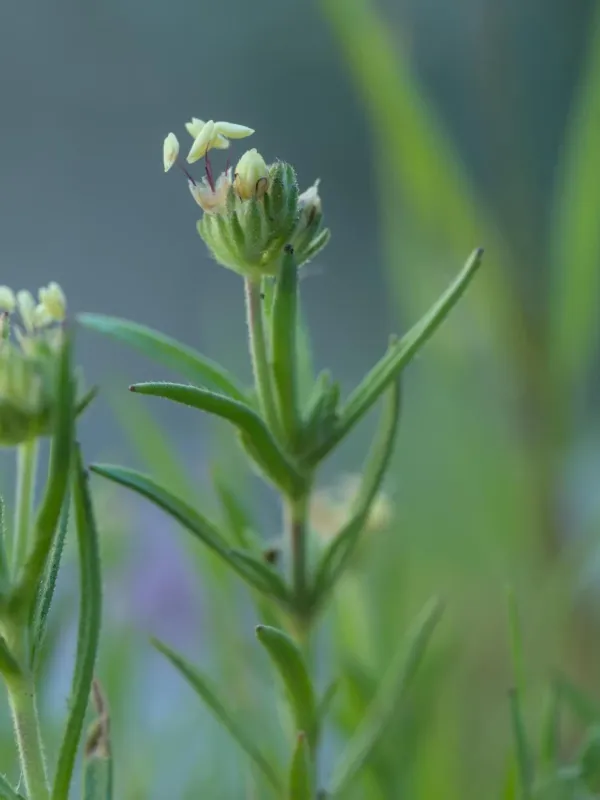
Description
Sowing dates
Flea seed (Plantago afra L.) is an annual herbaceous plant belonging to the Plantaginaceae family. The crop is highly demanding of heat and light, so sowing is performed in the spring when the soil warms up to 10–12°C.
For uniform germination, early spring is considered the optimal time, as soon as the risk of night frosts has passed. In regions with arid climates, sowing is performed using a wide-row method with row spacing of 45–60 cm to ensure sufficient space for plant development.
The sowing depth should not exceed 1–2 cm, as the seeds are small and require good contact with moist soil. If sown in dry soil, germination can be delayed or may fail completely.
The seeding rate is calculated based on the germination rate and purity of the planting material, usually around 4–6 kg per hectare. The use of precision seed drills allows for a significant reduction in seed consumption and avoids overcrowding of the crop.
After mass emergence, the first inter-row cultivation and thinning are performed, maintaining a distance of about 15–20 cm between plants in the row. This ensures normal growth and development of vegetative mass throughout the season.
Growing requirements
The crop prefers light, well-aerated sandy or loamy soils with a neutral pH. The plant does not tolerate waterlogging and heavy clay substrates, which cause the root system to rot.
Flea seed is a drought-tolerant plant adapted to Mediterranean-type climates. During active vegetation, moderate irrigation is only necessary in the initial stages; later, the crop is capable of surviving periods of moisture deficiency.
Light intensity is a critical factor: for normal seed ripening and the accumulation of biologically active substances, the plant needs an abundance of direct sunlight. Shading leads to a sharp decrease in yield and raw material quality.
Phosphorus-potassium fertilizers are recommended for this crop to promote stem strengthening and improve seed maturation. Excess nitrogen fertilizer is undesirable, as it causes excessive vegetative growth at the expense of reproductive organs.
The plant responds well to timely weed control, especially in the first half of the vegetation period. Since the plant grows relatively slowly, it loses the competition against aggressive weeds, requiring regular mechanical maintenance.
Yield
The economic use of flea seed is focused on obtaining seeds, which are a valuable source of dietary fiber (psyllium). Seed yield depends heavily on agronomic management and weather conditions during the flowering and ripening periods.
With strict adherence to agronomic requirements, the yield per hectare can range from 0.8 to 1.5 tons of seeds. High product output is ensured by timely pest control and the prevention of seed shattering in the field.
Harvest quality is determined by seed purity and the content of mucilaginous substances. After collection, seeds undergo mandatory cleaning from impurities and drying to a moisture content of no more than 12-13% to ensure stability during storage.
The seeds contain a high concentration of valuable polysaccharides, which are actively used in the pharmaceutical and food industries. Stability in raw material quality is a primary requirement for producers working for export or deep processing.
To increase production profitability, many farmers use modern seed processing methods, which allow for a significant increase in market value. Proper storage in ventilated facilities prevents product spoilage and mold growth.
Main diseases and pests
The main pests for this crop are various types of aphids and weevils, which can damage young leaves and flower stalks. Timely monitoring of crop conditions allows for prompt treatment with biological or chemical control agents.
Among diseases, fungal infections such as powdery mildew and various types of root rot are the most dangerous. These usually occur when crop rotation is violated and soil moisture is excessive, emphasizing the need for proper irrigation management.
Infectious wilting can be observed in years with prolonged rains and high temperatures. Pathogen development leads to partial yield loss, so prevention includes the use of healthy planting material and soil disinfection.
Wireworms and cutworms can damage the root system of young plants, reducing stand density. In integrated pest management, preference is given to methods that do not leave pesticide residues in the final medicinal raw material.
Prevention of phytosanitary problems includes mandatory adherence to spatial isolation from other plantain species and regular field rotation to prevent the accumulation of infection in the soil layer.
Harvesting
Flea seed harvesting is performed at the stage of full seed maturity, when they acquire a characteristic dark brown or almost black color. During this period, it is important to prevent mass seed shattering, so harvest timing is determined by daily field inspections.
The optimal harvesting method is direct combining if the plants ripen uniformly. In conditions of uneven ripening, the windrow method is used, where plants are mowed, dried in swaths, and then threshed.
Weather conditions at the time of harvest play a decisive role: dry, sunny days are preferred. Increased humidity during harvesting complicates threshing and leads to a decrease in seed quality due to potential mold development and darkening of the seed coat.
After threshing, the material requires immediate cleaning from leaves, stems, and other plant debris. This is achieved using separation systems that remove light impurities with an airflow.
The final stage of the harvest is seed drying in specialized drying complexes at a temperature not exceeding 40-45°C. Gentle drying preserves the biological properties of the seeds and ensures a long shelf life without loss of quality.