

Reference · Crops
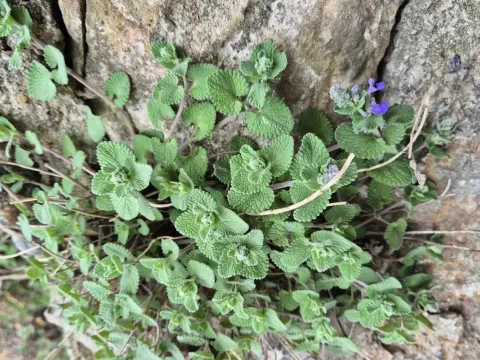
Catnip
Nepeta L.
Catnip is a perennial essential oil crop, and sowing is usually carried out either in early spring or before winter to facilitate better seed stratification. In temperate climate regions, the optimal time is the start of field operations when soil temperatures reach 8–10 degrees Celsius.
15
items
What the section contains
 Catmint
Nepeta racemosa Lam.
Catmint
Nepeta racemosa Lam.
 Catmint
Nepeta transcaucasica x Nepeta grandiflora
Catmint
Nepeta transcaucasica x Nepeta grandiflora
 Catnip
Nepeta cataria L.
Catnip
Nepeta cataria L.
 Faassen's catmint
Nepeta x faassenii Bergmans ex Stearn
Faassen's catmint
Nepeta x faassenii Bergmans ex Stearn
 Govan and tuberous catmint hybrid
Nepeta govaniana x Nepeta tuberosa
Govan and tuberous catmint hybrid
Nepeta govaniana x Nepeta tuberosa
 Govan's Catmint
Nepeta govaniana (Wall. ex Benth.) Benth.
Hybrid catnip
Nepeta kubanica Pojark. x N. sibirica L.
Govan's Catmint
Nepeta govaniana (Wall. ex Benth.) Benth.
Hybrid catnip
Nepeta kubanica Pojark. x N. sibirica L.
 Hybrid Kuban Catmint
Nepeta kubanica Pojark. x N. subsessilis Maxim.
Hybrid Kuban Catmint
Nepeta kubanica Pojark. x N. subsessilis Maxim.
 Kuban catnip
Nepeta kubanica Pojark.
Kuban catnip
Nepeta kubanica Pojark.
 Nepeta grandiflora
 M. Bieb.
Nepeta grandiflora
Nepeta grandiflora M. Bieb.
 Nepeta subsessilis
 Maxim.
Nepeta subsessilis
Nepeta subsessilis Maxim.
 Nepeta tenuifolia
 Benth.
Nepeta tenuifolia
Nepeta tenuifolia Benth.
 Siberian catmint
Nepeta sibirica L.
Transcaucasian catnip
Nepeta transcaucasica Grossh.
Siberian catmint
Nepeta sibirica L.
Transcaucasian catnip
Nepeta transcaucasica Grossh.
 Tuberous catmint
Nepeta tuberosa L.
Tuberous catmint
Nepeta tuberosa L.
Marketplace
Products in this section · 9


Catnip
The seeding depth should not exceed 1–2 centimeters, as seeds have low germination energy if buried too deeply. Farmers typically use a row seeding method with row spacings of about 45–60 centimeters to facilitate subsequent mechanical weeding and maintenance.
Seeding rates vary from 4 to 6 kilograms per hectare depending on the quality of the seed material. To ensure uniform emergence, it is recommended to roll the soil immediately after sowing to improve seed-to-soil contact.
Seedlings usually emerge within 14–20 days after sowing, developing slowly during the initial growth stage. During this period, it is critically important to manage weed pressure so that the young plants are not suppressed by invasive weeds.
Catnip can be productively cultivated in the same location for up to 5–6 years, after which the stand thins out and essential oil yield decreases. Therefore, it is advisable to incorporate the crop into rotations and plan for plantation renewal.
The crop has moderate soil requirements, preferring well-drained chernozem or sandy loam soils with a neutral pH. Waterlogged and heavy clay soils with poor drainage are detrimental to the root system and can lead to plant loss.
Catnip is a light-loving plant; when grown in shade, the essential oil content in the leaves and flowering spikes drops significantly. The best growing conditions are provided on open, sunlit plots that receive full exposure throughout the day.
The plant demonstrates high frost and drought tolerance, allowing it to be grown successfully in various climate zones. However, during the flowering period, the crop requires sufficient moisture to ensure intensive synthesis of aromatic compounds.
Fertilization is necessary to maintain high productivity, particularly in nutrient-poor soils. Preference is given to phosphorus-potassium fertilizers, which enhance the accumulation of biologically active substances within the green biomass.
Catnip belongs to the Lamiaceae family, which defines its specific biological traits. It is an herbaceous plant with upright stems and a distinctive lemon or mint-like scent, attributed to high levels of nepetalactone.
The yield of green biomass for catnip averages between 150 and 250 centners per hectare when following standard agricultural practices. Biomass production is most vigorous during the second and third years of the plant's life cycle.
Essential oil yield depends on the growth stage and seasonal weather conditions. The highest oil concentration is observed during mass flowering, making harvest timing a critical factor for financial profitability.
When propagating via seeds, seed yields can reach 5–8 centners per hectare. Seed viability is typically maintained for up to three years if stored properly in a cool, dry environment.
The economic efficiency of the crop is driven by multiple harvests from the same plantation without annual costs for soil preparation and sowing. After harvest, the plants recover quickly, allowing for a secondary harvest in southern regions.
Catnip is widely sought after in the food industry, medicine, and the production of natural flavorings. Stable demand for the raw material makes it a promising niche crop for commercial farms.
The main threats to plantations include fungal diseases such as powdery mildew, which occurs under high humidity and in overly dense plantings. The disease affects the foliage, causing premature leaf drop and loss of market quality.
Root rot can occur if soil drainage is compromised. Prevention involves strict crop rotation and avoiding planting on plots previously used for other members of the Lamiaceae family.
Regarding pests, flea beetles are the most dangerous, as they can damage young seedlings early in the season. Authorized insecticides or integrated pest management methods are employed to control insect populations.
Aphids can infest flowering spikes during hot, dry weather, sucking juices and reducing the quality of essential oil raw materials. If infestation is severe, timely treatment with biological or chemical agents is necessary.
Weeds are major competitors for catnip, especially in the first year of establishment. Regular inter-row cultivation and hand weeding are essential tasks to prevent cultural plants from being overwhelmed by weed pressure.
The harvest is conducted during the mass flowering phase, as this is when the concentration of essential oils in the aerial parts is at its peak. At this time, the flowers are most saturated with nepetalactone.
Green biomass is cut at a height of 10–12 centimeters from the soil surface using specialized mowers. It is crucial to prevent soil and foreign debris from entering the raw material to maintain product purity.
Immediately after cutting, the raw material is sent for primary processing or drying. If the goal is essential oil extraction, the material is distilled in its fresh state, as valuable components begin to lose potency shortly after harvest.
For medicinal use, the herbs are dried in the shade under canopies or in well-ventilated dryers at temperatures not exceeding 40 degrees Celsius. Overheating leads to the loss of aromatic compounds and degrades overall quality.
Cleaning and sorting complete the harvest cycle. Properly dried catnip retains its characteristic aroma for a long period, allowing for successful marketing as high-quality medicinal or aromatic raw material.