
Faassen's catmint
Nepeta x faassenii Bergmans ex Stearn
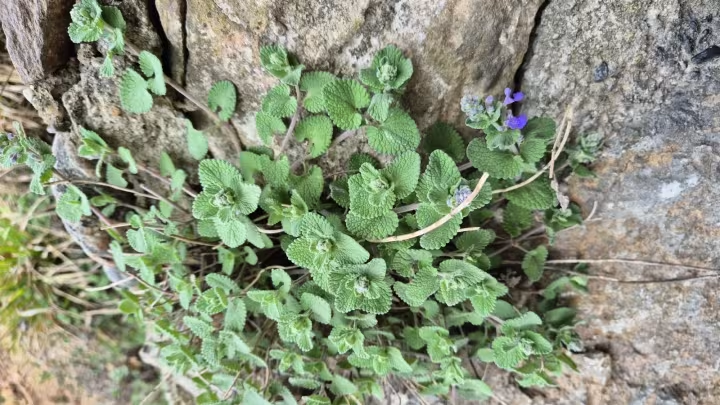
Description
Sowing dates
Nepeta x faassenii is a sterile hybrid and does not produce viable seeds, which means propagation must be performed exclusively through vegetative methods.
The most effective way to multiply the plant is by dividing mature clumps, which should be performed in early spring or autumn to ensure successful establishment.
Cuttings can also be taken from non-flowering shoots in early summer and rooted in a lightweight, well-draining potting medium for rapid development.
Plants should be spaced approximately 30 to 40 centimeters apart to allow for proper airflow, which prevents the center of the plant from becoming woody or rotting.
Regular rejuvenation every few years is recommended to keep the plants vigorous and to maintain their aesthetic appeal throughout the growing season.
Growing requirements
Faassen's catmint belongs to the Lamiaceae family and is highly valued for its exceptional ability to withstand heat and periods of prolonged drought.
The plant thrives in full sun exposure but is adaptable enough to tolerate partial shade, provided it still receives sufficient light for optimal blooming.
It prefers well-drained, sandy, or loamy soil types and is generally intolerant of heavy, waterlogged soils that remain saturated during the winter months.
While catmint is relatively undemanding regarding fertility, it performs best in soils with a neutral pH, avoiding excessive nitrogen fertilization that causes flopping.
This species is hardy across many climate zones, requiring little to no winter protection once the root system has been established in the garden soil.
Main diseases and pests
One of the significant advantages of growing Faassen's catmint is its natural resistance to most insect pests, thanks to the aromatic essential oils in its foliage.
The most common issues encountered by gardeners are fungal diseases, such as powdery mildew, which can occur during periods of high humidity and heat.
Root rot is a potential risk if the soil does not provide adequate drainage, especially during wet seasons or in areas with heavy clay ground composition.
Cultural practices such as thinning out dense growth and ensuring appropriate watering techniques are the best preventative measures against common pathogens.
If disease symptoms appear, it is recommended to prune the affected parts of the plant immediately to limit the spread and maintain overall plant health.
Harvesting
Faassen's catmint is primarily utilized in horticulture as a robust and long-blooming perennial that serves as an excellent filler in perennial borders.
Gardeners often prune the stems back by half after the first wave of blossoms to encourage a fresh flush of foliage and a second display of flowers.
As a nectar-rich plant, it is highly attractive to bees, butterflies, and other essential pollinators, making it a valuable addition to any ecological garden.
Its sprawling growth habit makes it an ideal groundcover for suppressing weeds and preventing soil erosion on slopes or along garden pathways.
The aromatic leaves and dried flower spikes can be used in floral arrangements, as they retain their pleasant fragrance and color even after being dried.