
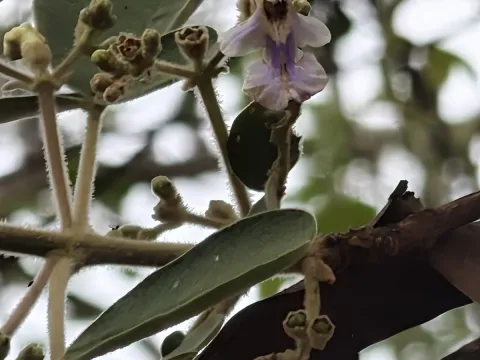
Chaste tree
Vitex
The chaste tree, scientifically known as Vitex agnus-castus, is a deciduous shrub belonging to the Lamiaceae family. It is widely recognized for its aromatic foliage and purple flower spikes that appear during the mid-to-late summer months.
What the section contains
 Chaste tree
Vitex agnus-castus L.
Chaste tree
Vitex agnus-castus L.
 Chinese chaste tree
Vitex negundo L.
Chinese chaste tree
Vitex negundo L. var. cannabifolia (Siebold & Zucc.) Hand.-Mazz.
Chinese chaste tree
Vitex negundo L.
Chinese chaste tree
Vitex negundo L. var. cannabifolia (Siebold & Zucc.) Hand.-Mazz.
 Hybrids of Vitex agnus-castus and Vitex trifolia
hybrids between Vitex agnus-castus L. and Vitex trifolia L.
Hybrids of Vitex agnus-castus and Vitex trifolia
hybrids between Vitex agnus-castus L. and Vitex trifolia L.
 Vitex pseudonegundo
 (Hausskn.) Hand.-Mazz.
Vitex pseudonegundo
Vitex pseudonegundo (Hausskn.) Hand.-Mazz.
 Vitex trifolia
 L.
Vitex trifolia
Vitex trifolia L.
Chaste tree
Native to the Mediterranean region and parts of Central Asia, this plant thrives in warm, temperate climates. It is adapted to coastal conditions, where it benefits from sandy soils and full sunlight exposure, which is critical for its optimal growth.
Cultivation requires well-drained soil with a neutral to slightly alkaline pH level. While the plant is notably drought-tolerant once established, supplemental irrigation is recommended during the first year of planting to ensure deep root development.
Agricultural management primarily focuses on annual pruning, which is essential to maintain the desired shape and stimulate the production of new growth. Proper pruning helps in maximizing the yield of berries, which are harvested for herbal and pharmacological use.
Beyond its medicinal value, the plant serves as a significant nectar source for pollinators, supporting local biodiversity. It is often cultivated in large plantations where systematic harvesting techniques are applied for seed and leaf collection.
The chaste tree is generally hardy, but it is susceptible to root rot if planted in poorly drained soil. Maintaining an appropriate moisture balance is the most effective way to prevent fungal infections that affect the root structure.
Pests such as spider mites and aphids may occur during hot, dry weather conditions. These pests can be managed through natural biological controls or targeted applications of insecticidal soap, ensuring the medicinal purity of the harvested material.
Fungal leaf spot diseases can develop if the planting density is too high, preventing adequate airflow between the branches. Ensuring proper spacing during the initial planting phase is a standard practice to mitigate these risks.
Winter hardiness is a major concern in regions with prolonged freezing temperatures. Growers often implement protective mulching or choose sheltered planting sites to protect the crown of the plant from extreme frost damage.
Nutrient deficiencies, specifically in nitrogen or iron, can cause chlorosis, leading to yellowing of leaves. Regular soil testing and the application of balanced organic fertilizers help in maintaining the overall health and productivity of the crop.