
Reference · Crops
Cabbage
Brassica L.
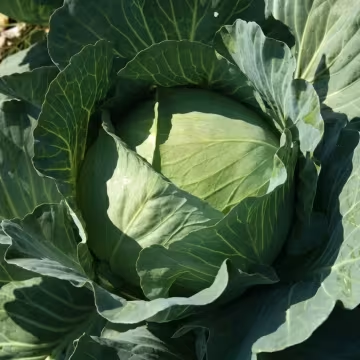
Cabbage (Brassica oleracea) belongs to the Brassicaceae family. In temperate climates, seedlings are started 45–60 days before the final transplanting into the field.
49
items
What the section contains
 Winter rapeseed
Brassica napus L.
2 062 products
Winter rapeseed
Brassica napus L.
2 062 products
 Wild cabbage
Brassica oleracea L.
839 products
Wild cabbage
Brassica oleracea L.
839 products
 Turnip
Brassica rapa L.
42 products
Turnip
Brassica rapa L.
42 products
 Rutabaga
Brassica napus L. var. napobrassica (L.) Rchb.
12 products
Rutabaga
Brassica napus L. var. napobrassica (L.) Rchb.
12 products
 Black mustard
Brassica nigra (L.) W. D. J. Koch
5 products
Black mustard
Brassica nigra (L.) W. D. J. Koch
5 products
 Cauliflower
Brassica oleracea L. (Cauliflower Group)
1 product
Brassica harmsiana
Brassica x harmsiana O. E. Schulz
Brussels sprouts
Brassica oleracea L. (Brussels Sprouts Group)
Chinese kale
Brassica oleracea L. (Chinese Kale or Kailaan Group)
Cauliflower
Brassica oleracea L. (Cauliflower Group)
1 product
Brassica harmsiana
Brassica x harmsiana O. E. Schulz
Brussels sprouts
Brassica oleracea L. (Brussels Sprouts Group)
Chinese kale
Brassica oleracea L. (Chinese Kale or Kailaan Group)
 Collard greens
Brassica oleracea L. (Collard Group)
Collard greens
Brassica oleracea L. (Collard Group)
 Ethiopian mustard
Brassica carinata A. Braun
Fodder turnip
Brassica napus var. napus
Hybrid of Chinese cabbage and turnip
hybrids between Brassica rapa L. Emend. Metzg. ssp. pekinensis (Lour.) Hanelt and Brassica rapa L. var. rapa (L.) Thell.
Ethiopian mustard
Brassica carinata A. Braun
Fodder turnip
Brassica napus var. napus
Hybrid of Chinese cabbage and turnip
hybrids between Brassica rapa L. Emend. Metzg. ssp. pekinensis (Lour.) Hanelt and Brassica rapa L. var. rapa (L.) Thell.
 Hybrid of napa and bok choy
hybrids between Brassica rapa L. Emend. Metzg. ssp. pekinensis (Lour.) Hanelt and Brassica rapa L. Emend. Metzg. ssp. chinensis (L.) Hanelt
Hybrid of napa and bok choy
hybrids between Brassica rapa L. Emend. Metzg. ssp. pekinensis (Lour.) Hanelt and Brassica rapa L. Emend. Metzg. ssp. chinensis (L.) Hanelt
 Indian mustard
Brassica juncea (L.) Czern.
Kale
Brassica oleracea L. (Kale Group)
Indian mustard
Brassica juncea (L.) Czern.
Kale
Brassica oleracea L. (Kale Group)
 Kale
Brassica oleracea L. (Thousand Head Kale Group)
Kale
Brassica oleracea L. (Curly kale Group)
Kale
Brassica oleracea L. convar. botrytis (L.) Alef.
Kale
Brassica oleracea L. (Broccoli Group)
Kale
Brassica oleracea L. convar. botrytis (L.) Alef. var. cymosa Duch. x Brassica oleracea L. var. sabellica L.
Kale
Brassica oleracea L. (Cabbage Group)
Kale
Brassica oleracea L. (White Cabbage Group)
Kale
Brassica oleracea L. var. capitata L. x Brassica oleracea L. var. sabellica L.
Kale
Brassica oleracea L. var. gemmifera DC. x Brassica oleracea L. convar. acephala (DC.) Alef.
Kale
Brassica oleracea L. var. gemmifera x Brassica oleracea convar. acephala var. sabellica
Kale
Brassica oleracea L. (Palm Kale Group)
Kohlrabi
Brassica oleracea L. (Kohlrabi Group)
Kale
Brassica oleracea L. (Thousand Head Kale Group)
Kale
Brassica oleracea L. (Curly kale Group)
Kale
Brassica oleracea L. convar. botrytis (L.) Alef.
Kale
Brassica oleracea L. (Broccoli Group)
Kale
Brassica oleracea L. convar. botrytis (L.) Alef. var. cymosa Duch. x Brassica oleracea L. var. sabellica L.
Kale
Brassica oleracea L. (Cabbage Group)
Kale
Brassica oleracea L. (White Cabbage Group)
Kale
Brassica oleracea L. var. capitata L. x Brassica oleracea L. var. sabellica L.
Kale
Brassica oleracea L. var. gemmifera DC. x Brassica oleracea L. convar. acephala (DC.) Alef.
Kale
Brassica oleracea L. var. gemmifera x Brassica oleracea convar. acephala var. sabellica
Kale
Brassica oleracea L. (Palm Kale Group)
Kohlrabi
Brassica oleracea L. (Kohlrabi Group)
 Leaf kale
hybrids between Brassica oleracea L. convar. capitata (L.) Alef. and Brassica oleracea L. convar. acephala (DC.) Alef. var. viridis L.
Marrowstem Kale
Brassica oleracea L. (Marrowstem Kale Group)
Leaf kale
hybrids between Brassica oleracea L. convar. capitata (L.) Alef. and Brassica oleracea L. convar. acephala (DC.) Alef. var. viridis L.
Marrowstem Kale
Brassica oleracea L. (Marrowstem Kale Group)
 Mizuna and turnip hybrid
hybrids between Brassica rapa L. subsp. nipposinica (L. H. Bailey) Hanelt and Brassica rapa L. subsp. Rapa
Mizuna and turnip hybrid
hybrids between Brassica rapa L. subsp. nipposinica (L. H. Bailey) Hanelt and Brassica rapa L. subsp. Rapa
 Mizuna-Tatsoi hybrid
hybrids between Brassica rapa L. subsp. nipposinica (L. H. Bailey) Hanelt and Brassica rapa L. subsp. narinosa (L. H. Bailey) Hanelt
Napa cabbage
Brassica rapa L. subsp. campestris (L.) A. R. Clapham
Napa cabbage
Brassica rapa L. subsp. chinensis (L.) Hanelt
Napa cabbage
Brassica rapa L. subsp. narinosa (L. H. Bailey) Hanelt
Mizuna-Tatsoi hybrid
hybrids between Brassica rapa L. subsp. nipposinica (L. H. Bailey) Hanelt and Brassica rapa L. subsp. narinosa (L. H. Bailey) Hanelt
Napa cabbage
Brassica rapa L. subsp. campestris (L.) A. R. Clapham
Napa cabbage
Brassica rapa L. subsp. chinensis (L.) Hanelt
Napa cabbage
Brassica rapa L. subsp. narinosa (L. H. Bailey) Hanelt
 Napa cabbage
Brassica rapa L. subsp. nipposinica (L. H. Bailey) Hanelt
Napa cabbage
Brassica rapa L. subsp. pekinensis (Lour.) Hanelt
Napa cabbage
Brassica rapa L. var. perviridis L. H. Bailey
Napa cabbage
Brassica rapa L. var. rapa (L.) Thell.
Napa cabbage
Brassica rapa L. subsp. nipposinica (L. H. Bailey) Hanelt
Napa cabbage
Brassica rapa L. subsp. pekinensis (Lour.) Hanelt
Napa cabbage
Brassica rapa L. var. perviridis L. H. Bailey
Napa cabbage
Brassica rapa L. var. rapa (L.) Thell.
 Pak choi and mizuna hybrid
hybrids between Brassica rapa L. Emend. Metzg. ssp. chinensis (L.) Hanelt and Brassica rapa L. subsp. nipposinica (L. H. Bailey) Hanelt
Red cabbage
Brassica oleracea L. (Red Cabbage Group)
Pak choi and mizuna hybrid
hybrids between Brassica rapa L. Emend. Metzg. ssp. chinensis (L.) Hanelt and Brassica rapa L. subsp. nipposinica (L. H. Bailey) Hanelt
Red cabbage
Brassica oleracea L. (Red Cabbage Group)
 Romanesco
hybrids between Brassica oleracea L. convar. botrytis (L.) Alef. and Brassica oleracea L. var. italica Plenck
Romanesco
hybrids between Brassica oleracea L. convar. botrytis (L.) Alef. and Brassica oleracea L. var. italica Plenck
 Saharan mustard
Brassica tournefortii Gouan
Sarepta mustard
Brassica juncea (L.) Czern. subsp. integrifolia (H. West) Thell. var. integrifolia (H. West) Sinskaya
Savoy cabbage
Brassica oleracea L. (Savoy Cabbage Group)
Saharan mustard
Brassica tournefortii Gouan
Sarepta mustard
Brassica juncea (L.) Czern. subsp. integrifolia (H. West) Thell. var. integrifolia (H. West) Sinskaya
Savoy cabbage
Brassica oleracea L. (Savoy Cabbage Group)
 Sharp-beaked cabbage
Brassica oxyrrhina (Coss.) Willk.
Sharp-beaked cabbage
Brassica oxyrrhina (Coss.) Willk.
 Stubble turnip
Brassica napus L. subsp. napus var. pabularia (DC.) Alef.
Tronchuda cabbage
Brassica oleracea L. (Tronchuda Group)
Zurich cabbage
Brassica x turicensis O. E. Schulz & Thell.
Stubble turnip
Brassica napus L. subsp. napus var. pabularia (DC.) Alef.
Tronchuda cabbage
Brassica oleracea L. (Tronchuda Group)
Zurich cabbage
Brassica x turicensis O. E. Schulz & Thell.
Marketplace
Products in this section · 12


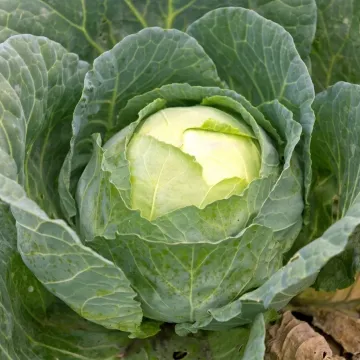


Cabbage
Early-maturing varieties are sown in March for summer harvest, while late-maturing varieties are sown in April for winter storage and autumn consumption.
Direct seeding is possible in warmer regions once soil temperatures consistently stay above 10°C, which helps avoid transplant shock.
The optimal germination temperature is 18–20°C; maintaining stable conditions is crucial to prevent the seedlings from becoming leggy or weak.
Precise timing is essential to prevent bolting, as cabbage plants exposed to prolonged cold temperatures at a young age may produce seeds prematurely.
Cabbage thrives in fertile, well-draining loam soils with a pH between 6.5 and 7.5, requiring consistent nutrient availability throughout the season.
The crop is highly light-demanding, requiring full sun exposure to ensure proper head formation and vigorous leaf development.
Optimal growing temperatures range from 15°C to 20°C; temperatures consistently above 25°C can stress the plant and delay head development.
Adequate soil moisture is critical; therefore, incorporating organic matter into the soil helps retain water and supports a stable growing environment.
Regular irrigation is necessary throughout the growing season, especially during the head-filling stage to prevent splitting and quality issues.
Yield potential ranges from 40 to 100 tonnes per hectare, depending on the chosen hybrid, local climate conditions, and the intensity of farm management.
Modern high-performance hybrids offer better uniformity and stress tolerance compared to traditional heirloom varieties, increasing overall profitability.
Planting density is adjusted based on the harvest target: higher densities are used for early crops, while lower densities are standard for late-season heads.
Drip irrigation systems are highly recommended to optimize water delivery and liquid fertilization, resulting in significantly higher marketable yields.
Balanced fertilizer programs, prioritizing nitrogen in early stages and potassium during head formation, are key to achieving maximum plant biomass.
Common diseases include clubroot, Fusarium wilt, and bacterial soft rot, which can cause significant economic losses if not managed early.
Pests like cabbage loopers, aphids, and diamondback moths require a proactive Integrated Pest Management (IPM) approach to minimize crop damage.
Biological controls and selective insecticides are effective when applied according to the development stages of the identified insect populations.
Crop rotation is the most effective cultural practice; never plant cabbage or other brassicas in the same spot for at least 3 to 4 years.
- Clubroot (Plasmodiophora brassicae)
- Damping-off
- Cabbage Aphids
- Cabbage Maggot
Early-season cabbage is harvested manually as soon as heads reach maturity to meet immediate market demand for fresh consumption.
Late-season storage varieties are typically harvested in late autumn after the first light frosts, which enhances the sugar content in the leaves.
Heads are harvested by cutting the stalk, leaving a few wrapper leaves to protect the cabbage from bruising and desiccation during handling.
Harvesting should occur during dry weather; excess moisture on the heads is a major risk factor for developing storage rots in a warehouse.
Post-harvest grading involves sorting heads by size and inspecting for physical defects to ensure long-term storability in refrigerated environments.