
Napa cabbage
Brassica rapa L. var. rapa (L.) Thell.
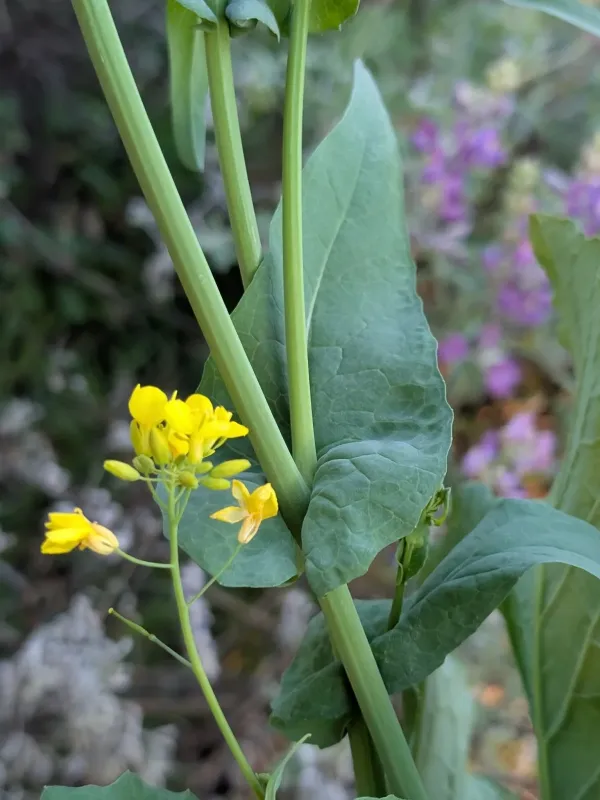
Description
Sowing dates
Napa cabbage is a fast-growing vegetable belonging to the Brassicaceae family, with a growth cycle ranging from 45 to 80 days. Cultivation usually occurs in two main seasons: early spring sowing in April and late summer sowing in July for storage varieties.
This crop is sensitive to day length; excessive light exposure can trigger premature bolting (flowering). For spring planting, it is crucial to select bolt-resistant hybrids to ensure consistent leaf head development throughout the season.
Seeds can be sown directly into the soil at a depth of 1–1.5 cm or started in cell trays. The transplanting method is preferred for early production, as it protects delicate root systems and allows for better field spacing management.
The standard planting distance is 30–40 cm between plants and 50 cm between rows. This spacing is vital to ensure adequate airflow, which reduces humidity around the leaf base and prevents common fungal issues.
Germination requires soil temperatures between 15–20 degrees Celsius. Under these conditions, seedlings typically emerge within 4–6 days, allowing for precise scheduling of consecutive plantings for continuous harvest.
Growing requirements
Napa cabbage thrives in fertile, well-drained loamy or sandy soils with a neutral pH of 6.0–7.0. Soil acidity must be corrected with lime if necessary to prevent clubroot, a destructive disease that targets the root system.
Being a cool-season crop, it can withstand light frost, but it develops best in moderate temperatures between 15–22 degrees Celsius. Extreme heat often leads to bitter leaves and increased susceptibility to insect pests.
Water management is critical; the crop requires consistent moisture to ensure high-quality, succulent leaves. Dry spells during head formation will significantly reduce yields and may cause the leaves to become tough or distorted.
Organic matter, such as well-rotted compost, should be incorporated into the soil before planting. While nitrogen and potassium are necessary, excessive fertilization should be avoided to prevent nitrate accumulation in the leaves.
Exposure to direct sunlight is beneficial, but during the summer months, growers often use shade cloths. This practice helps maintain cooler soil temperatures and slows down the bolting process, ensuring a more productive harvest.
Yield
With intensive management and high-quality hybrid seeds, Napa cabbage can yield between 40 to 80 tonnes per hectare. The variety choice is the primary determinant of yield potential and disease resistance.
Double-cropping in a single season is possible in many temperate regions, making it a highly profitable vegetable. Short-season varieties allow growers to maximize land use efficiency throughout the year.
A typical head weighs between 0.5 and 2.5 kg at maturity. Maintaining an optimal plant population density is essential to balance individual head size with overall field output and profitability.
Routine weeding and light cultivation of the inter-row space help aerate the soil and preserve moisture. These practices are fundamental to improving the quality and visual appeal of the harvested heads.
Controlled environment agriculture, such as high-tunnel or greenhouse production, can further boost yields by protecting the plants from weather fluctuations and extending the harvesting window significantly.
Main diseases and pests
Clubroot is the most serious disease affecting this crop. It is best managed through strict crop rotation protocols, ensuring that brassicas are not replanted in the same soil for at least 3–4 years to break the pathogen cycle.
Crucifer flea beetles are common pests, particularly on young seedlings. Integrated pest management, including the use of row covers or biological insecticides, is highly effective in preventing widespread leaf damage.
Slugs and snails can cause significant damage in high-humidity areas. Regular removal of debris and setting up physical barriers can protect the young leaves from being consumed during early development.
Downy mildew is a frequent issue in damp conditions or dense plantings. Improving plant spacing and applying preventative fungicides can help minimize the impact of this disease on harvest quality.
Aphids and cabbage worms are also common concerns. An integrated approach, utilizing beneficial insects or targeted biopesticides, is recommended to keep pest populations below economic injury levels while maintaining product safety.
Harvesting
Harvesting should be performed in dry weather when the heads reach their desired firmness. Timely harvest is critical, as heads left in the field for too long after maturity are prone to cracking and rotting.
Heads should be cut at the base with a sharp knife, leaving a small stump. It is important to minimize bruising, as mechanical damage makes the cabbage highly vulnerable to secondary bacterial infection during storage.
For long-term storage, heads must be kept at temperatures of 0...+2 degrees Celsius with high humidity (around 95%). Proper cooling and ventilation are necessary to keep the cabbage fresh for up to three months.
The product should be sorted and cleaned of any damaged outer leaves before transport. Proper packaging in perforated film ensures adequate respiration while preventing wilting during the logistics process.
Harvesting for winter storage should be completed before heavy frosts. Frozen heads have a shorter shelf life and lose their texture, so early monitoring of weather forecasts is essential for successful storage operations.