
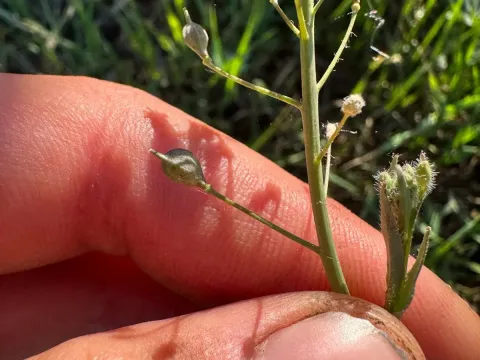
Camelina
Camelina
Camelina (Camelina sativa), commonly known as false flax, is an annual crop belonging to the Brassicaceae family. It is valued for its short growth cycle, typically reaching maturity within 70 to 100 days after planting.
What the section contains

Camelina
Sowing should take place as early as possible in the spring. Camelina is highly cold-tolerant and capable of surviving light frosts during the seedling stage, making it an ideal choice for short growing seasons in northern latitudes.
The seeding rate is typically between 8 to 12 kilograms per hectare. Because the seeds are tiny, it is crucial to maintain a shallow planting depth of 1.5 to 3 centimeters to ensure uniform and rapid emergence.
Camelina serves as an excellent emergency crop in cases of failed winter cereal harvests. Its rapid early development allows it to quickly canopy the soil, effectively outcompeting weeds without the need for intensive herbicide interventions.
Optimal germination occurs at soil temperatures as low as 3–5 degrees Celsius. This early start allows the crop to establish a deep root system before the onset of summer heat, improving its overall resilience and productivity.
Camelina is known for its low input requirements and ability to grow on marginal soils where other oilseeds fail. It thrives on sandy, sandy-loam, and podzolic soils that are not ideal for crops like canola.
Well-drained soils are preferred as the crop is sensitive to waterlogging. It performs best in neutral soil conditions but shows remarkable adaptability to various pH levels, making it a flexible addition to diverse farming operations.
The crop is highly drought-tolerant due to its efficient water usage and early maturation. This characteristic makes it a reliable choice for arid or semi-arid regions where rainfall is inconsistent during the later part of the summer.
Agricultural management is relatively simple compared to other cruciferous crops. Because of its fast growth, camelina naturally suppresses weed pressure, reducing the need for chemical weeding during the early stages of the season.
Fertilization needs are modest, with nitrogen, phosphorus, and potassium applied based on local soil tests. Excessive nitrogen can lead to plant lodging and a decrease in oil content, thus requiring careful balancing of nutrient inputs.
Average seed yields for camelina range from 1.2 to 2.0 metric tons per hectare. Under optimal conditions and with modern agronomic practices, yields can exceed 2.5 metric tons per hectare, offering competitive returns.
The seeds are rich in oil, typically containing between 35 and 42 percent. This high oil content makes camelina a preferred source for both edible oils and technical applications, including the rapidly growing biofuel sector.
Camelina meal, the byproduct of the oil extraction process, serves as a high-protein feed for livestock and poultry. It is rich in essential nutrients and antioxidants, making it a valuable feed component that improves livestock growth rates.
The stability and quality of camelina oil, characterized by a high proportion of omega-3 fatty acids, create consistent demand in the pharmaceutical and food supplement industries, providing producers with multiple market outlets.
The economic viability of camelina is further supported by lower production costs. Reduced requirements for fertilizers and pesticides translate into a higher profit margin, even if the total biomass yield is lower than traditional heavy-input oilseeds.
Common diseases affecting camelina include downy mildew (Peronospora camelinae) and fusarium wilt. Management strategies focus on crop rotation and the use of treated seeds to minimize the risk of soil-borne pathogens.
The most significant insect pest is the flea beetle, which can decimate emerging stands in a matter of days. Insecticidal seed treatments are highly recommended to provide protection during the critical initial growth phase.
Late-season pests such as the rape blossom beetle can cause damage to reproductive structures. Continuous scouting during the budding and flowering stages is necessary to determine if and when chemical intervention is required.
Integrated weed management begins with a clean seedbed before planting. By controlling weeds early, the camelina crop can successfully shade out subsequent weeds, maintaining clean fields throughout the harvest cycle.
- Downy mildew (Peronospora camelinae)
- Flea beetles (Phyllotreta spp.)
- Rape blossom beetle (Meligethes aeneus)
- Diamondback moth (Plutella xylostella)
Harvesting camelina at the right time is critical to prevent shattering of the seed pods. The process should begin when the pods have turned golden-brown and the seeds have reached their mature, hard state.
Direct combining is the standard harvesting method. Operators must calibrate the combine’s settings carefully, particularly the drum speed and concave clearance, to prevent seed damage while ensuring all seeds are threshed.
Harvested seeds usually require cleaning to remove debris and moisture content assessment. Keeping moisture levels below 12 percent is essential for stable, long-term storage and to prevent mold growth during the drying process.
Efficient logistics are necessary during harvest to manage the small seed size and prevent losses during transport. Using sealed containers or grain-tight trailers helps minimize waste from the field to the storage facility.
Camelina seeds store well in standard grain bins, provided there is adequate aeration. Proper temperature control and moisture management ensure the quality of the oil is preserved until it reaches the end user or processing facility.