
Romanesco
hybrids between Brassica oleracea L. convar. botrytis (L.) Alef. and Brassica oleracea L. var. italica Plenck
Description
Sowing dates
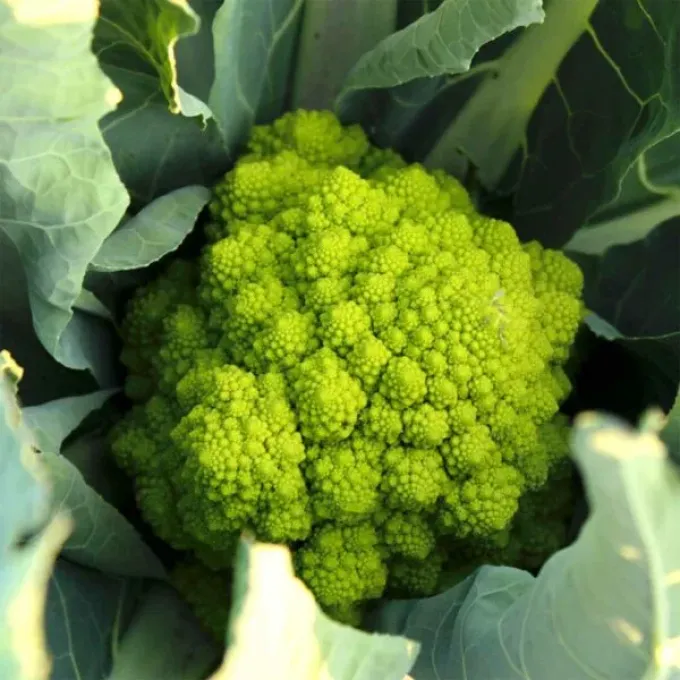
Romanesco is an annual horticultural crop belonging to the Brassicaceae family, recognized as a fascinating hybrid form of cauliflower and broccoli. It is best known for its striking fractal-shaped inflorescences.
Sowing times depend on the specific climatic zone. For an early spring harvest, seeds are sown in protected nurseries during late winter or early spring.
For a late summer or autumn harvest, seeds are usually sown directly into trays or outdoor beds in mid-summer, allowing the plant to develop during the cooler months.
Optimal germination occurs at soil temperatures between +18°C and +20°C. After emergence, the temperature should be lowered to prevent legginess and ensure strong seedling development.
Seedlings are typically transplanted into the field after reaching the 5-6 true leaf stage, ensuring that the risk of frost has completely passed.
Growing requirements
Romanesco thrives in fertile, well-draining soils rich in organic matter. A neutral soil pH level ranging from 6.5 to 7.5 is ideal for nutrient availability.
Consistent moisture is critical for this crop. Periods of drought will cause premature bolting or the formation of stunted, low-quality heads.
Sunlight is essential for the characteristic development of its fractal structures. Romanesco requires full sun exposure to maintain its vigorous growth and compact shape.
The plant prefers temperate conditions, ideally between +15°C and +22°C. Excessive heat during the head-formation stage is detrimental to the final crop quality.
Balanced fertilization, particularly providing enough nitrogen for leafy growth and potassium for head development, is essential for high yields.
Yield
Yields for Romanesco are generally moderate, typically ranging from 1.5 to 3 kilograms per square meter depending on variety and management practices.
The weight of an individual head varies significantly, usually between 400 and 800 grams. Size is prioritized less than the symmetry and density of the fractals.
Standard planting density is about 4-5 plants per square meter. Proper spacing is necessary to ensure adequate airflow and reduce the incidence of fungal diseases.
Mulching is a highly recommended practice for Romanesco as it helps stabilize soil temperature and keeps root moisture levels constant during fluctuating weather.
Secondary micronutrient applications, specifically boron, are often used to prevent the occurrence of hollow stems and to enhance the structural integrity of the head.
Main diseases and pests
Major pests include flea beetles, imported cabbage worms, and aphids. These can quickly compromise the foliage and the quality of the developing heads.
Diseases such as clubroot and downy mildew are significant risks. These are often linked to improper soil management and excessive humidity around the base of the plant.
Strict crop rotation is the primary strategy for prevention. Avoid planting Romanesco in areas previously occupied by other Brassica species for at least three to four years.
Integrated pest management (IPM) techniques, including the use of row covers during the early growth stages, are effective in minimizing physical pest damage.
Regular field sanitation, such as removing weeds and infected plant debris, is vital to reduce the pressure of local pest populations and soil-borne pathogens.
Harvesting
Harvesting should occur when the heads reach peak density and the spiral fractals are clearly defined, before the structure begins to separate or open.
Using a sharp knife, harvest the head along with several surrounding leaves. These leaves act as a natural protective layer during post-harvest handling.
Timing is crucial; harvesting during the cool morning hours preserves the crispness and turgor of the inflorescences for market presentation.
Storage requires cool conditions, ideally near 0°C, to maintain freshness. Romanesco has a relatively short shelf life and is highly valued in the gourmet food industry.
- Culinary use: Best prepared steamed, roasted, or raw in salads to preserve its crunch.
- Nutritional value: High in vitamin C, vitamin K, and dietary fiber.