
Brachyapium
Brachyapium
Description
Growing requirements
Brachyapium is a genus of herbaceous flowering plants belonging to the Apiaceae family. It is naturally distributed across the Mediterranean region, demonstrating a high degree of adaptation to rocky and calcareous substrates typical of southern European landscapes.
The crop thrives in well-drained soils that prevent root saturation. It is essential to ensure that the site has optimal sunlight exposure, as the species is sensitive to shading which can inhibit the development of essential oils and reduce biomass production.
Climate requirements for Brachyapium are centered around a Mediterranean regime, characterized by mild, wet winters and warm, dry summers. It is considered a drought-tolerant plant once established, provided the soil structure allows for deep root penetration.
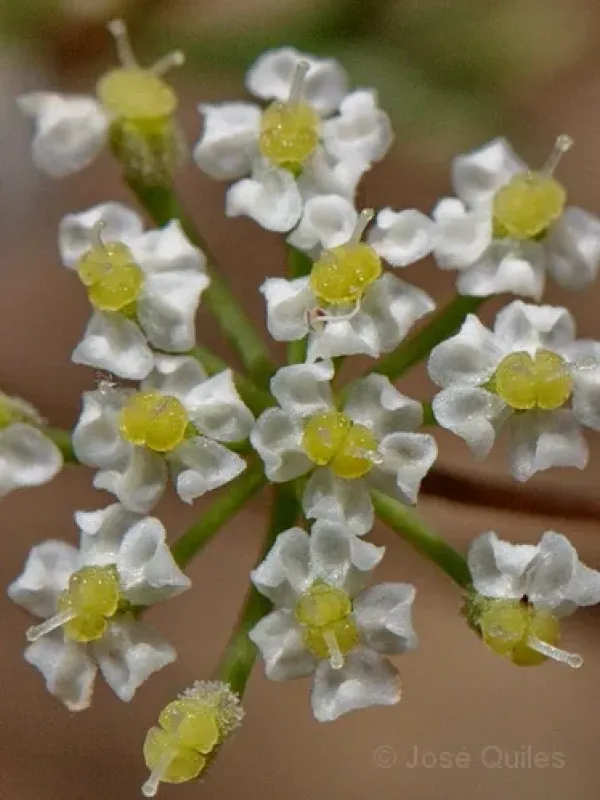
Botanically, plants of the genus Brachyapium exhibit complex umbels and pinnate foliage. The growth cycle is synchronized with seasonal temperature shifts, requiring specific thermal sums for flowering and subsequent seed maturation.
Economically, this crop is primarily studied for its potential in secondary metabolite extraction. The interest in Brachyapium is linked to its unique essential oil profile, making it a potential candidate for specialized botanical and agricultural research applications.
Main diseases and pests
The primary threats include fungal diseases such as root rot and downy mildew, which are particularly prevalent in poorly managed fields with high humidity. Proper crop rotation is recommended to break the lifecycle of soil-borne pathogens.
Insect pests, including various types of leaf miners and aphids, pose a risk during the early developmental stages of the crop. Integrated pest management strategies are crucial for maintaining plant health and achieving standard yields.