
Braya
Braya
The genus Braya is a member of the Brassicaceae family, known for its extreme resilience in harsh environmental conditions. These perennial herbs are specialized for life in arctic and alpine tundra habitats.
What the section contains


Braya
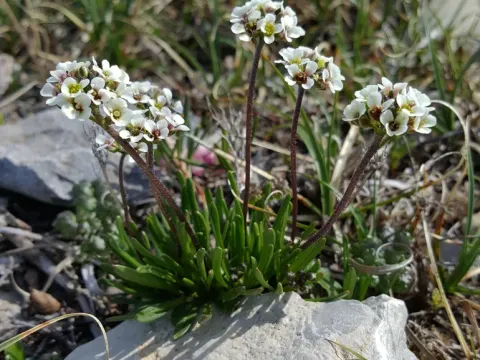
Botanically, plants in the Braya genus are characterized by a prostrate or compact growth habit, featuring rosettes of leaves that protect the growth point from freezing temperatures and high-velocity winds. Their flowers display the signature cruciform structure of the mustard family.
The natural range of these species extends throughout the circumpolar regions and high mountain chains, including the Alps and the Rocky Mountains. They are typically found in limestone scree or mineral-rich soils where nitrogen levels are generally low.
Cultivation requirements necessitate an environment that mimics their native habitat: excellent drainage is paramount, as the roots are highly susceptible to rot in stagnant, moisture-heavy conditions. They thrive in rocky or gritty substrates with neutral to slightly alkaline pH.
While not a mainstream commercial crop, the genus is significant in agricultural research. Scientists study Braya to understand the genetic mechanisms behind extreme cold tolerance, which could eventually be used to improve the frost resistance of common agricultural brassicas.