
Napa cabbage
Brassica rapa L. var. perviridis L. H. Bailey
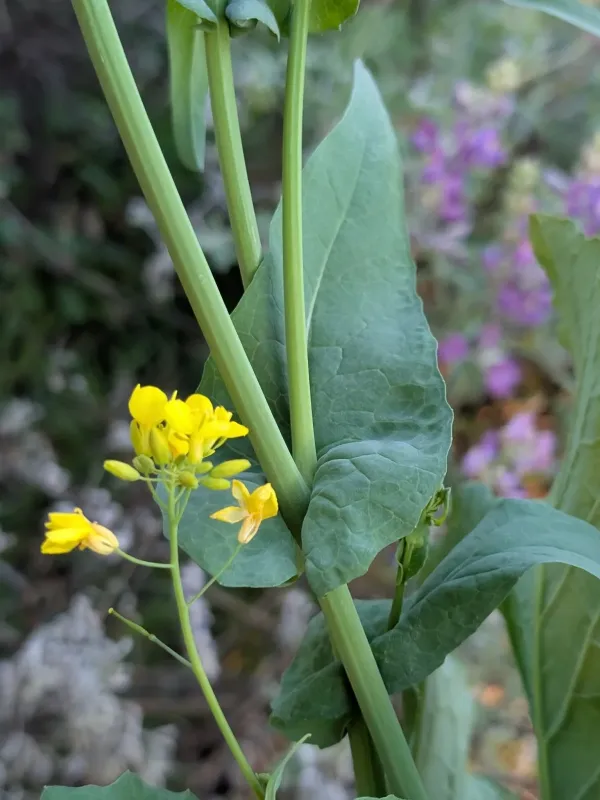
Description
Sowing dates
Napa cabbage belongs to the Brassicaceae family and is a fast-maturing crop, allowing for multiple harvests within a single growing season. Sowing dates depend on specific variety characteristics and production goals, with two primary planting cycles typically identified.
The first sowing in open ground or as transplants is carried out in early spring as soon as the soil warms up to 10–12 degrees Celsius, helping to avoid premature bolting. It is optimal to plant seedlings in April to ensure the harvest is collected before the onset of long daylight periods.
The second major sowing period falls in late July or early August, when daylight hours begin to decrease. This is the most favorable time, as cool weather and shorter days promote the intensive formation of dense, juicy heads.
To accelerate production in the spring, it is recommended to use row covers or temporary greenhouses. This protects young plants from late frosts, which can trigger the plant to shift prematurely into the reproductive flowering phase.
When direct seeding, it is essential to follow a spacing layout that ensures optimal plant density. A standard practice involves row spacing of approximately 40–50 cm and a distance of at least 30 cm between plants within rows to allow for adequate airflow.
Growing requirements
This crop has high demands regarding soil quality, preferring fertile loamy or sandy loam soils with a neutral pH. It is crucial to ensure good drainage, as moisture stagnation in the root zone quickly leads to the development of rots.
Napa cabbage is a light-loving plant, yet prolonged daylight acts as a signal for the plant to transition into its flowering phase. Therefore, site selection should account for partial shading in the afternoon or the choice of varieties resistant to early bolting.
Temperature regulation is a critical factor for successful cultivation, as the crop thrives best in moderate temperatures ranging between 15 and 22 degrees Celsius. Excessive heat combined with low humidity results in reduced head quality and leaf deformation.
Moisture requirements for Napa cabbage are high throughout all growth stages, especially during the period of intensive leaf mass accumulation. Regular, moderate watering prevents leaf cracking and ensures the final produce remains succulent.
Organic and mineral fertilizers are primarily applied during basic soil preparation, as the crop absorbs nutrients rapidly. Nitrogen fertilization is effective in the first half of the growing season, while excessive nitrogen near harvest time can negatively impact the storage life of the crop.
Yield
Yield depends directly on the agricultural background, timeliness of irrigation, and the use of intensive-type hybrids. On average, by following proper technology, one can obtain between 5 to 8 kilograms of marketable produce per square meter.
The use of modern hybrids allows for higher head uniformity and improved post-harvest shelf life. An important yield criterion is planting density, which should be adapted to the specific variety and soil type.
To increase the yield of marketable produce, regular inter-row cultivation is necessary, which promotes root aeration and better moisture absorption. It is also important to control weeds, which compete with the cabbage for resources during early growth stages.
In greenhouse conditions, yields are often higher due to precise control over the microclimate and protection from extreme temperature fluctuations. This allows producers to plan supply schedules over an extended period.
The final yield indicator also depends on the biological resistance of the planting material to major diseases. Utilizing healthy seedlings and high-quality seeds is the key to stable production in any climatic condition.
Main diseases and pests
The primary threat to crops comes from pests such as flea beetles, which can destroy seedlings within days. To protect young plants, non-woven cover materials are often used to limit insect access to the foliage.
Slugs and snails can cause significant damage in high-humidity conditions by feeding on the tender edges of Napa cabbage leaves. Combatting them requires a combination of agricultural measures, such as mulching with sawdust, and the use of specialized products.
Clubroot is the most dangerous fungal disease, causing root enlargement and overall suppression of plant development. To prevent this, it is necessary to maintain strict crop rotation and avoid planting cabbage on the same site more than once every 4-5 years.
Downy mildew (peronosporosis) often manifests during rapid temperature and humidity fluctuations, requiring timely fungicide treatments. Symptoms include chlorotic spots that darken over time, eventually leading to tissue necrosis.
To control insect pests like the cabbage moth or white butterfly, biological protection methods or systemic insecticides are applied. It is essential to adhere to waiting periods before harvest to guarantee the ecological safety of the produce.
Harvesting
Harvesting Napa cabbage is conducted either selectively or en masse, depending on head density and reaching the target weight. The optimal harvest moment occurs when the head feels firm upon manual pressure but remains succulent.
A sharp knife is used to cut the heads, leaving a small stem base or cleaning off damaged outer leaves. It is important to harvest in dry weather, which significantly improves the longevity of the cabbage when stored in a cool environment.
If short-term storage is planned, heads should be wrapped in food-grade film to prevent moisture loss and wilting. Storage is best maintained at a temperature of around 0–2 degrees Celsius with high relative humidity.
Care must be taken when harvesting, as the delicate leaves of Napa cabbage are easily bruised. Any mechanical damage becomes a gateway for bacterial rot development during the storage process.
If autumn frosts are predicted, it is recommended to harvest before they occur, as frozen heads are prone to rapid decay. Adhering to proper harvesting techniques ensures consumer quality and an attractive market appearance of the product.