

Reference · Crops
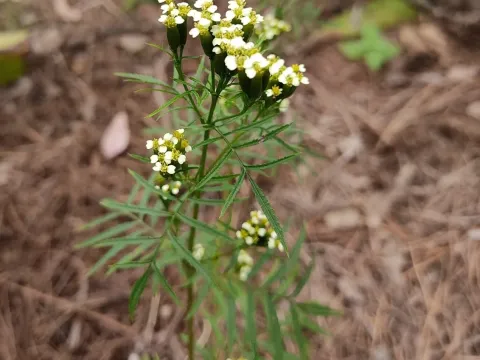
Tagetes
Tagetes L.
Tagetes seeds are typically sown in open ground only after the risk of frost has completely passed. In temperate climates, this is usually late spring, when the soil temperature consistently stays above 15 degrees Celsius.
12
items
What the section contains
 African marigold
Tagetes erecta L.
French marigold
Tagetes patula L.
French Marigolds
Tagetes patula L. ssp nana
Hybrids of French and Signet marigolds
hybrids between Tagetes patula and Tagetes minuta
African marigold
Tagetes erecta L.
French marigold
Tagetes patula L.
French Marigolds
Tagetes patula L. ssp nana
Hybrids of French and Signet marigolds
hybrids between Tagetes patula and Tagetes minuta
 Lemmon's marigold hybrid
Tagetes lemmonii x Tagetes patula
Lemmon's marigold hybrid
Tagetes lemmonii x Tagetes patula
 Lemon Marigold
Tagetes lemmonii A. Gray
Parry's Marigold
Tagetes parryi A. Gray
Lemon Marigold
Tagetes lemmonii A. Gray
Parry's Marigold
Tagetes parryi A. Gray
 Signet marigold
Tagetes tenuifolia Cav.
Signet marigold
Tagetes tenuifolia Cav.
 Tagetes foetidissima
 DC.
Tagetes foetidissima
Tagetes foetidissima DC.
 Tagetes lucida
 Cav.
Tagetes lucida
Tagetes lucida Cav.
 Tagetes micrantha
 Cav.
Tagetes micrantha
Tagetes micrantha Cav.
 Tagetes minuta
 L.
Tagetes minuta
Tagetes minuta L.
Marketplace
Products in this section · 12


TAGETES 'ORANGEPRINZ'
Nauchno-proizvodstvennaya firma Rossiyskiye Semena
Tagetes
0
0
2 offers
0.12 €per pack
Buy





Tagetes
For earlier flower production, a greenhouse or indoor sowing method is preferred. Seeds should be sown in trays about six to eight weeks before the planned transplant date to ensure strong root establishment.
When sowing, ensure the seeds are covered with a thin layer of soil, no deeper than 1.5 centimeters. Maintaining consistent moisture is essential for uniform germination, which generally occurs within a week.
Thinning is necessary if the seedlings are too crowded. Keeping proper spacing between plants is crucial for air circulation, which significantly reduces the risk of fungal infections later in the growing season.
Before transplanting to the field, seedlings should be hardened off to acclimatize them to direct sunlight and outdoor temperatures, ensuring better survival rates once they are permanently planted.
Tagetes belongs to the Asteraceae family and is native to the Americas. It is widely recognized in agriculture not only for its aesthetic value but also for its natural ability to suppress soil-borne pathogens.
The plant thrives in full sun, which is essential for robust growth and optimal flowering. While it can tolerate partial shade, insufficient light often results in leggy stems and poor blossom development.
It adapts to various soil types but performs best in well-drained, fertile loams. Good soil drainage is critical, as Tagetes is highly susceptible to root rot in waterlogged conditions.
Watering should be balanced. While young plants need consistent moisture to establish their root systems, mature Tagetes plants are quite drought-tolerant and prefer soil that is allowed to dry out between waterings.
Regular maintenance, including weeding and light cultivation of the soil surface, promotes healthier growth. Fertilizer application can boost production, especially in soils that are low in organic matter.
Root rot is the most common pathology, especially in poorly drained soils or during prolonged wet weather. Improving drainage and avoiding overcrowding are the primary preventative measures.
Grey mold (Botrytis) can affect foliage in humid, stagnant air conditions. Infected plants should be promptly removed, and spacing should be increased to ensure better airflow throughout the crop canopy.
Spider mites are a major pest during hot and dry spells. They damage the leaves by piercing the tissue, leading to a stippled appearance and eventual leaf drop, requiring timely monitoring.
Aphids often colonize the tender shoots and flower buds, weakening the plant. Biological control agents or insecticidal soaps can be used to manage infestations without harming beneficial insects.
Slugs and snails can cause significant damage to young seedlings. Applying barrier methods or organic bait can protect the developing plants during their most vulnerable early growth stage.