
Tagetes foetidissima
Tagetes foetidissima DC.
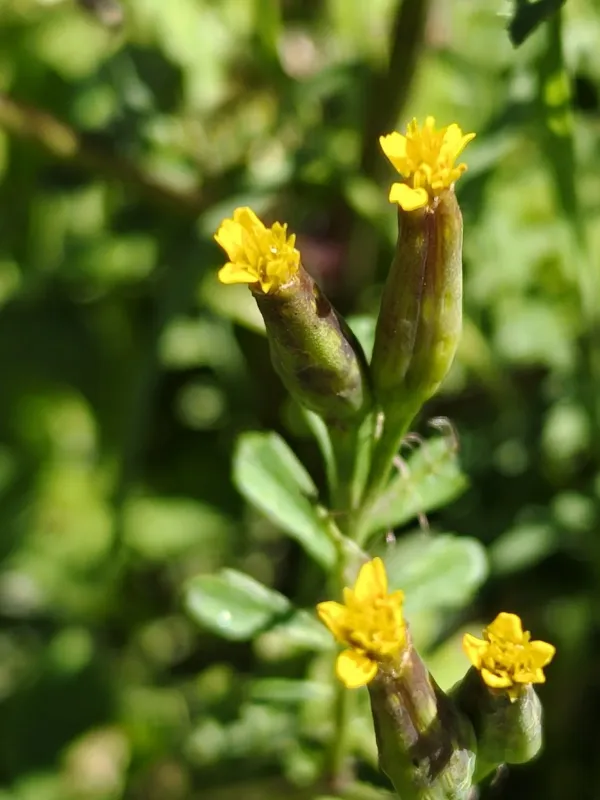
Description
Sowing dates
The sowing of Tagetes foetidissima in agricultural conditions should be performed once the soil temperature consistently stays above 15 degrees Celsius.
Seeds are sown at a depth of 1 to 2 centimeters in rows, ensuring the necessary spacing between plants to provide enough air circulation during the peak growing season.
For large-scale cultivation, precision seeders can be used, though careful soil preparation is required to prevent crust formation, which hinders the emergence of small seedlings.
Irrigation immediately after sowing is essential to initiate the germination process and ensure uniform development of the crop across the entire field.
Thinning operations are conducted shortly after the first true leaves appear to remove weaker plants and optimize the density of the stand for maximum yield.
Growing requirements
Tagetes foetidissima is a member of the Asteraceae family, noted for its strong, pungent aroma derived from specialized glandular hairs on its leaves and stems.
This crop requires full sun exposure to thrive, as decreased light levels result in lower biomass production and a significant reduction in essential oil content.
Soil requirements include well-drained loamy textures; however, the plant is relatively tolerant of varying soil pH levels, provided there is no long-term waterlogging.
Nutrient management focuses on moderate nitrogen application to promote vegetative growth, followed by phosphorus and potassium for healthy reproductive output.
The plant is known for its allelopathic properties, which can help in suppressing certain soil-borne pathogens and weeds in the immediate proximity of the root zone.
Main diseases and pests
Root rot is the most significant disease challenge, especially in low-lying areas of the field where water drainage is poor and humidity remains elevated for long periods.
Insect pests such as thrips and aphids can cause direct damage to the foliage, which reduces the photosynthetic capacity and overall vigor of the plant stand.
Red spider mites frequently attack the crop during hot, arid conditions, leading to chlorosis and potential premature leaf drop if not managed with appropriate interventions.
Field hygiene is critical; clearing away crop residues after harvest is a necessary practice to prevent the overwintering of pathogens and harmful insect populations.
- Implementation of integrated pest management strategies.
- Regular field monitoring for early detection of infestations.
- Application of sustainable botanical or biological control agents.