
African marigold
Tagetes erecta L.
Description
Sowing dates
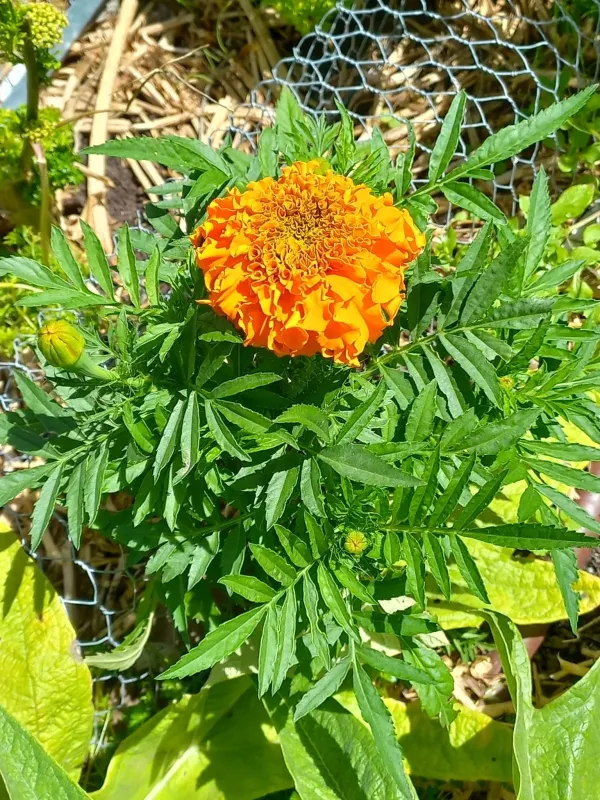
African marigold (Tagetes erecta L.) is an annual flowering plant belonging to the Asteraceae family. It is widely cultivated for its high ornamental value and essential oil production.
Seeds are typically sown in greenhouse trays 6 to 8 weeks before the last frost date. The soil temperature should be maintained between 20°C and 25°C for optimal germination.
Seedlings require thinning and space optimization to prevent leggy growth, ensuring that each plant develops a strong, branching stem architecture.
Transplanting to the field is performed when the soil has thoroughly warmed up and the risk of frost has completely passed, ensuring steady growth rates.
Standard spacing for commercial production is generally 40–50 cm between rows, allowing for mechanical weeding and adequate airflow between the dense plant foliage.
Growing requirements
The plant thrives in full sun exposure. It is highly sensitive to shade, which significantly reduces the quality and quantity of the large, globular flower heads.
While African marigolds adapt to various soil types, they prefer well-drained, fertile, loamy soils with a pH ranging from 6.0 to 7.5 for maximum nutrient uptake.
Water requirements are moderate; however, consistent moisture is necessary during the early development stages to establish a deep and healthy root system.
The crop does not tolerate frost and grows best in regions with warm, long summers, which are critical for reaching the plant's full reproductive potential.
Fertilization with balanced NPK levels promotes balanced growth, preventing an overabundance of vegetative foliage that could otherwise delay the flowering process.
Main diseases and pests
The primary threats include Botrytis cinerea (gray mold) and Alternaria leaf spot, which are exacerbated by high humidity and poor ventilation within the crop canopy.
Spider mites are common pests that thrive in hot and dry conditions, causing leaf chlorosis and stunting if left unchecked by integrated pest management practices.
Root-knot nematodes are significant soil-borne pests that African marigolds effectively suppress due to the alpha-terthienyl compounds present in their roots.
Cultural control methods such as crop rotation, debris removal, and controlled irrigation are essential to maintaining a healthy and productive stand.
Application of fungicides and acaricides should be targeted and performed according to local agricultural regulations to ensure maximum efficiency and minimal ecological impact.
Harvesting
Harvesting for the cut-flower market is done when the flower heads are nearly fully expanded but still firm, ensuring a longer vase life for the product.
For essential oil extraction or herbal pigment production, harvesting is performed at the peak of flowering, as the concentration of secondary metabolites is highest at this time.
The harvesting process involves manual or mechanized cutting of the flower stalks, often requiring multiple passes to collect blooms as they reach uniform maturity.
Post-harvest handling requires quick cooling to minimize dehydration and prevent the onset of fungal decay during storage and transportation.
Seeds are harvested by allowing the heads to dry partially on the plant, followed by careful threshing and cleaning to ensure high-quality propagation material.