
Tagetes minuta
Tagetes minuta L.
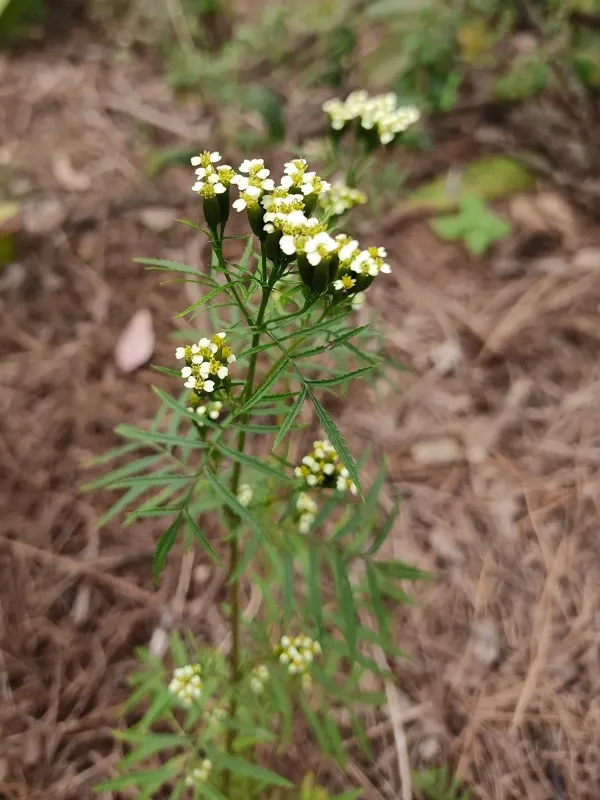
Description
Sowing dates
Tagetes minuta, commonly known as southern marigold or khaki weed, is an annual herbaceous plant belonging to the Asteraceae family.
Sowing occurs in the spring, once soil temperatures have reached at least 12–15°C to ensure uniform germination and early plant development.
Seeds should be drilled in rows spaced approximately 45–60 cm apart to allow for proper airflow and effective mechanical weed management throughout the season.
The optimal planting depth is about 1–2 cm; shallow planting is crucial because the seeds require a consistent moisture level to break dormancy.
As a fast-growing species, Tagetes minuta quickly develops a canopy that shades the ground, naturally suppressing the growth of competing weed species.
Growing requirements
This plant is a heliophyte, meaning it requires full sun exposure for the development of its foliage and the production of essential oils.
It thrives in a variety of soil types, though well-drained, fertile sandy loams provide the best environment for maximizing biomass production.
Tagetes minuta is highly drought-tolerant, utilizing its robust root system to sustain growth during periods of limited water availability.
While the plant is hardy, it is highly sensitive to frost, which can cause severe damage or complete crop failure if temperatures drop below freezing.
Proper soil aeration is vital, as excessive waterlogging can lead to root pathogens and hinder the plant's metabolic processes for oil synthesis.
Yield
The yield of Tagetes minuta is primarily determined by the volume of essential oil extracted from its leaves, stems, and flower buds at peak maturity.
Farmers can maximize yields by choosing high-oil-content varieties and ensuring the crop is harvested at the precise developmental stage.
Beyond oil production, the crop acts as a natural soil bio-fumigant, significantly reducing populations of plant-parasitic nematodes in the soil.
Effective nutrient management and irrigation during dry spells are key factors in achieving consistent biomass yields year over year.
Processing facilities should be located near the harvest sites to ensure the freshness of the raw material, as volatile oils degrade quickly after cutting.
Main diseases and pests
The plant is generally robust, but it can be susceptible to fungal diseases such as powdery mildew in areas with high humidity and poor circulation.
Insect pests, including aphids and spider mites, may infest the plants during hot, dry conditions, potentially impacting both biomass and oil quality.
Crop rotation is essential to prevent the buildup of soil-borne pathogens and to maintain the overall health of the field environment.
Avoiding high-density planting helps mitigate the risk of disease spread by promoting better ventilation throughout the foliage canopy.
Integrated Pest Management (IPM) strategies, including biological control, are preferred to maintain the integrity of the essential oils for commercial use.
Harvesting
Harvesting should be timed to coincide with the early flowering phase, as this is when the concentration of essential oil is at its peak.
Mechanical harvesting equipment, such as forage harvesters, is commonly used to efficiently cut and collect the biomass for immediate processing.
Once harvested, the material must be dried under controlled conditions or steam-distilled immediately to prevent the loss of volatile chemical components.
Proper storage of the dried product is necessary to keep moisture levels low and prevent mold contamination before distillation.
The final yield of the essential oil depends significantly on the efficiency of the extraction process and the handling of raw material post-harvest.