

Reference · Crops
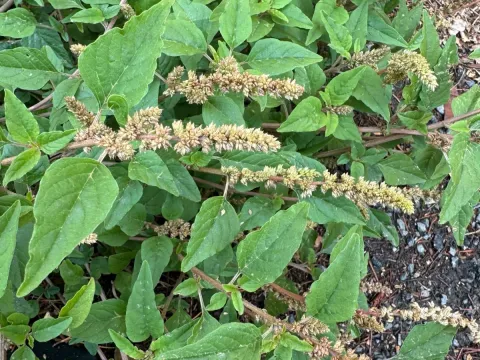
Amaranth
Amaranthus L.
Sowing of Amaranthus begins when the soil temperature at the planting depth reaches 12–14°C. Early sowing in cold soil leads to poor germination and weak initial development of the seedlings.
16
items
What the section contains
 Amaranth
us hybridus L. x Amaranthus hypochondriacus L.
Amaranth
Amaranthus hybridus L. x Amaranthus hypochondriacus L.
 Amaranthus caudatus
 L.
Amaranthus caudatus
Amaranthus caudatus L.
 Amaranthus dubius
 Mart. ex Thell.
Amaranthus dubius
Amaranthus dubius Mart. ex Thell.
 Amaranthus hybridus
 L.
Amaranthus hybridus
Amaranthus hybridus L.
 Blood amaranth
Amaranthus cruentus L.
Fringed amaranth
Amaranthus crispus (Lesp. et Thévenau) N Terracc.
Blood amaranth
Amaranthus cruentus L.
Fringed amaranth
Amaranthus crispus (Lesp. et Thévenau) N Terracc.
 Green amaranth
Amaranthus viridis L.
Hybrid of Amaranthus hypocondriacus and Amaranthus cruentus
Amaranthus hypocondriacus L. x Amaranthus cruentus L.
Green amaranth
Amaranthus viridis L.
Hybrid of Amaranthus hypocondriacus and Amaranthus cruentus
Amaranthus hypocondriacus L. x Amaranthus cruentus L.
 Joseph's coat
Amaranthus tricolor L.
Joseph's coat
Amaranthus tricolor L.
 Prostrate amaranth
Amaranthus blitoides S. Watson
Prostrate amaranth
Amaranthus blitoides S. Watson
 Prostrate amaranth
Amaranthus graecizans L.
Prostrate amaranth
Amaranthus graecizans L.
 Purple amaranth
Amaranthus hypochondriacus L.
Purple amaranth
Amaranthus hypochondriacus L.
 Redroot pigweed
Amaranthus retroflexus L.
Redroot pigweed
Amaranthus retroflexus L.
 Spiny amaranth
Amaranthus spinosus L.
Spiny amaranth
Amaranthus spinosus L.
 Thunberg's amaranth
Amaranthus thunbergii Moq.
Thunberg's amaranth
Amaranthus thunbergii Moq.
 Tumbleweed
Amaranthus albus L.
Tumbleweed
Amaranthus albus L.
Marketplace
Products in this section · 12


Amaranth
The optimal planting window is late May or early June, depending on the climatic zone. Stable warm weather during this period is essential to ensure rapid growth and to outcompete early-season weeds.
Precision planting is required due to the extremely small size of the seeds. The seeds should be placed at a depth of no more than 1–2 cm, as deep burial prevents seedlings from emerging.
Seeding rates typically range from 0.5 to 1 kg per hectare for grain production. Higher densities may be utilized when cultivating the crop specifically for high-biomass forage or silage.
Post-seeding compaction using a cultipacker or light roller is recommended to improve seed-to-soil contact, which facilitates the uptake of soil moisture and promotes uniform emergence.
Amaranth belongs to the Amaranthaceae family and is a warm-season, light-demanding crop. It is highly valued for its exceptional drought tolerance, attributed to the efficient C4 photosynthetic pathway.
While the crop can adapt to various soil types, it performs best in well-drained, fertile loams with a neutral pH. It is sensitive to waterlogged conditions, which can lead to root rot.
Full sunlight is a critical requirement for amaranth. Shading during the early vegetative stages significantly stunts growth and negatively impacts the final yield of both seeds and foliage.
Adequate levels of nitrogen and phosphorus are necessary for optimal development, particularly during the first 50 days of growth, which is the period of most intensive biomass accumulation.
The crop develops a robust, deep-reaching taproot system. This allows the plant to access moisture and nutrients in deeper soil horizons, making it a valuable addition to modern crop rotation systems.
Grain yields for amaranth typically range from 15 to 30 quintals per hectare. These figures depend heavily on selecting appropriate varieties and adhering to site-specific best management practices.
When grown as a forage crop, amaranth is highly productive, potentially yielding 500–800 quintals of green biomass per hectare per season, often harvested in multiple cuts depending on the region.
Effective weed management is the primary factor limiting yield. Because amaranth is a slow grower in the first weeks, mechanical weeding or inter-row cultivation is vital to prevent yield suppression.
Balanced fertilization and the use of micro-elements during the mid-vegetative stage can enhance plant resilience, resulting in more robust panicle development and improved grain fill.
Genetics play a major role in yield potential. Modern hybrid cultivars have been developed to provide more uniform maturity and higher resistance to environmental stresses compared to landrace varieties.
The most significant diseases affecting amaranth include root rots and Fusarium wilt, which are particularly prevalent in soils with poor drainage or excessive moisture levels during the seedling stage.
Insect pests, such as weevils, wireworms, and various leaf-eating beetles, can cause significant damage to young plants. Early detection through regular field scouting is crucial for effective control.
Weeds pose the greatest threat to overall crop success. Since herbicide options are often limited for this crop, mechanical control and proper field preparation prior to planting are essential.
Damping-off diseases can be minimized by ensuring good soil aeration and using high-quality, treated seed. Proper crop rotation is necessary to prevent the build-up of soil-borne pathogens.
Maintaining spatial distance from wild amaranth species is a standard phytosanitary practice, as wild relatives can act as reservoirs for viral diseases and insect pests that attack the crop.
Grain harvest begins when the plants reach full physiological maturity, indicated by the drying of the panicles and the seeds becoming hard and easily dislodged by mechanical impact.
Combined harvesting is the standard method, requiring adjustments to the combine settings, specifically reducing cylinder speed and using fine screens to handle the very small seeds efficiently.
Post-harvest management is critical; the grain must be dried to a moisture content of 12–14% to ensure long-term storage and prevent heating or spoilage within bulk grain containers.
For forage production, harvest should take place at the onset of flowering. This is the stage when the nutritional profile, particularly the protein content in leaves and stems, is at its peak.
Storage facilities should be clean, cool, and well-ventilated. Protecting the harvested grain from moisture and stored-product pests is essential to maintain the quality of the final agricultural product.