
Amaranthus vulgatissimus
Amaranthus vulgatissimus
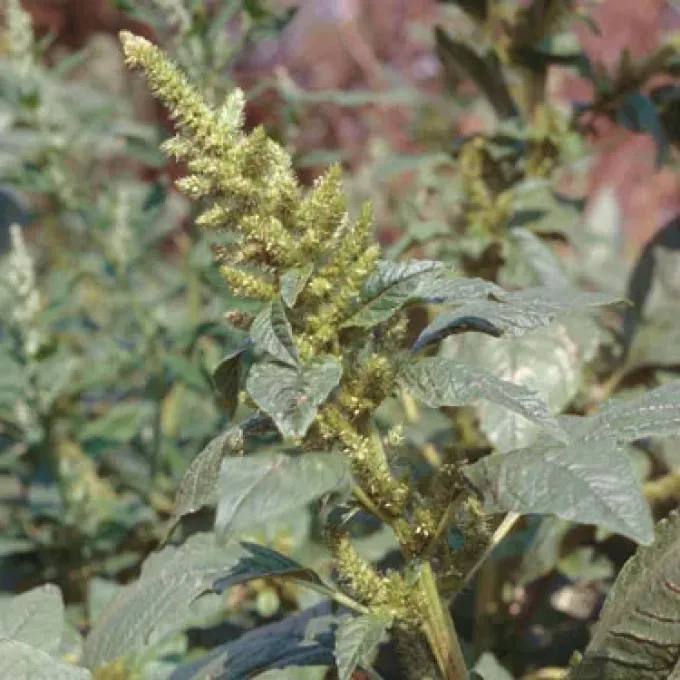
Description
Sowing dates
Amaranthus vulgatissimus is a thermophilic annual plant of the Amaranthaceae family that requires specific soil temperatures for successful germination. Sowing must be delayed until the soil has consistently warmed up to at least 12–14 degrees Celsius.
The optimal planting window generally occurs from late April to mid-May, depending on the climatic zone. Sowing into cold soil significantly delays emergence and increases the risk of fungal infections in seeds.
Due to the extremely small size of the seeds, they should be sown shallowly, ideally at a depth of 1–2 centimeters. Using precise seeding equipment helps maintain a consistent depth, which is vital for achieving uniform stand establishment.
During the initial growth phase, the crop is sensitive to weed competition. Consequently, sowing in rows allows for mechanical weeding and inter-row cultivation, which are essential for the crop's development in the early stages.
Planting density is a key factor in yield optimization, with recommended rates typically ranging from 100,000 to 150,000 plants per hectare. This density prevents excessive branching and encourages a more uniform maturation process.
Growing requirements
The crop thrives in fertile, well-drained loamy soils with a neutral pH. It is highly sensitive to waterlogged conditions, which can lead to root system degradation and reduced productivity in heavy clay soils.
Amaranth is renowned for its drought tolerance, which is supported by a deep taproot system. This biological trait allows the plant to access moisture from deeper soil layers during prolonged dry spells.
As a light-loving plant, amaranth requires full sun exposure to achieve maximum photosynthetic efficiency. Shaded areas significantly impede growth and lead to a reduction in both biomass and seed yield potential.
Temperature is a critical factor, with the ideal growth range between 25 and 30 degrees Celsius. Development slows down considerably below 10 degrees, making the plant ill-suited for regions with early autumn frosts.
Nutrient management, particularly nitrogen, is vital during the rapid vegetative stage. Applying balanced fertilizers promotes rapid biomass accumulation, though excessive nitrogen should be avoided to prevent nitrate accumulation in tissues.
Yield
The yield potential of green biomass for this species can reach 300 to 800 centners per hectare under favorable management practices. Its efficiency in converting sunlight into protein makes it a highly valuable forage source.
Seed yields range between 15 and 30 centners per hectare. Achieving these figures requires proper site selection, adequate weed control, and optimal soil fertility levels maintained throughout the growing season.
Productivity is significantly enhanced when proper inter-row spacing is combined with timely cultivation practices. Intense agricultural management can lead to a substantial increase in overall biological output.
The nutritional profile of the plant includes high levels of essential amino acids and proteins. It is widely considered an excellent alternative crop for sustainable agricultural systems aiming to diversify feed sources.
Regular monitoring of plant development allows farmers to adjust irrigation and fertilization schedules. With consistent care, amaranth provides stable yields even in challenging climatic conditions where traditional crops might fail.
Main diseases and pests
Soil-borne pests, such as wireworms, pose the most significant risk during the early emergence phase. They often feed on the roots of young seedlings, leading to gaps in the field and reduced stand density.
Root rot diseases are common issues, especially in fields with poor drainage or where the crop is grown consecutively without proper rotation. Prevention is primarily focused on soil aeration and crop spacing.
Insects like aphids and various species of leaf-eating beetles can cause damage during the active growing season. Regular scouting and integrated pest management practices are recommended to mitigate these threats.
Powdery mildew may occur in mid-summer when high humidity and temperature fluctuations are present. Maintaining proper field hygiene and ensuring adequate air circulation between rows significantly reduces the spread of fungal pathogens.
- Implementation of crop rotation.
- Use of certified, disease-free seed.
- Mechanical weeding to reduce pest habitats.
Harvesting
For forage production, the optimal harvest time is during the early flowering stage. This is when the leaves and stems contain the highest concentration of digestible proteins and beneficial phytochemicals.
Seed harvesting should be timed carefully when the seed heads turn brown and the seeds reach maturity. Delaying the harvest can lead to significant shattering losses, so monitoring the moisture content is crucial.
Direct combining is the standard method for large-scale operations. Modern machinery adjustments, including fan speeds and screen sizes, are necessary to ensure the harvest of the small, light seeds without excessive loss.
Post-harvest, seeds must be cleaned of vegetative debris immediately to prevent spoilage. Drying the seed to a moisture content of approximately 12–14% is necessary for long-term safe storage.
The harvested green biomass can be chopped and ensiled immediately. Amaranth silages are noted for their good fermentation characteristics, making them an excellent choice for winter livestock feeding programs.