
Alternanthera reineckii
Alternanthera reineckii
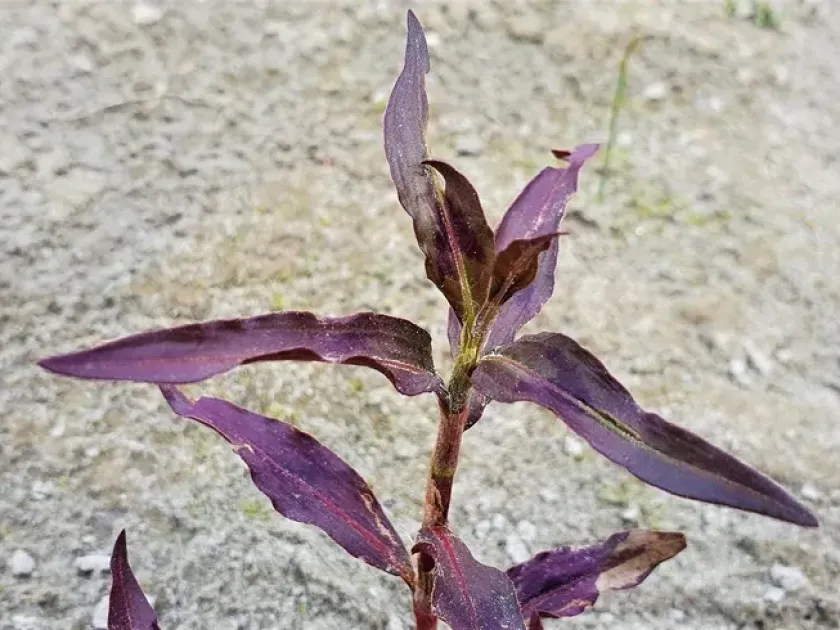
Description
Growing requirements
Alternanthera reineckii is a perennial herbaceous plant belonging to the Amaranthaceae family, widely recognized for its use as a premium aquarium species. It originates from the tropical regions of South America, specifically inhabiting marshy environments and riverbanks in Brazil and Paraguay.
Botanically, it features an upright stem with opposite leaves that display a remarkable range of colors from green to deep red. The coloration of the foliage is highly responsive to environmental factors, specifically the spectral quality and intensity of artificial lighting.
To cultivate this species successfully, aquatic environment parameters must be carefully managed. A water temperature of 22–28°C and a pH range between 6.0 and 7.5 are considered optimal for healthy physiological development.
The plant demonstrates high demand for CO2 injection and nutrient-rich substrate. Iron supplementation is essential to prevent chlorosis and maintain the characteristic red pigmentation of the leaf tissues, which is highly sought after in aquascaping.
Propagation is primarily achieved through vegetative stem cuttings. By removing and planting segments containing several nodes, the plant will readily establish a new root system in the substrate, provided that lighting conditions remain consistent.
Main diseases and pests
The most significant threat to Alternanthera reineckii is the uncontrolled growth of algae, such as hair algae, which compete for nutrients and block vital light exposure. Balancing the nutrient supply is crucial for mitigation.
Inadequate lighting causes rapid decline, characterized by the decay of lower leaves and a general loss of structural integrity. This condition often leads to opportunistic infections by fungal pathogens attacking the necrotic tissue.
Environmental fluctuations, particularly sudden changes in pH or water hardness, can result in stunted growth and leaf deformation. Consistency in maintenance protocols is essential to prevent these physiological stresses.
Herbivorous aquatic pests, such as certain snail species, may damage the delicate leaves, compromising the plant's photosynthetic ability and aesthetic value. Periodic monitoring is recommended to keep pest populations in check.
To ensure long-term viability, regular pruning is necessary. This prevents the lower parts of the stem from becoming barren due to shading, promotes lateral branching, and ensures the plant remains healthy and resistant to diseases.