
Thunberg's amaranth
Amaranthus thunbergii Moq.
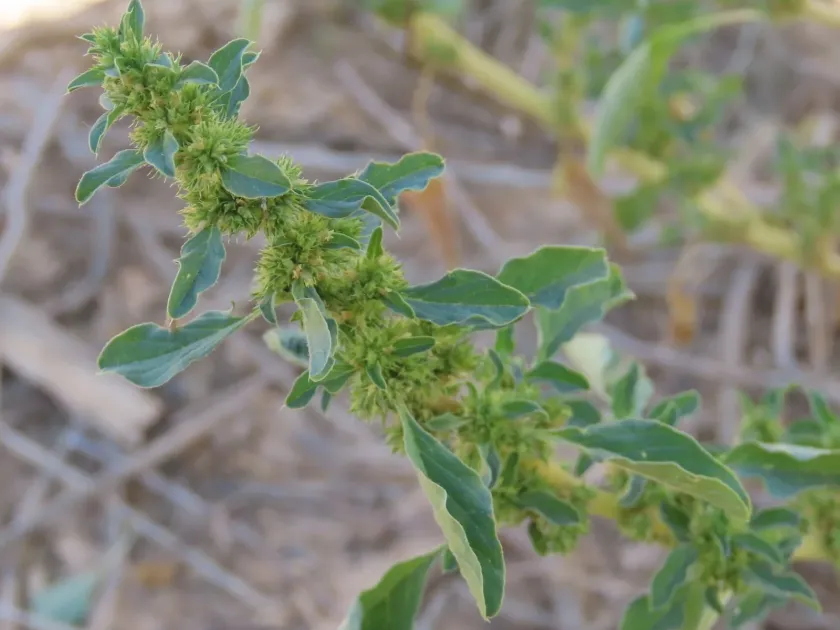
Description
Sowing dates
Thunberg's amaranth (Amaranthus thunbergii Moq.) is an annual herbaceous plant belonging to the Amaranthaceae family. Originating from Africa, this species has adapted well to various arid and semi-arid environments, making it a subject of agricultural interest for its resilience and biomass production.
In temperate climates, the sowing of this crop must be synchronized with the soil warming process. The ideal time to start seeding is when the soil temperature at a depth of 5–10 cm stabilizes between +15°C and +18°C. Sowing too early in cold, wet soil significantly inhibits germination and increases the risk of fungal decay.
Preparation of the seedbed is essential due to the minute size of the seeds. The soil surface must be fine-tilled and firm to ensure optimal seed-to-soil contact. Seeds are typically sown at a shallow depth of 1.5–2 cm, followed by light rolling to help retain soil moisture around the seeds.
Row spacing depends on the primary use of the crop. For forage production, narrow rows of 15–30 cm are common to maximize density. For grain production, wider row spacing of 45–70 cm is preferred to allow for mechanical weed control, which is crucial during the plant's early, slower growth phase.
Plant density in commercial plots is usually maintained between 150,000 and 300,000 plants per hectare. Because early development is slow, ensuring the plot is free of weeds before emergence is a fundamental component of the agrotechnical strategy for this species.
Growing requirements
Thunberg's amaranth is a highly photophilous plant that requires direct, full-spectrum sunlight for efficient photosynthesis. Any shade from neighboring vegetation or surrounding structures results in etiolation, reduced stem strength, and a significant drop in overall biomass production.
The plant exhibits remarkable drought tolerance, which is one of its primary agricultural advantages. Its deep taproot system allows it to extract moisture from deeper soil layers, enabling growth in environments where other crops would suffer from severe water stress.
Regarding soil preferences, this amaranth thrives in light, well-aerated sandy or loamy soils with a neutral or slightly alkaline pH. While it is adaptable, it performs poorly in heavy clay soils or areas prone to waterlogging, which often induce root rot and stunted development.
Nutrient management should focus on a balanced NPK ratio. While the plant can grow in moderate fertility, applications of organic matter or compost significantly improve soil structure and water-holding capacity, leading to more uniform growth throughout the season.
Optimal growth occurs at temperatures between +25°C and +30°C. The species is highly sensitive to frost; temperatures near or below freezing will damage tissues and halt growth, meaning the crop should only be cultivated during the frost-free period of the year.
Yield
The primary agricultural utility of Thunberg's amaranth lies in its high-quality forage potential. It is valued for its rich protein content, essential amino acids (especially lysine), and mineral profile, which make it an excellent supplementary feed for livestock and poultry.
Depending on soil fertility and moisture management, the yield of green biomass can reach between 30 and 60 tons per hectare. Its ability to regrow after cutting makes it a highly efficient crop in intensive forage production systems, allowing for multiple harvests within a single season.
The biomass can be utilized in several ways: as fresh forage, wilted for silage, or processed into hay and leaf meal. Its high sugar content at the vegetative stage makes it an excellent candidate for ensiling, ensuring that livestock producers have access to nutrient-dense feed during winter months.
Grain production is another potential output, with seed yields typically ranging from 1.5 to 3 tons per hectare. The seeds are highly nutritious, containing healthy fats and essential proteins, which adds value to the crop if managed correctly through the maturation phase.
Due to its high biomass turnover, this amaranth acts as a profitable rotational crop in arid regions, helping to maintain soil cover and suppressing competing weeds, provided that the initial stand is well-established during the first few weeks of the growth period.
Main diseases and pests
Fungal infections, specifically root rot and powdery mildew, represent the most significant threats to Amaranthus thunbergii, particularly in humid or poorly ventilated conditions. These pathogens can spread rapidly if the canopy becomes too dense and airflow is restricted.
Pests such as aphids and various species of loopers (caterpillars) often target the succulent leaves and developing shoots. Regular scouting of the field is necessary to detect infestation early and apply corrective measures before the damage exceeds economic thresholds.
The core of the protection strategy involves integrated pest management (IPM). This includes strict adherence to crop rotation to break the life cycles of soil-borne pathogens and the destruction of wild amaranth varieties that act as alternate hosts for pests and viruses.
If chemical intervention is necessary, it must comply with local regulations for forage crops. It is critical to adhere to the pre-harvest interval (PHI) for any pesticides used, ensuring that no residues remain in the silage or fresh fodder intended for animal consumption.
Managing soil aeration and avoiding excessive irrigation are key to preventing bacterial stem rots. Maintaining a healthy, vigorous plant through optimal fertilization and spacing is the best natural defense against most diseases affecting this crop species.
Harvesting
Harvesting for green forage is ideally performed at the onset of flowering. At this growth stage, the ratio of protein to fiber is optimal, ensuring high digestibility and palatability for livestock before the stems become overly lignified and fibrous.
Grain harvesting requires a precise approach. It begins once the panicles change color and dry out, but before the seeds reach full brittleness to prevent excessive shattering losses. Modern harvesting equipment must be carefully calibrated to reduce mechanical stress on the seeds.
When using combine harvesters for grain, rotor speed must be reduced to avoid damaging the small seeds. Proper adjustment of the air intake in the cleaning shoe is vital to separate the chaff from the heavy seeds without blowing them out of the machine.
Post-harvest processing is mandatory for grain. Drying the harvest to a moisture content of 12-13% is essential to prevent mold growth, heating, and oxidation of the fats contained within the seeds during long-term storage.
For ensiling, the green mass should be chopped to a particle size of 2-3 cm. Proper packing in the silo is critical to creating anaerobic conditions, which promotes the activity of lactic acid bacteria, ensuring the preservation of nutrients and long-term stability of the feed.