
Amaranthus hybridus
Amaranthus hybridus L.
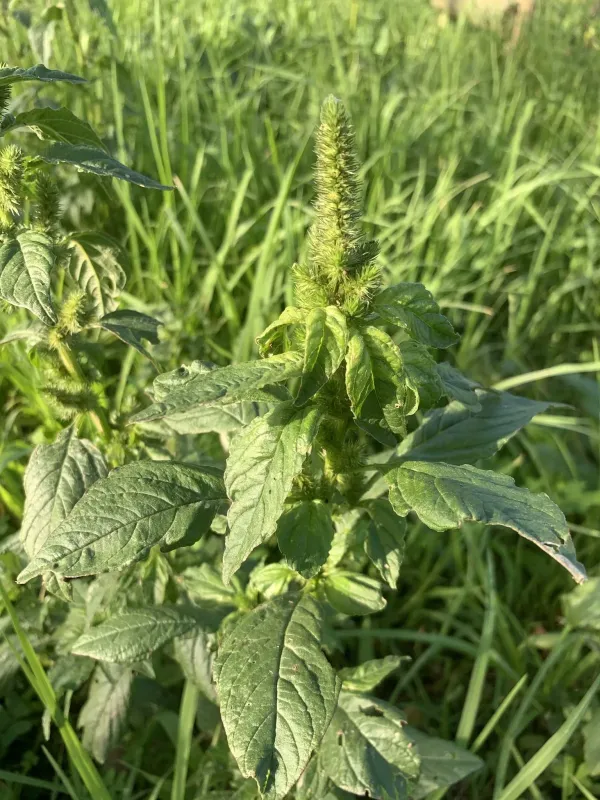
Description
Sowing dates
Amaranthus hybridus is a warm-season crop, so planting should only begin once soil temperatures have reached a steady +14...+16 degrees Celsius.
The optimal sowing window typically spans from late May to early June, ensuring that the risk of late spring frosts has completely passed.
Seeds are exceptionally tiny, requiring shallow planting depths of 1–2 cm to ensure successful germination and emergence through the soil surface.
Precision planters are recommended for sowing, maintaining row spacings between 45 and 70 cm to provide ample room for full plant development.
Seeding rates are adjusted based on the end goal: approximately 0.5–1 kg per hectare for grain production and up to 2 kg for green biomass production.
Growing requirements
Belonging to the Amaranthaceae family, Amaranthus hybridus is a resilient annual herb known for its strong adaptability to diverse environmental conditions.
The plant utilizes the C4 photosynthetic pathway, making it highly drought-tolerant and capable of sustained growth even during periods of intense heat.
Ideally, this crop thrives in loose, well-drained soils with a neutral or slightly alkaline pH and a high content of organic matter for maximum vigor.
Sunlight is a critical requirement for this species; it demands full exposure throughout the day to avoid etiolation and ensure structural stability.
Early-stage weed management is vital, as the crop grows slowly during its initial month and can be easily outcompeted by aggressive weed species.
Yield
When managed with appropriate agronomic practices, Amaranthus hybridus is capable of producing impressive yields in both forage mass and protein-rich grain.
For silage or green manure applications, the crop can generate between 40 and 80 tons of biomass per hectare depending on soil fertility and irrigation.
The harvestable grain is highly valued for its nutritional profile, containing a balanced range of essential amino acids and health-promoting lipids.
Grain yields generally range from 1.5 to 3 metric tons per hectare under optimized field conditions with proper fertilization and moisture control.
Beyond human consumption, the plant serves as a high-quality forage additive, significantly enhancing the nutritional content of livestock feeding programs.
Main diseases and pests
Young seedlings are particularly vulnerable to various chewing insects, such as weevils and aphids, which can stunt development or destroy entire stands.
Root rot represents a significant threat, especially in waterlogged or poorly drained soils where fungal pathogens can thrive unchecked during the season.
Downy mildew and other foliar fungal diseases may appear in dense plantings where humidity remains high and air circulation is severely restricted.
Soil-dwelling pests like wireworms and cutworms can damage the subterranean portions of the stem, weakening the plant's structural integrity.
Effective defense strategies involve using high-quality treated seeds and implementing strict crop rotation protocols to minimize pest life cycles.
Harvesting
Harvesting for biomass should occur at the onset of the flowering stage, when the nutrient density in leaves and stems reaches its physiological peak.
For grain production, the timing is critical; harvest should commence as soon as the flower spikes begin to dry and seeds darken to prevent loss.
Direct combine harvesting is common, though it requires careful calibration of drum speed and concave clearance to prevent damaging the fine seeds.
In regions with high late-season rainfall, farmers often use a swathing method, cutting the plants and allowing them to dry in the field before threshing.
Post-harvest processing is mandatory, including thorough cleaning and drying of the seeds to moisture levels below 14% to prevent mold and spoilage.