
Alternanthera caracasana
Alternanthera caracasana
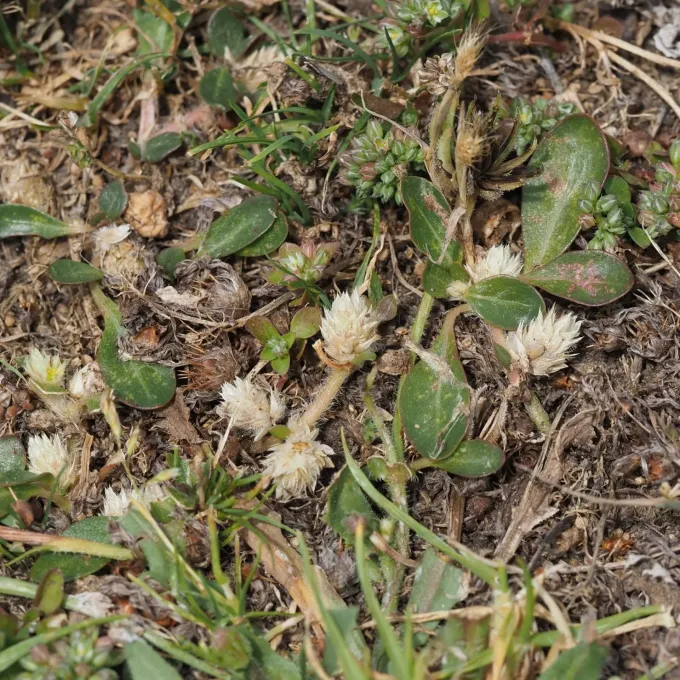
Description
Growing requirements
Alternanthera caracasana is a perennial herbaceous plant belonging to the Amaranthaceae family. It is characterized by its prostrate growth habit, with stems that often root at the nodes when in contact with moist soil.
Originating from tropical regions of the Americas, this species has naturalized globally in tropical and subtropical zones, where it is frequently observed in disturbed habitats and cultivated fields.
The plant thrives in full sun and has a high tolerance for diverse soil types, including sandy, loamy, and clay soils, provided that it is not subjected to prolonged waterlogging which may hinder root respiration.
Climatic requirements are focused on warm temperatures; the species exhibits robust growth during hot seasons, making it a persistent competitor for resources such as nitrogen and water in agricultural systems.
Economically, it is classified as a significant weed, capable of forming dense mats that suppress the emergence and early development of commercial crops by outcompeting them for light and nutrients.
Main diseases and pests
As a member of the Amaranthaceae family, this species can act as a reservoir for various phytopathogenic viruses, which pose a risk to nearby high-value vegetable crops by serving as an overwintering host.
Various generalist insect pests and nematodes utilize the plant as a food source or breeding ground, increasing the overall pest pressure in fields where the weed is not managed properly.
Management strategies focus on mechanical cultivation, which is effective if done early in the season to prevent the establishment of the creeping root system in deeper soil layers.
Chemical control involves the use of systemic herbicides; however, the waxy texture of the foliage requires the inclusion of surfactants in the spray mix to ensure adequate absorption and efficacy.
Integrated weed management remains the most sustainable approach, combining crop rotation, competitive planting densities, and precise herbicide application to minimize the impact on crop yields.