
Tumbleweed
Amaranthus albus L.
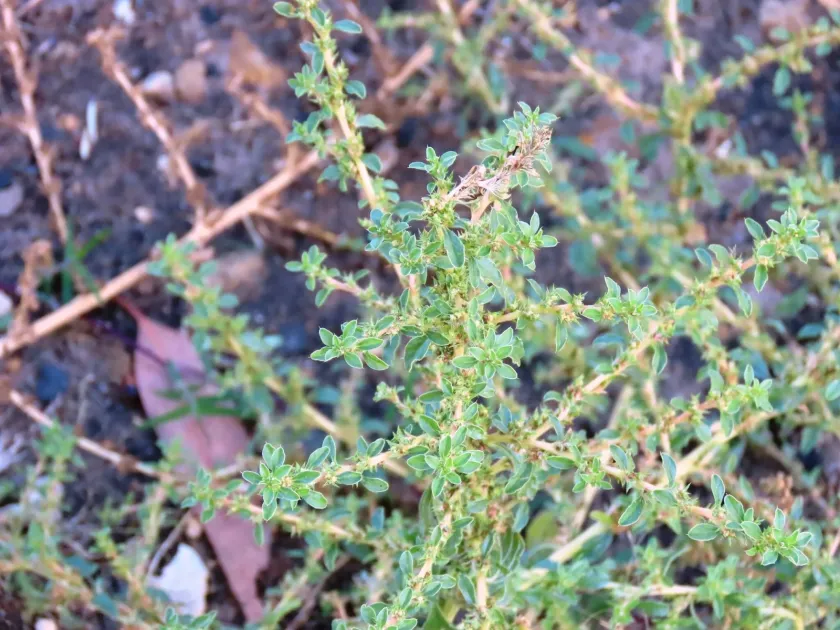
Description
Growing requirements
Tumbleweed, or Amaranthus albus L., is a significant member of the Amaranthaceae family. Originating from North America, this annual herb has successfully naturalized in diverse climates across the globe, often becoming an invasive weed species.
This plant thrives in well-drained, sandy, or light soils and is particularly known for its ability to grow in disturbed habitats. It has a high tolerance for drought and salinity, making it a persistent colonizer of agricultural and waste lands.
Environmentally, it requires full sun exposure for optimal development. As a C4 photosynthetic plant, it demonstrates exceptional efficiency in carbon fixation during hot, sunny conditions, outcompeting many local grasses and crops for resources.
Its unique biological adaptation involves a branched, bushy structure that becomes brittle upon maturity. The entire plant detaches from the roots to act as a tumbleweed, dispersing thousands of seeds across vast distances through wind movement.
Agronomic management requires consistent efforts due to the seeds' long-term soil viability and their ability to germinate throughout the growing season whenever soil moisture is adequate.
Main diseases and pests
Tumbleweed serves as an alternative host for various plant pathogens, including fungi and viruses. This makes it a critical vector for diseases that can devastate commercial crops like sugar beets and various vegetables.
Several insect pests, including aphids and leaf beetles, utilize the plant as a refuge. By maintaining weed populations at the edges of fields, farmers unintentionally create "green bridges" for pests to migrate onto main crops.
The plant acts as a fierce competitor for nutrients and water. In newly established crop fields, its rapid germination and early growth can quickly shade out and suppress the development of desired agricultural varieties.
Effective control measures include mechanical hoeing and the application of post-emergence herbicides. Prevention of seed set is the highest priority, as a single plant can produce a massive volume of seeds that persist in the soil bank.
Farmers are advised to practice good sanitation along field boundaries and irrigation ditches to prevent the initial spread of this plant into the main production areas, as eradication becomes exponentially harder once the seed bank is established.