
Prostrate amaranth
Amaranthus blitoides S. Watson
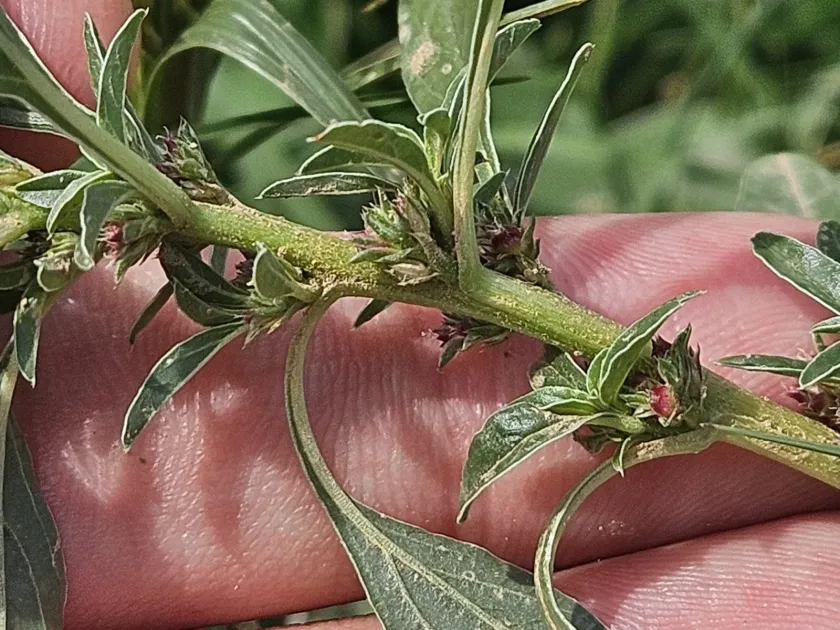
Description
Sowing dates
Prostrate amaranth is a thermophilic plant, which requires soil temperatures to reach at least 12–15 degrees Celsius for consistent seed germination.
The primary germination window typically opens in late spring and continues throughout the summer, depending on soil moisture availability and regional climate.
Seeds are capable of emerging from the shallow soil surface, and they exhibit a staggered emergence pattern, which complicates mechanical control efforts.
Rapid growth is observed immediately following emergence, allowing the plant to quickly establish a foothold even in competitive crop environments.
Successful management strategies must account for the plant's ability to produce multiple generations if growing conditions remain favorable throughout the season.
Growing requirements
Belonging to the Amaranthaceae family, this species is noted for its high environmental plasticity and adaptability to diverse ecological conditions.
It thrives in open, sunny environments and is highly intolerant of shade, which is why it often becomes a problem in fields with low plant density.
While it prefers fertile soils, it shows remarkable success on nutrient-poor or compacted soils where other crops struggle to establish themselves.
The plant possesses a deep taproot system, enabling it to access moisture reserves during periods of severe drought that would limit other vegetation.
Soil pH levels ranging from slightly acidic to alkaline are tolerated well, demonstrating the plant's robustness across various geographic regions.
Main diseases and pests
Prostrate amaranth acts as a host for several pathogenic fungi, including those responsible for leaf spot diseases that can spread to nearby cash crops.
Viruses transmitted by insect vectors often find a reservoir in this plant, posing a significant threat to vegetable and field crop health.
Invertebrate pests like aphids, spider mites, and various lepidopteran larvae frequently feed on the succulent foliage and tender stems of the plant.
Root-knot nematodes have been known to cause significant damage to the root system, potentially weakening the plant but also serving as a localized pest trap.
Integrated pest management protocols, including chemical and mechanical interventions, are essential to limit the negative impact of these threats in agricultural settings.