
Purple amaranth
Amaranthus hypochondriacus L.
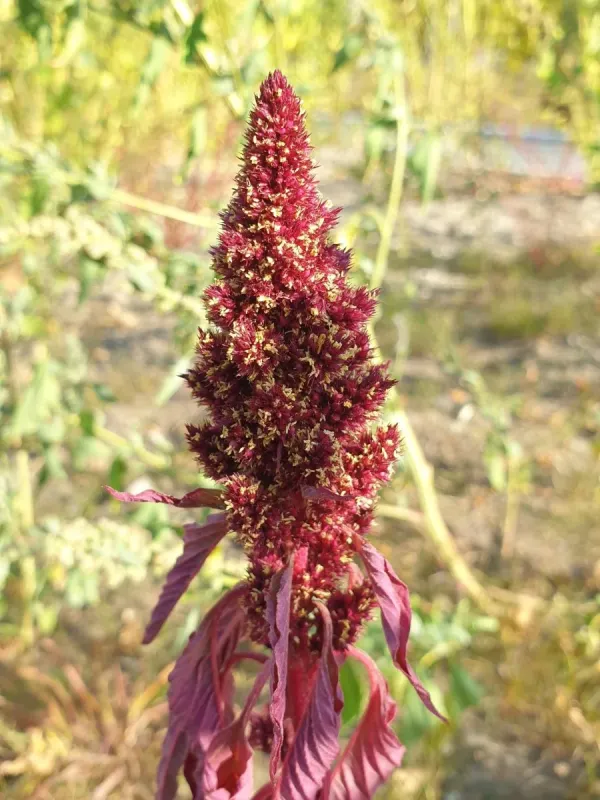
Description
Sowing dates
Purple amaranth should be sown when the soil temperature at a depth of 5-10 cm consistently reaches +12°C to +14°C. Early sowing in cold soil significantly inhibits germination and increases the risk of soil-borne diseases.
The seeds are extremely small and light, requiring shallow sowing at a depth of 1 to 2 cm. Precise planting equipment is necessary to ensure consistent placement, as burying seeds too deep will result in poor emergence.
Optimal planting densities range from 0.5 to 1.0 kg of seed per hectare. Row spacing should be adjusted between 45 and 70 cm to facilitate mechanical cultivation and weed control during the early stages of growth.
Post-sowing rolling is highly recommended to improve soil-to-seed contact and ensure proper moisture uptake, which is essential for uniform germination of this tiny-seeded crop.
Managing competition from weeds is critical in the first four weeks, as the plant establishes itself slowly. Effective weed control during this period is the most important factor in securing a healthy crop stand.
Growing requirements
As a C4 plant, purple amaranth is highly efficient in converting solar energy into biomass, making it well-suited for high-temperature and high-light environments during the growing season.
It thrives in a variety of well-drained soil types, including sandy loams and silt loams. However, it is sensitive to waterlogging and poor soil aeration, which can rapidly lead to root rot and stunted growth.
The plant possesses a robust taproot system that allows it to access deep soil moisture, granting it significant drought tolerance once the plants are fully established in the field.
Nutrient requirements should be met through balanced fertilization. While the crop responds well to nitrogen, excessive applications can cause lodging or reduce seed quality, so precise soil analysis is advised.
It is a photoperiod-sensitive crop that prefers long, warm days. Adequate sunlight exposure is necessary to ensure proper flower development and seed maturation throughout the late summer months.
Yield
Under optimal management, seed yields for purple amaranth typically range between 20 and 30 decitons per hectare. Green matter production can be substantial, providing a valuable source of livestock forage.
Yield stability is heavily dependent on weather conditions during the flowering phase. Adequate moisture and warm temperatures during this period are vital to ensure the development of large, filled seed heads.
The crop is valued for its high nutritional density, particularly its high-quality protein profile and presence of essential fatty acids like squalene, which are found in the seed oil.
In forage production, harvesting at the early flowering stage ensures the highest protein content and digestibility, making it an excellent component for silage in sustainable dairy and livestock systems.
Economic potential is increasing as demand for gluten-free grains and specialized oils grows in international markets, positioning purple amaranth as a high-value niche alternative to traditional cereals.
Main diseases and pests
Insect pests, such as weevils and aphids, can cause significant damage by feeding on young leaves or developing flower heads, which directly impacts the potential harvestable seed volume.
Fungal diseases like root rot are often linked to poor soil management or excessive irrigation. Implementing a diverse crop rotation is the most effective preventative measure against these soil-borne pathogens.
Downy mildew can appear under humid conditions, causing leaf discoloration and reducing the plant's overall vitality. Ensuring adequate airflow through proper spacing helps keep the foliage dry and healthy.
Weed management remains the primary challenge in organic systems. Regular inter-row cultivation is often necessary to prevent encroaching weeds from outcompeting the slow-growing young amaranth plants.
Chemical control should be approached with caution as the seeds may accumulate pesticide residues, potentially compromising the quality of final food-grade products intended for human consumption.
Harvesting
Harvesting purple amaranth requires timing and precision. Because the seeds mature at different rates within the flower head, waiting for the entire plant to dry down often leads to significant seed loss through shattering.
The ideal time to harvest is when the seeds have hardened and turned their characteristic dark color, while the foliage may still retain some green. This prevents the loss of the most mature seeds.
A two-stage harvesting process—cutting the plants and allowing them to windrow for final drying before threshing—is often superior to direct combining, as it reduces mechanical damage to the seeds.
Once harvested, the grain must be immediately cleaned to remove dust and plant debris. High levels of foreign material can trap moisture, leading to mold and fermentation in storage containers.
Careful drying at temperatures not exceeding 40°C is essential to maintain the integrity of the delicate seed oils. Excessive heat can degrade the nutrient profile, reducing the market value of the grain.