
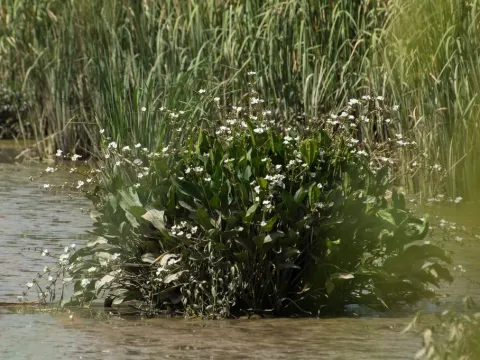
Echinodorus
Echinodorus
Echinodorus is a genus of perennial aquatic or semi-aquatic plants belonging to the Alismataceae family. Known commonly as Amazon sword plants, they are highly valued in both ornamental horticulture and botanical research for their diverse leaf shapes and growth patterns.
What the section contains
 Amazon sword plant
Echinodorus grisebachii
Amazon sword plant
Echinodorus grisebachii
 Bleher's Amazon Sword
Echinodorus bleherae
Bleher's Amazon Sword
Echinodorus bleherae
 Echinodorus barthii
Echinodorus barthii
Echinodorus barthii
 Echinodorus berteroi
Echinodorus berteroi
Echinodorus berteroi
 Echinodorus floribundus
Echinodorus floribundus
Echinodorus floribundus
 Echinodorus horizontalis
Echinodorus horizontalis
Echinodorus horizontalis
 Echinodorus longiscapus
Echinodorus longiscapus
Echinodorus longiscapus
 Echinodorus palifolius
Echinodorus palifolius
Echinodorus palifolius
 Echinodorus paniculatus
Echinodorus paniculatus
Echinodorus paniculatus
 Echinodorus pubescens
Echinodorus pubescens
Echinodorus pubescens
 Echinodorus subalatus
Echinodorus subalatus
Echinodorus subalatus
 Echinodorus trialatus
Echinodorus trialatus
Echinodorus trialatus
 Gabriel's Echinodorus
Echinodorus gabrieli
Gabriel's Echinodorus
Echinodorus gabrieli
 Hybrid Echinodorus
Echinodorus hybrids
Hybrid Echinodorus
Echinodorus hybrids
 Large-flowered Echinodorus
Echinodorus grandiflorus
Large-flowered Echinodorus
Echinodorus grandiflorus
Echinodorus
The native range of these plants spans the tropical and subtropical regions of the Americas. They are typically found in the margins of rivers, streams, and seasonal wetlands, reflecting their biological adaptation to fluctuating water levels and nutrient-rich substrates.
For optimal growth, Echinodorus requires a nutrient-dense substrate rich in iron and trace elements. The root system is robust and requires a deep, loose planting medium to facilitate nutrient uptake and stable anchorage of the plant's expansive foliage.
Environmental conditions must mimic tropical habitats, with water temperatures consistently between 22 and 28 degrees Celsius. Light intensity is a critical factor; high-quality full-spectrum lighting promotes faster growth and better leaf coloration compared to low-light conditions.
Propagation is primarily handled through vegetative means, specifically by separating adventitious plantlets that emerge on rhizomes or flower stalks. This method ensures the genetic stability of the mother plant and allows for rapid population expansion in a nursery setting.
Chlorosis is the most common physiological disorder affecting Echinodorus, typically appearing as yellowing leaf tissue while veins remain green. This is a direct indicator of iron deficiency, which must be addressed through targeted substrate fertilization.
Root rot represents a significant pathological threat, often exacerbated by compacted soil or stagnant water conditions. When oxygen cannot reach the rhizosphere, pathogenic fungi proliferate, leading to the rapid decay of the plant crown.
Pests such as snails and various aquatic insects can cause significant mechanical damage to the foliage. These pests can rapidly defoliate young, tender shoots, which negatively impacts the plant's overall photosynthetic capacity and growth rate.
Effective management requires strict adherence to hygiene protocols, including the inspection of all new stock for signs of infestation. Mechanical removal of pests and the use of targeted biological controls are preferred over broad-spectrum pesticides.
Maintaining a balanced ecosystem is essential for disease prevention. Regular monitoring of water quality, including pH levels and nutrient concentrations, helps maintain plant vigor, making them less susceptible to opportunistic infections and pests.