
Amazon sword plant
Echinodorus grisebachii
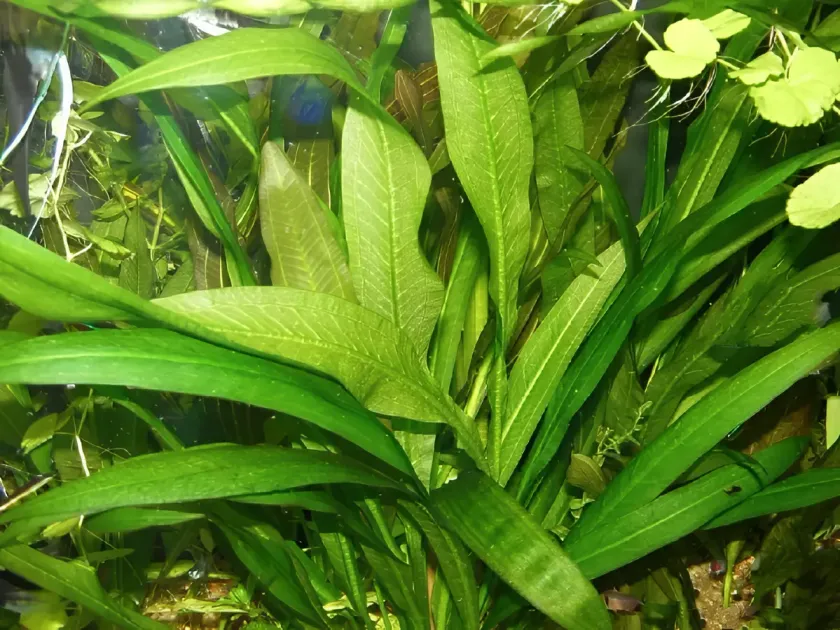
Description
Sowing dates
Propagation of Echinodorus grisebachii is primarily achieved through vegetative means by utilizing adventitious plantlets. These develop on the inflorescence stems once the plant has reached a mature stage.
For successful propagation, the flower stalk should be pinned to the substrate. Once the plantlets develop sufficient root systems and leaves, they can be carefully severed from the mother plant.
Tissue culture propagation is becoming standard in commercial aquaculture to ensure disease-free specimens. This method allows for mass production of consistent, high-quality stock.
When propagating in greenhouse conditions (emersed state), plants grow significantly faster, producing more robust plantlets compared to those grown fully submerged.
It is essential to provide high-intensity lighting during the propagation phase to ensure that the new plantlets have sufficient energy reserves to establish themselves in a new environment.
Growing requirements
Echinodorus grisebachii, a member of the Alismataceae family, is a staple aquatic plant native to Central and South America. It is highly valued for its elegant, lanceolate leaves.
The plant thrives in water temperatures between 22 and 28 degrees Celsius. Stable temperatures are crucial to prevent leaf decay and ensure steady metabolic rates.
Lighting requirements are moderate to high. Sufficient light intensity is necessary to maintain the plant's structural integrity and prevent leggy, weak growth patterns.
Nutrient-rich substrate is vital for this species, as it is a heavy root feeder. Incorporating root tabs or clay-based substrate supplements significantly enhances growth rates.
Water chemistry should be maintained within a pH range of 6.5 to 7.5. Soft to medium-hard water is generally preferred to prevent calcium carbonate buildup on the leaf surfaces.
Main diseases and pests
Iron deficiency is the most common physiological issue for this species, leading to chlorosis. This condition causes the leaves to lose their green pigment and turn yellow.
Algal growth on leaves, particularly hair algae, is a major threat. This usually stems from an imbalance in the ratio of nitrates and phosphates within the aquarium ecosystem.
Pests such as snails or certain aquatic larvae can graze on the soft leaf tissues, creating wounds that may become entry points for secondary bacterial infections.
Fluctuating water parameters, especially rapid changes in pH or hardness, can lead to leaf melting, where the tissue dissolves rapidly due to extreme environmental stress.
Effective management involves regular water changes, monitoring nutrient levels, and ensuring proper water circulation to prevent the accumulation of debris around the crown.