
Echinodorus pubescens
Echinodorus pubescens
Description
Growing requirements
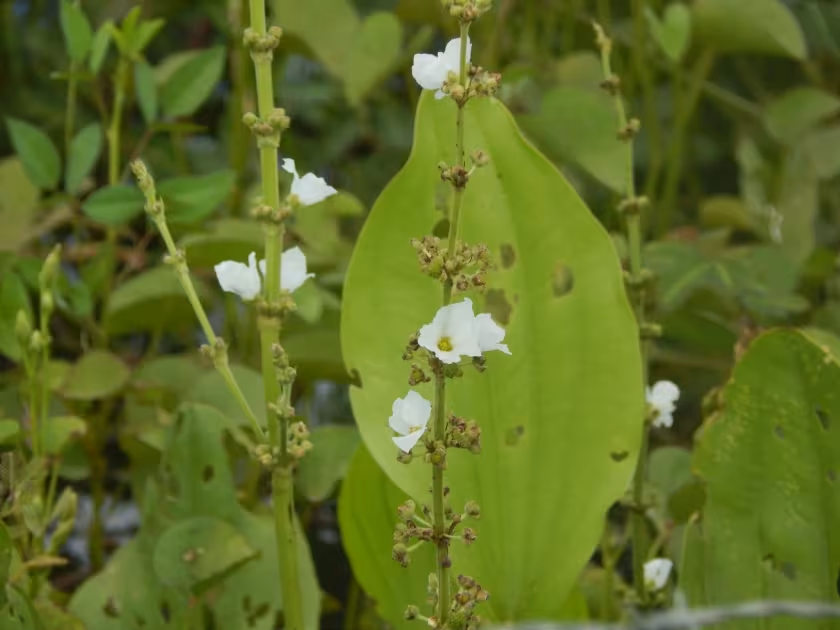
Echinodorus pubescens is a perennial herbaceous aquatic and semi-aquatic plant belonging to the Alismataceae family. In its natural habitat, it thrives in the tropical zones of South America, preferring marshy areas and the banks of slow-moving water bodies.
The plant derives its name from the characteristic pubescence of its leaf blades and petioles, which is a rare trait for this genus. Its botanical structure includes a robust root system that penetrates deep into the substrate, ensuring nutrient uptake in waterlogged soil conditions.
Successful cultivation of this species requires specific conditions closely mimicking its tropical native environment. The plant prefers loose, silted soils with high organic matter content and a slightly acidic to neutral pH balance.
This crop is highly sensitive to light conditions, requiring bright but diffused light to maintain vigorous growth. The optimal temperature range for development is between 22 and 28 degrees Celsius, and sudden temperature fluctuations can negatively affect leaf health.
The primary agricultural and horticultural use of Echinodorus pubescens is in ornamental gardening and aquascaping. It is frequently utilized for background layouts in paludariums and greenhouses, where it can grow to significant sizes, forming dense clusters of foliage.
Main diseases and pests
The main threats to the plant are fungal infections, which often occur due to water stagnation or impaired gas exchange in the root zone. Such damage typically manifests as necrotic spots on the leaves, necessitating the prompt removal of affected plant parts.
Common pests that pose a risk include various mollusks, which may graze on the young, tender leaves. Additionally, when grown in greenhouse environments, the plant may be subject to infestations by aphids and spider mites that colonize the emergent parts of the shoots.