
Echinodorus berteroi
Echinodorus berteroi
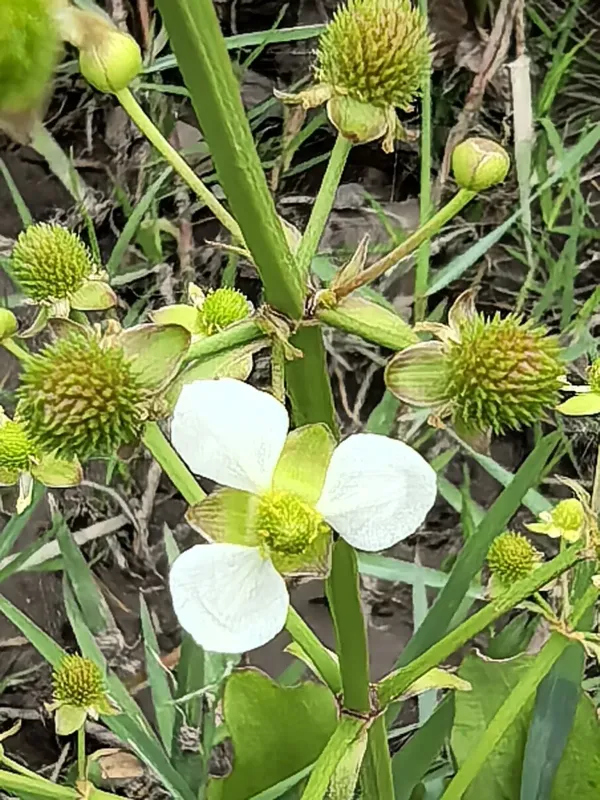
Description
Growing requirements
Echinodorus berteroi is an aquatic species belonging to the Alismataceae family, native to the tropical and subtropical regions of the Americas. This plant thrives in wetland environments, including river margins and shallow marshes, demonstrating remarkable adaptability to seasonal water level fluctuations.
Successful cultivation of this species requires a nutrient-rich substrate combined with stable water parameters. Optimal growth is achieved under bright lighting conditions, which support the robust development of both submerged and emergent leaf forms characteristic of this plant.
The temperature regime should be maintained between 20°C and 28°C to ensure consistent vegetative growth. A well-aerated substrate is essential to prevent root asphyxiation, as the plant relies on deep root systems for nutrient uptake from the soil medium.
Agronomic management involves periodic root fertilization to maintain the plant's vigor. The availability of micronutrients, particularly iron and manganese, is crucial for preventing leaf chlorosis and maintaining healthy green coloration throughout the growing season.
Botanically, Echinodorus berteroi is known for its polymorphic leaves, which adjust their shape based on environmental stressors and water depth. This adaptability makes it a versatile species for both ornamental aquatic landscapes and specialized botanical production.
Main diseases and pests
The primary threats to this plant include fungal and bacterial pathogens that flourish in stagnant water conditions. Decay of the rhizome and leaf tissues is often a sign of poor environmental management and accumulation of organic waste.
Pests such as aphids and spider mites can colonize the emergent parts of the plant if grown in humid greenhouse settings. Integrated pest management strategies, including biological controls, are recommended to protect the crop from infestation.
Nutrient imbalances, particularly mineral deficiencies, are frequently encountered in intensive cultivation. Monitoring soil and water chemistry is necessary to prevent yellowing of the foliage and structural weakness of the stem system.
Algal overgrowth on the leaves can significantly impair photosynthetic efficiency and restrict the plant's development. Effective algal control methods and maintaining a clean growing environment are essential to ensure the health of the specimens.
Proper hygiene during propagation and maintenance is vital to prevent the spread of diseases. Quarantine of new additions to the cultivation area helps maintain the integrity of the existing stock and minimizes the risk of introducing new pathogens.