
Echinodorus subalatus
Echinodorus subalatus
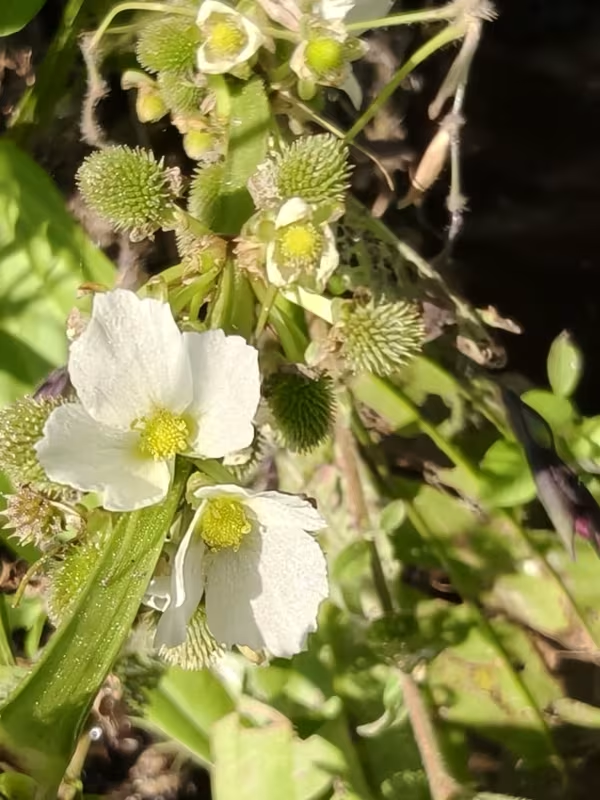
Description
Growing requirements
Echinodorus subalatus belongs to the Alismataceae family, a group of aquatic plants native to the tropical wetlands of Central and South America. Its natural habitat includes riverbanks and marshes that undergo regular seasonal flooding.
The plant features distinct lanceolate leaves and a robust root system, which is characteristic of perennial hydrophytes. It serves as an excellent specimen for aquascaping and wetlands restoration, provided the environmental conditions are suitable.
Optimal growth requires a stable water temperature between 22 and 28 degrees Celsius. The species thrives in soft to moderately hard water conditions with a neutral to slightly acidic pH, mirroring its natural environment.
A nutrient-rich substrate is essential for the development of Echinodorus subalatus. It is highly recommended to use a base layer containing organic matter and iron, as the plant extracts the majority of its nutrients through the roots.
Light intensity is a critical factor for successful cultivation. The plant requires moderate to high light levels to maintain its structure and coloration; insufficient lighting will lead to etiolated, weak growth and potential decline of the plant specimen.
Main diseases and pests
The plant is susceptible to fungal rot, often triggered by water temperature fluctuations or an accumulation of organic debris in the substrate, which creates an environment conducive to pathogen growth.
Leaf-eating pests, such as aphids and spider mites, can severely damage the foliage when the plant is kept in an emersed or semi-emersed state under low humidity conditions in a greenhouse or vivarium.
Chlorosis, resulting from a deficiency in essential trace elements like iron or manganese, is a major physiological threat that compromises the health and photosynthesis rate of the plant.
Algal blooms pose a significant threat by competing for light and nutrients. Keeping the water parameters stable and controlling the biological load is vital to preventing algae from smothering the Echinodorus leaves.
Bacterial soft rot can occur if the substrate becomes anaerobic, usually caused by over-compaction of the soil or poor circulation, leading to the rapid decay of the root system and the crown of the plant.