
Echinodorus barthii
Echinodorus barthii
Description
Growing requirements
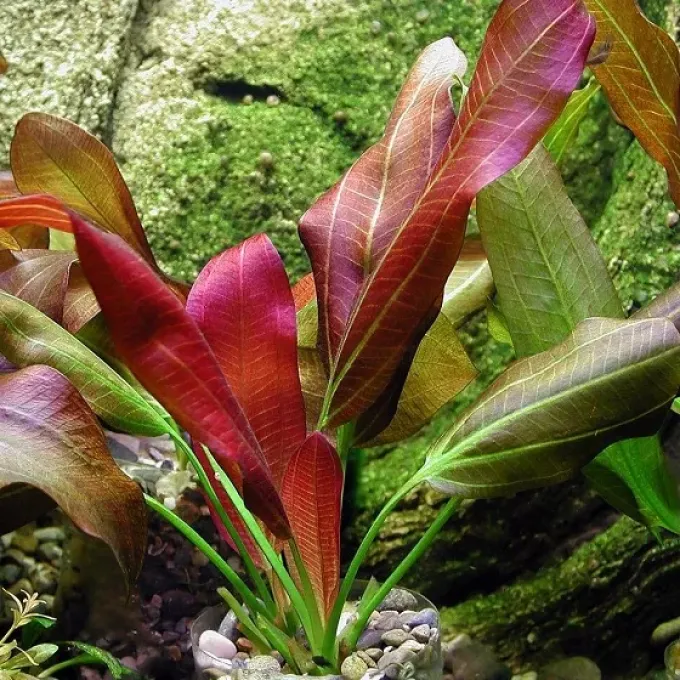
Echinodorus barthii is a highly decorative species belonging to the Alismataceae family. Known for its striking reddish-brown young leaves and deep green mature foliage, it is a hybrid frequently used in professional aquascaping.
This aquatic culture thrives in tropical environments with water temperatures ranging from 22°C to 28°C. Consistent warmth is essential for maintaining a steady growth rate and preventing dormancy during the colder months.
The root system is quite extensive, requiring a deep, nutrient-rich substrate composed of fine gravel or specialized aquatic soil. Adding iron-rich root tabs is highly recommended to promote vigorous growth and vibrant coloration.
Lighting requirements are moderate to high. To achieve the signature deep red hue on the leaves, the plant must be exposed to high-intensity light spectra for at least 10 hours per day, supplemented with CO2 injection.
Water chemistry flexibility is a hallmark of this plant, as it adapts well to varying pH levels and hardness. However, regular water maintenance and moderate circulation are crucial to ensure gas exchange and nutrient distribution throughout the foliage.
Main diseases and pests
The primary concern for Echinodorus barthii is chlorosis, caused by an iron deficiency. This condition manifests as yellowing of the leaves, starting from the veins and spreading across the blade, which can eventually lead to leaf death.
Pests such as certain species of aquatic snails may graze on the softer tissues of the plant. Maintaining a balanced ecosystem and monitoring for unusual leaf damage is the best preventive measure against such infestations.
Algal blooms on the leaf surface can hinder photosynthesis. If the plant is heavily shaded or if there is an excess of nutrients in the water column, algae can rapidly colonize the leaves, requiring physical removal or adjusted lighting.
Root rot occurs if the substrate becomes anaerobic, usually due to compaction or lack of adequate mineral supplementation. Proper substrate depth and regular maintenance prevent the accumulation of toxic by-products around the root zone.
- Ensuring proper depth for root expansion
- Regular assessment of nitrate and phosphate levels
- Strategic pruning to promote light penetration