
Echinodorus horizontalis
Echinodorus horizontalis
Description
Sowing dates
Propagation of Echinodorus horizontalis is primarily achieved through vegetative division. The plant produces adventitious plantlets on inflorescence stalks, which serve as the primary source for multiplying the culture.
Harvesting these plantlets requires them to develop a robust root system of at least 3 centimeters. Proper timing ensures that the young plants can effectively uptake nutrients immediately after transplantation into the substrate.
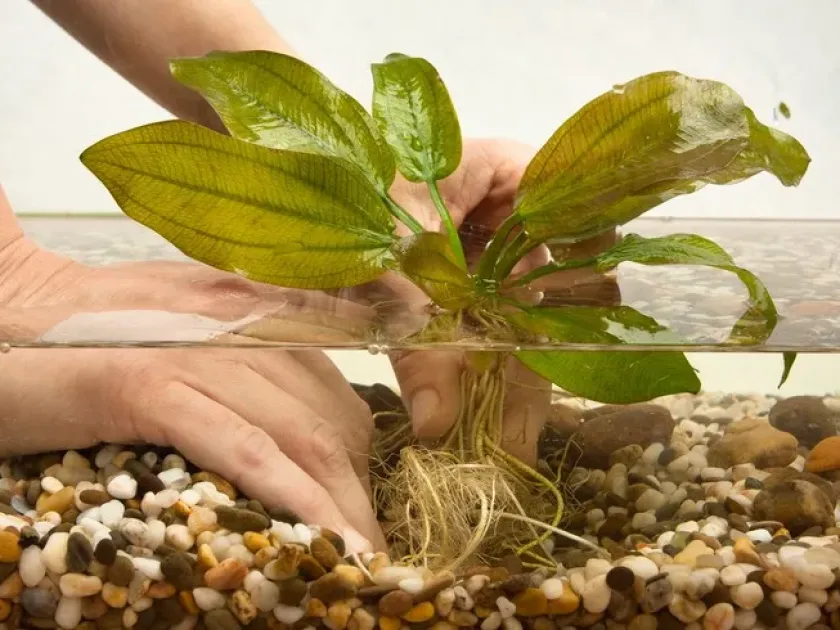
When placing the plant into the growth medium, it is crucial to keep the crown exposed. Burying the base of the rosette promotes tissue decay and limits the photosynthetic efficiency of the specimen.
For commercial production, hydroponic or emersed cultivation methods are preferred. These environments allow for faster development and stronger, more resilient leaf structures compared to fully submerged conditions.
The use of nutrient-rich, iron-supplemented soil mixes at the time of planting drastically improves initial establishment rates. This creates an optimal environment for the proliferation of secondary root growth.
Growing requirements
Echinodorus horizontalis is a member of the Alismataceae family, native to the tropical wetlands of South America. It thrives in warm environments with water temperatures ranging from 22 to 28 degrees Celsius.
The crop requires a nutrient-dense substrate with a slightly acidic to neutral pH. A substrate composed of fine-grained minerals or professional aquatic soil provides the necessary anchorage and nutrition.
High-intensity lighting is essential to maintain the horizontal orientation of the leaves, which gives the species its name. A photoperiod of 10 to 12 hours is recommended to sustain vigorous growth.
Regular carbon dioxide injection is vital for the optimal development of this plant. Sufficient CO2 levels lead to significantly larger leaf surface areas and improved overall vitality of the plant biomass.
Environmental stability is a non-negotiable requirement. The plant is highly sensitive to fluctuations in water chemistry, especially rapid changes in general hardness (GH) and carbonate hardness (KH).
Main diseases and pests
Root rot is the most common pathology, typically caused by stagnant water or compacted substrate layers. Proper maintenance of the rhizosphere is necessary to ensure adequate oxygen diffusion to the roots.
Biological threats include algae outbreaks that compete with the plant for light and space. Effective control involves balancing nutrient inputs to prevent excessive levels of nitrates and phosphates.
Physiological disorders, such as iron-deficiency chlorosis, present as yellowing leaves while the veins remain green. This is easily managed by adjusting the micronutrient dosing in the liquid fertilizer regime.
Physical damage from aquatic pests, such as snails or herbivorous insects, can create entry points for secondary bacterial infections. Regular monitoring and integrated pest management are necessary.
Stress from improper transplantation or insufficient light can trigger a dormant phase or leaf melting. A gradual acclimatization process is critical when moving plants between different aqueous environments.