
Large-flowered Echinodorus
Echinodorus grandiflorus
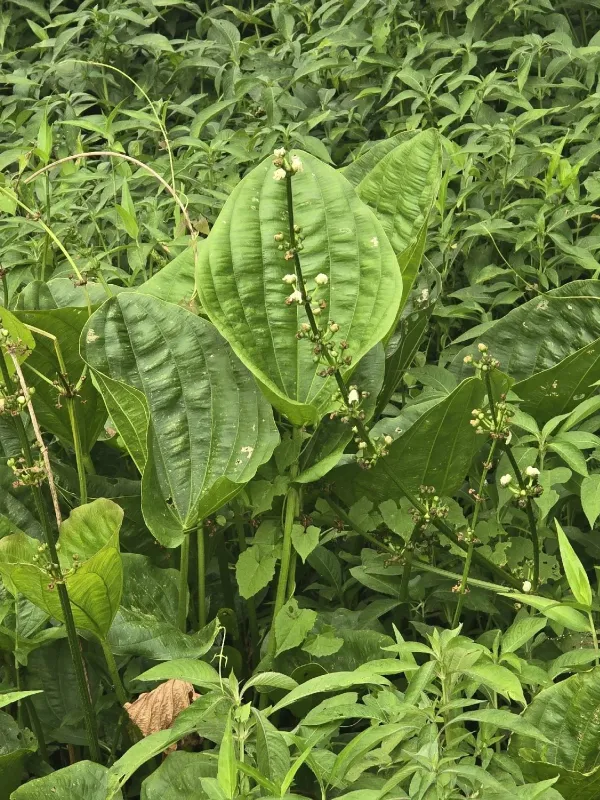
Description
Growing requirements
Large-flowered Echinodorus (Echinodorus grandiflorus) belongs to the Alismataceae family. It is a robust perennial herb native to the tropical wetlands of South America, widely distributed across Brazil, Argentina, and Paraguay.
The plant is defined by its substantial, arrow-shaped leaves supported by long petioles, rising from a strong rhizome system. In its native habitat, it thrives as a marginal aquatic plant, often standing tall above the water surface.
Cultivation requires a nutrient-rich, moist soil or shallow water conditions. It is essential to maintain high humidity levels, as the plant reacts poorly to dry air or prolonged exposure to strong, drying winds in outdoor settings.
Ideal thermal conditions involve temperatures ranging from +22°C to +28°C. This species is highly light-demanding and requires full sunlight or high-intensity artificial lighting to maintain its characteristic structure and vibrant foliage.
In terms of usage, the species is predominantly cultivated for ornamental purposes in public and private water gardens. Furthermore, it is studied for its phytoremediation capabilities in stabilizing water quality in anthropogenic wetlands.
Main diseases and pests
Root rot caused by stagnant water conditions and pathogenic fungi remains the most common threat to the health of the plant, especially in poorly drained planting zones.
Spider mites and aphids pose a significant risk, particularly when the plant is cultivated in greenhouse environments where humidity fluctuates or ventilation is inadequate.
Nutrient deficiencies, specifically iron and magnesium, lead to interveinal chlorosis, which stunts plant growth and reduces the aesthetic value of the foliage.
Bacterial soft rot can occur if leaves are mechanically damaged, allowing pathogens to penetrate the soft tissues, often exacerbated by high temperatures and poor circulation.
Invasive algae species can establish themselves on the leaves, severely limiting the plant's photosynthetic capacity and competing for essential dissolved minerals.